
US military strikes on Iran enter ninth night as Strait of Hormuz crisis deepens
The escalating conflict over the world's most important oil chokepoint is sending ripple effects through energy and crypto markets alike.
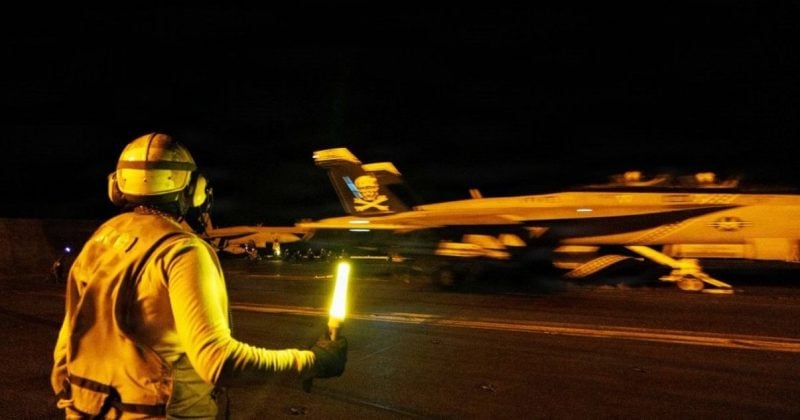
The US Central Command has now conducted nine consecutive nights of precision strikes against Iranian military infrastructure, targeting the country’s ability to threaten commercial shipping through the Strait of Hormuz.
For crypto investors wondering why they should care about naval warfare thousands of miles from any blockchain node, here’s the thing: roughly 20% of the world’s oil passes through the Strait of Hormuz. When that corridor gets disrupted, everything downstream gets chaotic, and “everything” includes the macro conditions that drive digital asset prices.
What’s actually happening
CENTCOM has been systematically dismantling Iranian military capabilities since at least July 11, 2026. Over the course of the campaign, strikes have hit more than 300 Iranian military sites.
The target list reads like a military hardware catalog: air-defense systems, radar installations, missile launch sites, drone facilities, and coastal surveillance infrastructure.
These operations marked the first confirmed use of one-way attack sea drones, a new class of weapon designed for single-use maritime strikes. The Pentagon deployed these alongside aerial drones and conventional munitions.
The news moving money, markets, and the world—before your day starts.
Daily. Free. Join 34,000+ readers across crypto, finance, and policy.
Iran declared the Strait of Hormuz closed back in March 2026, a move that coincided with earlier military actions from both US and Israeli forces. That declaration effectively turned one of the world’s busiest shipping lanes into a conflict zone, with Iranian forces targeting vessels transiting the passage.
The oil connection crypto traders can’t ignore
The Strait of Hormuz isn’t just any waterway. Massive volumes of crude oil and liquefied natural gas flow through this narrow passage daily, supplying markets across Asia, Europe, and beyond.
The absence of any direct connection between these military operations and crypto or blockchain technology is worth noting. There are no sanctions-evasion angles, no CBDC implications, and no direct on-chain effects. The transmission mechanism is purely macro: energy prices affect inflation, inflation affects monetary policy, and monetary policy affects the risk appetite that drives crypto valuations.
Traders should be monitoring oil futures alongside their usual crypto indicators. The conflict has been running with what some observers describe as limited public exposure, which means the market may not have fully priced in the risk of further escalation.