
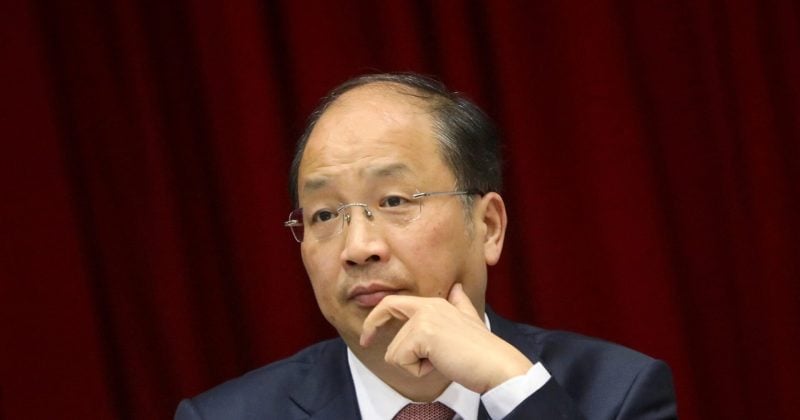
China investigates former securities regulator Fang Xinghai for discipline violations
The Stanford-educated reformer who opened China's markets to foreign investors is now under probe as Beijing's anti-corruption campaign reaches deeper into financial regulators.
Fang Xinghai, the former vice chairman of the China Securities Regulatory Commission (CSRC), is under investigation for “serious violations of Party discipline and laws.” The probe, announced on July 24, is being conducted by the Communist Party’s Central Commission for Discipline Inspection and the National Commission of Supervision, the two most powerful anti-corruption bodies in China.
Specific charges haven’t been disclosed.
Fang was one of the most internationally recognized faces of Chinese financial reform, a Stanford-educated economist who spent nearly a decade pushing to open China’s capital markets to the outside world.
The reformer’s resume
Fang earned his PhD in economics from Stanford University and worked at the Shanghai Stock Exchange before ascending to the CSRC vice chairmanship in October 2015. His timing was, to put it mildly, eventful.
He stepped into the role just months after a massive stock market crash that wiped out trillions in value and rattled global confidence in Chinese financial governance.
Over the next nine years, Fang became the CSRC’s point person for international engagement. He championed programs that broadened foreign investor access to domestic securities and futures markets. He was a regular presence at Davos, a familiar face to global fund managers, and widely regarded as a bridge between China’s opaque regulatory apparatus and Western financial institutions.
Macro, rates, and crypto—what moved markets and what matters next.
Daily. Free. Join 34,000+ readers across crypto, finance, and policy.
He retired in 2024 and was succeeded by Li Ming. The investigation announcement came roughly two years later.
A pattern, not an outlier
Fang is now the second senior CSRC official to face investigation in recent years.
Beijing’s anti-corruption campaign, which began under President Xi Jinping over a decade ago, has increasingly turned its attention to the financial sector. The campaign has already swept through banking, insurance, and state-owned enterprises.
What this means for markets and investors
For traditional finance participants, the immediate concern is policy continuity. Fang architected many of the market-access programs that foreign institutional investors rely on. If his policies come under retroactive scrutiny, or if his successors feel pressure to distance themselves from his approach, the terms of foreign participation in Chinese markets could shift.
Market participants should watch for two things in the coming months. First, whether the investigation produces specific charges or remains in the ambiguous “discipline violations” category. Second, whether Fang’s successors at the CSRC maintain, expand, or quietly roll back the foreign-access programs he championed.