
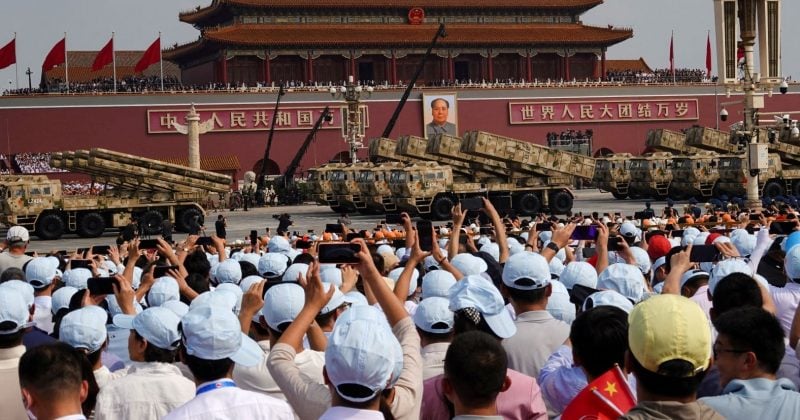
China to send rocket launchers to Iran, potentially complicating U.S.-Iran deal prospects

https://www.cnn.com/2025/09/03/world/gallery/in-pictures-chinas-80th-victory-day-parade

China to send rocket launchers to Iran, potentially complicating U.S.-Iran deal prospects

US-Iran deal in 2026

China is reportedly preparing to send rocket launchers to Iran, a move that could exacerbate tensions in the already volatile U.S.-Israel-Iran conflict. According to reports, the transfer will include shoulder-fired air-defense missile systems aimed at bolstering Iran’s defensive capabilities. This development comes amid ongoing efforts to negotiate a U.S.-Iran deal, which markets are watching closely. The Fear and Greed Indexes suggest widespread fear across financial markets, including cryptocurrencies, as market participants assess the implications of increased military support for Iran.

Key Takeaways

  • Reports of China sending rocket launchers to Iran suggest heightened military support for Iran, potentially impacting U.S.-Iran negotiations.
  • Market pricing for a U.S.-Iran deal in 2026 reflects a decrease in perceived likelihood, with odds dropping across several sub-markets.
  • The Fear and Greed Indexes indicate a prevailing sense of fear in financial markets, which could be influencing current market pricing.

What to Watch

  • Any official confirmations from China or Iran regarding the reported military transfer may further shift market expectations.
  • Developments in the U.S.-Iran negotiations, particularly any statements from key figures such as U.S. Chief Negotiator Mike Vance or Iranian Foreign Minister Javad Zarif, could further influence market pricing.
  • Any military activity in the region that might indicate an escalation, as this would likely exert further pressure on market expectations for a U.S.-Iran deal in 2026.

Get live prediction-market analysis, powered by Vera. Sign up for Vera.

Disclosure: This article was edited by Estefano Gomez. For more information on how we create and review content, see our Editorial Policy.

China to send rocket launchers to Iran, potentially complicating U.S.-Iran deal prospects

China to send rocket launchers to Iran, potentially complicating U.S.-Iran deal prospects

US-Iran deal in 2026

https://www.cnn.com/2025/09/03/world/gallery/in-pictures-chinas-80th-victory-day-parade

China is reportedly preparing to send rocket launchers to Iran, a move that could exacerbate tensions in the already volatile U.S.-Israel-Iran conflict. According to reports, the transfer will include shoulder-fired air-defense missile systems aimed at bolstering Iran’s defensive capabilities. This development comes amid ongoing efforts to negotiate a U.S.-Iran deal, which markets are watching closely. The Fear and Greed Indexes suggest widespread fear across financial markets, including cryptocurrencies, as market participants assess the implications of increased military support for Iran.

Key Takeaways

  • Reports of China sending rocket launchers to Iran suggest heightened military support for Iran, potentially impacting U.S.-Iran negotiations.
  • Market pricing for a U.S.-Iran deal in 2026 reflects a decrease in perceived likelihood, with odds dropping across several sub-markets.
  • The Fear and Greed Indexes indicate a prevailing sense of fear in financial markets, which could be influencing current market pricing.

What to Watch

  • Any official confirmations from China or Iran regarding the reported military transfer may further shift market expectations.
  • Developments in the U.S.-Iran negotiations, particularly any statements from key figures such as U.S. Chief Negotiator Mike Vance or Iranian Foreign Minister Javad Zarif, could further influence market pricing.
  • Any military activity in the region that might indicate an escalation, as this would likely exert further pressure on market expectations for a U.S.-Iran deal in 2026.

Get live prediction-market analysis, powered by Vera. Sign up for Vera.

Disclosure: This article was edited by Estefano Gomez. For more information on how we create and review content, see our Editorial Policy.