
Via whitehouse.gov
China warns US against tech curbs ahead of Xi Jinping’s visit, escalating tensions that ripple through crypto markets
Beijing sanctions US firms and tightens drone export controls weeks before a high-stakes summit, adding fuel to the geopolitical fire that increasingly shapes digital asset valuations.
China just dropped a not-so-subtle reminder that it has economic ammunition of its own. On August 5, Beijing sanctioned at least six US entities and slapped strict new export controls on drones headed to America, all while warning Washington that additional tech restrictions would be met with further retaliation.
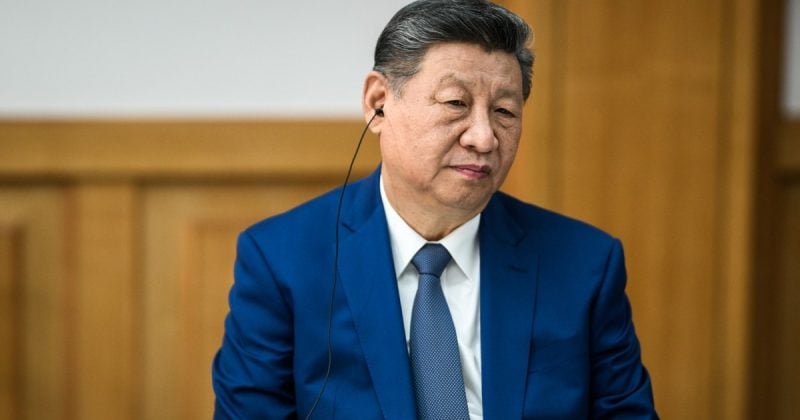
The timing is not accidental. Xi Jinping is scheduled to visit the US on September 24 for talks with President Donald Trump, and technology, particularly AI, sits at the top of the agenda.
What Beijing actually did
China’s Ministry of Commerce targeted entities including Applied DNA Sciences and Compliance Testing LLC with sanctions. Drone exports to the US now require case-by-case government review, effective immediately, covering unmanned aerial vehicles and key components.
These moves were a direct response to recent US actions. The FCC imposed import bans on Chinese drones, and additional Chinese companies were listed under the Uyghur Forced Labor Prevention Act. Beijing framed its retaliation as “restrained,” which in diplomatic speak means “we could do a lot worse, and you should know that.”
This latest episode follows Trump’s visit to Beijing in May, which evidently did not produce enough goodwill to prevent the current escalation. The US-China tech rivalry has been intensifying since 2018, when Washington began deploying export controls specifically designed to slow China’s progress in semiconductors and artificial intelligence.
Macro, rates, and crypto—what moved markets and what matters next.
Daily. Free. Join 34,000+ readers across crypto, finance, and policy.
Why crypto markets should pay attention
The drone export restrictions alone deserve attention from the digital asset community. Dual-use technology controls have a way of expanding their scope over time. What starts with drones can eventually touch computing hardware, specialized chips, and the very infrastructure that underpins AI development.
Mining operations also face potential collateral damage. China remains a major producer of rare earth minerals critical to semiconductor manufacturing. Any further deterioration in relations raises the specter of rare earth export restrictions, which would cascade through chip production and ultimately affect the hardware supply chain for Bitcoin mining equipment.
The September summit looms large
The Xi-Trump meeting on September 24 is shaping up to be one of the most consequential bilateral summits in years. China’s warning of further countermeasures creates an asymmetric risk profile: if talks go well, relief rallies across risk assets are likely; if they deteriorate, the sanctions playbook that Beijing just demonstrated could expand significantly.
Investors should watch for signals in the semiconductor space particularly closely. The US has used chip export controls as its primary weapon in the tech competition, and any indication that Washington plans to tighten these restrictions further before the summit could trigger pre-emptive Chinese retaliation.