
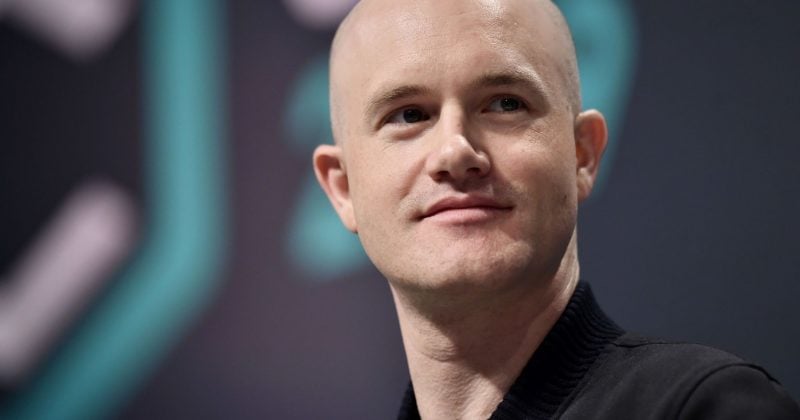
Coinbase CEO Brian Armstrong clarifies social media posts are not token endorsements
A profile picture change sent a memecoin soaring 3,000% before crashing 90%, proving why the disclaimer matters
Brian Armstrong wants you to know that when he posts on social media, he is absolutely, definitively not telling you to buy anything. His X bio literally says “Not investment advice.”
The Coinbase CEO’s latest clarification comes after a sequence of events that reads like a cautionary tale about influence, memecoins, and the gap between intention and impact in crypto markets.
The profile picture heard round the world
On July 16, Armstrong swapped his usual CryptoPunk NFT avatar on X for artwork associated with $BRIAN, a memecoin sometimes called “Coinbase Man.” It was, by all appearances, a casual move. The market did not treat it casually.
Within hours, $BRIAN’s market cap rocketed from under $1 million to somewhere between $30 million and $37 million. That is roughly a 3,000% surge triggered by a profile picture change.
Then Armstrong switched his avatar back to the CryptoPunk. The token’s market cap collapsed by 85% to 93% within 24 hours, falling to under $5 million. Traders who bought the top got a brutal education in the half-life of hype.
AI, tech, and the markets they move—in one daily briefing.
Daily. Free. Join 34,000+ readers across crypto, finance, and policy.
No regulatory action followed. No major news broke. The entire cycle, from liftoff to crater, was driven purely by trader sentiment reacting to what they perceived as a signal from one of crypto’s most powerful executives.
The “everything exchange” and the endorsement problem
Armstrong has been consistent on this point, at least in words. Back on January 2, he posted that Coinbase listings should not be treated as endorsements of specific tokens. The company’s stated goal is to build an “everything exchange,” one that lists assets broadly without playing favorites.
The $BRIAN episode is particularly interesting because the token lives on Base, Coinbase’s own layer-2 network. Base has become a hub for community-driven memecoins, and when Armstrong engages with anything on Base, even indirectly, traders interpret it as a green light.
The Elon problem, crypto edition
Armstrong’s situation has a wrinkle that Musk’s didn’t. Musk was tweeting about a token his company had no direct connection to. Armstrong changed his avatar to a token built on infrastructure his company operates. The separation between personal expression and corporate influence gets thinner when the asset in question exists on your own blockchain.
What this means for investors
The $BRIAN episode is a case study in asymmetric risk. The people who caught the early surge and sold near the top made life-changing returns on a profile picture change. Everyone who bought after the initial spike and held through the reversal lost most of their money within a day.