
CXMT refuses Apple’s request for lower LPDDR5X pricing, demanding Samsung-level rates

Via tomshardware.com

CXMT refuses Apple’s request for lower LPDDR5X pricing, demanding Samsung-level rates

China's rising memory chipmaker is playing hardball with the world's most valuable company, and the ripple effects could reshape tech supply chains and investor portfolios alike.

Apple, a company famous for squeezing suppliers until they beg for mercy, just got told “no” by a Chinese chipmaker. Changxin Memory Technologies, better known as CXMT, rejected Apple’s request for discounted LPDDR5X memory pricing, instead demanding rates on par with Samsung and SK Hynix.

Here’s the thing: Apple wasn’t coming to CXMT out of generosity. It was coming out of desperation. The three companies that dominate the DRAM market, Samsung, SK Hynix, and Micron, have been pivoting hard toward high-bandwidth memory for AI applications, leaving mobile DRAM supply tighter and prices significantly higher.

The pricing squeeze Apple can’t escape

CXMT holds roughly 8% of the global DRAM market as of Q1 2026. That’s not nothing, but it’s still a fraction of what the big three control.

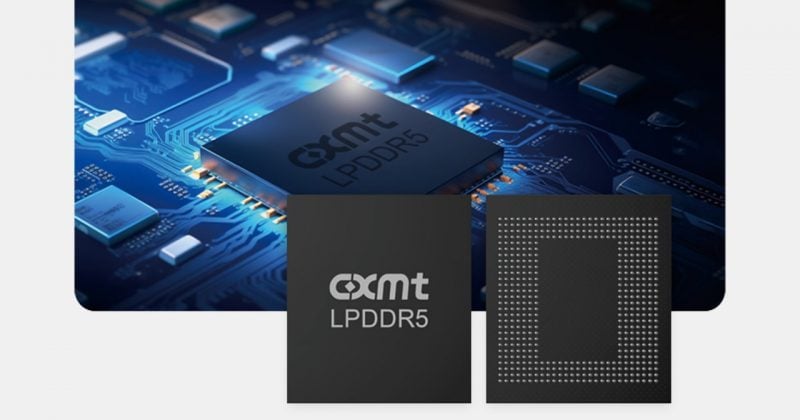
The company has recently begun mass-producing LPDDR5X memory with speeds up to 8533Mbps and capacities ranging from 12GB to 32GB. Those are flagship-tier specs, the kind Apple needs for its next-generation iPhones and iPads.

Pricing for 12GB LPDDR5X chips has reportedly surged to around $145, driven largely by the insatiable appetite for memory in AI workloads.

Advertisement

CXMT, rather than accepting the role of budget backup supplier, essentially told Apple: if you want our chips, pay what you’d pay Samsung. That’s a bold move from a company that, until recently, wasn’t even in the conversation for premium mobile memory.

Geopolitics makes everything harder

This isn’t just a supply-and-demand story. It’s a geopolitical chess match.

CXMT is a state-backed Chinese semiconductor company that sits on a US restrictions list. That means Apple can’t simply place an order and start shipping chips to Cupertino. The company is actively lobbying the US government for regulatory approvals to use CXMT’s memory in its products.

Apple’s motivation is straightforward. It wants to break the oligopoly that Samsung, SK Hynix, and Micron hold over its memory supply chain. Diversification reduces risk. But diversifying into a geopolitically sensitive supplier introduces entirely new risks.

Why the AI memory boom matters here

The root cause of Apple’s predicament is the AI infrastructure buildout. High-bandwidth memory, the specialized DRAM used in AI accelerators, commands significantly higher margins than mobile DRAM. Samsung and SK Hynix have rationally shifted production capacity toward HBM, where the money is better.

That leaves mobile DRAM in a structural supply deficit. Fewer wafers allocated to LPDDR5X means higher prices for every smartphone maker, not just Apple.

CXMT’s emergence as a viable LPDDR5X supplier should, in theory, help rebalance the market. But CXMT clearly has no interest in being the discount option. By demanding parity pricing with established players, it’s signaling that it views itself as a premium supplier, not a bargain bin alternative.

What this means for investors

For anyone holding Apple stock, this situation introduces a margin compression risk that’s worth watching closely. If Apple can’t secure cheaper memory, the cost of building each iPhone goes up. Apple then faces a choice: absorb the cost and accept lower margins, or pass it along to consumers through higher retail prices.

For memory semiconductor investors, the picture is more nuanced. Samsung and SK Hynix benefit from the current pricing environment, but CXMT’s growing capabilities represent a long-term competitive threat.

The US government’s decision on whether to grant Apple a waiver to use CXMT chips could be the single most important variable in this equation. A denial keeps the oligopoly intact and prices elevated. An approval opens a new front in the US-China tech competition, one where American companies are actively choosing Chinese suppliers over allied alternatives because the economics demand it.

Disclosure: This article was edited by Editorial Team. For more information on how we create and review content, see our Editorial Policy.

CXMT refuses Apple’s request for lower LPDDR5X pricing, demanding Samsung-level rates

CXMT refuses Apple’s request for lower LPDDR5X pricing, demanding Samsung-level rates

China's rising memory chipmaker is playing hardball with the world's most valuable company, and the ripple effects could reshape tech supply chains and investor portfolios alike.

Via tomshardware.com

Apple, a company famous for squeezing suppliers until they beg for mercy, just got told “no” by a Chinese chipmaker. Changxin Memory Technologies, better known as CXMT, rejected Apple’s request for discounted LPDDR5X memory pricing, instead demanding rates on par with Samsung and SK Hynix.

Here’s the thing: Apple wasn’t coming to CXMT out of generosity. It was coming out of desperation. The three companies that dominate the DRAM market, Samsung, SK Hynix, and Micron, have been pivoting hard toward high-bandwidth memory for AI applications, leaving mobile DRAM supply tighter and prices significantly higher.

The pricing squeeze Apple can’t escape

CXMT holds roughly 8% of the global DRAM market as of Q1 2026. That’s not nothing, but it’s still a fraction of what the big three control.

The company has recently begun mass-producing LPDDR5X memory with speeds up to 8533Mbps and capacities ranging from 12GB to 32GB. Those are flagship-tier specs, the kind Apple needs for its next-generation iPhones and iPads.

Pricing for 12GB LPDDR5X chips has reportedly surged to around $145, driven largely by the insatiable appetite for memory in AI workloads.

Advertisement

CXMT, rather than accepting the role of budget backup supplier, essentially told Apple: if you want our chips, pay what you’d pay Samsung. That’s a bold move from a company that, until recently, wasn’t even in the conversation for premium mobile memory.

Geopolitics makes everything harder

This isn’t just a supply-and-demand story. It’s a geopolitical chess match.

CXMT is a state-backed Chinese semiconductor company that sits on a US restrictions list. That means Apple can’t simply place an order and start shipping chips to Cupertino. The company is actively lobbying the US government for regulatory approvals to use CXMT’s memory in its products.

Apple’s motivation is straightforward. It wants to break the oligopoly that Samsung, SK Hynix, and Micron hold over its memory supply chain. Diversification reduces risk. But diversifying into a geopolitically sensitive supplier introduces entirely new risks.

Why the AI memory boom matters here

The root cause of Apple’s predicament is the AI infrastructure buildout. High-bandwidth memory, the specialized DRAM used in AI accelerators, commands significantly higher margins than mobile DRAM. Samsung and SK Hynix have rationally shifted production capacity toward HBM, where the money is better.

That leaves mobile DRAM in a structural supply deficit. Fewer wafers allocated to LPDDR5X means higher prices for every smartphone maker, not just Apple.

CXMT’s emergence as a viable LPDDR5X supplier should, in theory, help rebalance the market. But CXMT clearly has no interest in being the discount option. By demanding parity pricing with established players, it’s signaling that it views itself as a premium supplier, not a bargain bin alternative.

What this means for investors

For anyone holding Apple stock, this situation introduces a margin compression risk that’s worth watching closely. If Apple can’t secure cheaper memory, the cost of building each iPhone goes up. Apple then faces a choice: absorb the cost and accept lower margins, or pass it along to consumers through higher retail prices.

For memory semiconductor investors, the picture is more nuanced. Samsung and SK Hynix benefit from the current pricing environment, but CXMT’s growing capabilities represent a long-term competitive threat.

The US government’s decision on whether to grant Apple a waiver to use CXMT chips could be the single most important variable in this equation. A denial keeps the oligopoly intact and prices elevated. An approval opens a new front in the US-China tech competition, one where American companies are actively choosing Chinese suppliers over allied alternatives because the economics demand it.

Disclosure: This article was edited by Editorial Team. For more information on how we create and review content, see our Editorial Policy.