
Via cryptonest.co.uk
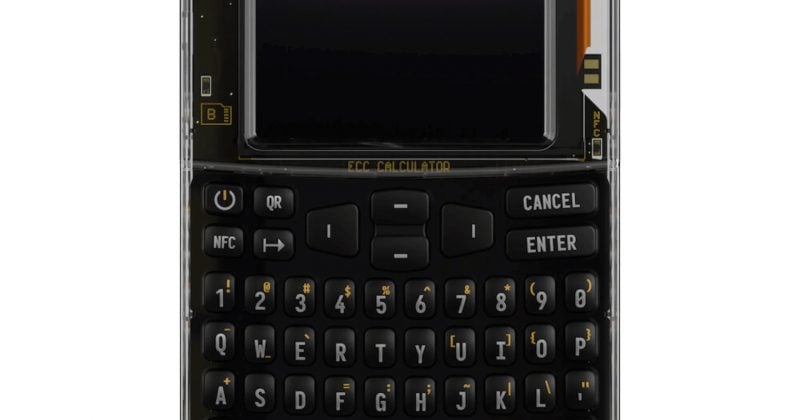
Denver Bitcoin shoots his ColdCard Q to protest firmware vulnerability
A Bitcoin community member destroyed his hardware wallet in protest after a seed entropy flaw left users without passphrases exposed
Hardware wallets are supposed to be the gold standard of Bitcoin security. The whole pitch is simple: keep your keys offline, away from hackers, away from exchanges, away from anything that could go wrong. So when a firmware flaw undermines that promise, the community tends to notice. When someone responds by literally shooting the device, everyone notices.
That is exactly what happened when Adam, known on X as @denverbitcoin, announced plans to destroy his ColdCard Q on August 2, 2026, framing the act as a symbolic gesture on behalf of users hurt by the vulnerability.
What the flaw actually did
When a ColdCard Q automatically generated a seed phrase, it drew on a pool of randomness that was limited to 32 bytes of entropy, making the seed theoretically easier to brute-force than users were led to believe.
The practical impact depended heavily on whether a user had added a passphrase, sometimes called the 25th word. A passphrase is an extra layer on top of the standard 24-word seed phrase. Users who had one were largely insulated from the problem. Users who had not were the ones left exposed.
Coinkite, the company behind the ColdCard lineup, acknowledged the issue and released updated firmware. The company also advised affected users to generate entirely new seeds, and clarified that the hardware itself was not defective. Only the firmware’s seed generation routine was at fault.
Why Adam pulled the trigger
Adam’s framing was explicitly about solidarity. He described the act as honoring users who had been effectively robbed because of the vulnerability, a pointed choice of words that places blame squarely on the firmware’s failure rather than on user error.
The news moving money, markets, and the world—before your day starts.
Daily. Free. Join 34,000+ readers across crypto, finance, and policy.
Criticism has also landed on influencers and educators who recommended ColdCard devices without, in the view of critics, sufficiently stress-testing the security assumptions or pushing passphrase adoption hard enough.
NVK, Coinkite’s founder, has faced direct criticism throughout the discussions on X, though engagement from mainstream crypto media has been limited. The bulk of the conversation has stayed within the platform’s Bitcoin-focused corners.
What this means for the hardware wallet market
The ColdCard has long occupied a specific position in the Bitcoin hardware wallet market as the choice of the security-maximalist. That reputation made the entropy flaw particularly jarring for its core audience.
The deeper market implication is about defaults. A firmware vulnerability that only affects users without passphrases is, in one reading, a user education problem. In another reading, it is a product design problem.
What to watch now is whether Coinkite’s updated firmware and communication strategy are enough to retain its reputation among the security-conscious Bitcoin holders who made up its core customer base, or whether this incident accelerates a shift toward competing devices. Adam’s destroyed ColdCard Q is now a permanent part of the visual record.