
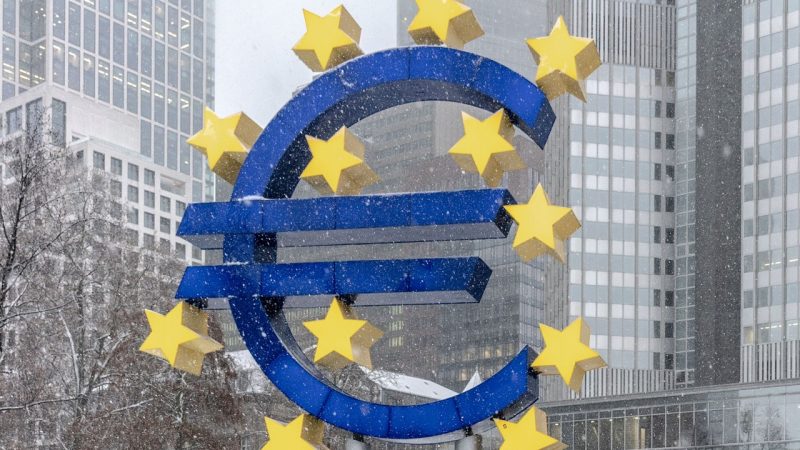
Photo: Masood Aslami / Pexels
ECB’s Rehn says there is no current need to deploy the Transmission Protection Instrument
The ECB's emergency bond-buying backstop has never been activated since its creation in 2022, and the central bank sees no reason to change that now
Olli Rehn, a member of the European Central Bank’s Governing Council, has stated that the ECB sees no current necessity to activate its Transmission Protection Instrument. The TPI, which was designed to prevent disorderly bond market conditions from undermining monetary policy across the eurozone, has sat on the shelf since the day it was created.
What the TPI actually is and why it matters
The Transmission Protection Instrument was ratified on July 21, 2022, during a period when the ECB was scrambling to address the risk that rapidly rising interest rates could blow out sovereign spreads in weaker eurozone economies.
The TPI gives the ECB the authority to purchase public-sector securities on secondary markets when financing conditions deteriorate in ways that aren’t justified by a country’s economic fundamentals. Countries benefiting from TPI purchases need to be in compliance with EU fiscal rules and other governance criteria. Since its creation more than four years ago, the instrument has never been deployed. Rehn’s comments confirm that the ECB sees no fragmentation risk severe enough to change that status quo.
The rate decision backdrop
Rehn’s remarks come alongside a fresh ECB decision to raise key interest rates by 25 basis points as of September 10, 2026. That move brings the deposit facility rate to 2.50%. ECB staff projections peg average headline inflation at 3.0% for 2026, declining to 2.5% in 2027 and 2.1% in 2028.
The news moving money, markets, and the world—before your day starts.
Daily. Free. Join 34,000+ readers across crypto, finance, and policy.
Geopolitical tensions, including ongoing conflict in the Middle East, continue to inject uncertainty into the inflation outlook. Rehn was deliberate in emphasizing that the ECB is not pre-committing to any specific policy path.
Why markets should pay attention
The decision to leave the TPI dormant while simultaneously raising rates sends a specific signal to bond markets: the ECB believes its rate hikes are transmitting cleanly across the eurozone. There’s no evidence that peripheral economies are being disproportionately punished by tighter monetary policy, at least not to a degree that worries Frankfurt.
The broader takeaway for market participants is that the ECB’s data-dependent approach means macroeconomic indicators will continue to drive policy decisions on a meeting-by-meeting basis. Inflation prints, employment data, and geopolitical developments in energy markets are the variables worth watching.