
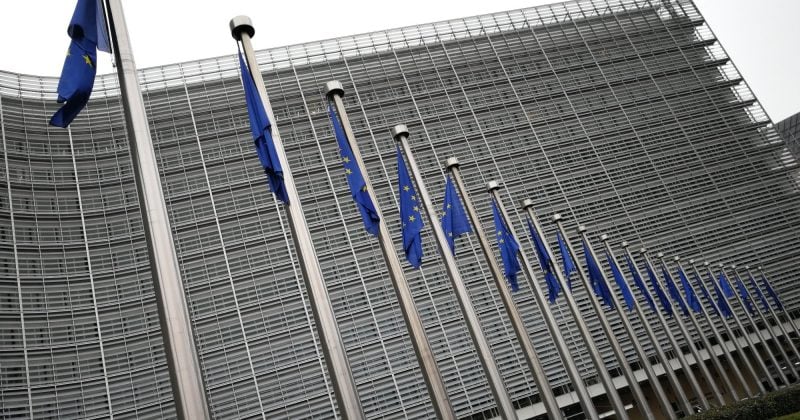
Via tripadvisor.co.uk
Europe bets big on industrial revival with Clean Industrial Deal worth over €100 billion
The EU's sweeping new industrial policy aims to counter US competition and decarbonize heavy industry, with ripple effects across global capital markets
The European Union just wrote one of the largest checks in its history. The Clean Industrial Deal, launched on February 26, 2025, is designed to mobilize over €100 billion for clean manufacturing, research, and supply chains, with some estimates putting the total closer to €150 billion once leveraged private investment kicks in.
What’s actually in the deal
The centerpiece is the Industrial Decarbonisation Bank, which targets €100 billion through a mix of funding sources including revenues from the EU’s emissions trading scheme. There’s also an initial €600 million earmarked specifically for battery research and development.
The broader framework covers affordable clean energy access, circular economy practices, regulatory simplifications, and workforce skills development.
The CID builds on the 2019 European Green Deal and the 2023 Green Deal Industrial Plan, and it aligns with the Net-Zero Industry Act. The Industrial Decarbonisation Bank alone is set to deploy an initial €1 billion in 2025.
Why this matters beyond Brussels
When the US passed the IRA, it created a gravitational pull for clean energy investment that threatened to suck capital and companies right out of Europe. The CID is Europe’s counter-offer: stay here, and we’ll help pay for your green transition.
Macro, rates, and crypto—what moved markets and what matters next.
Daily. Free. Join 34,000+ readers across crypto, finance, and policy.
Europe’s energy crisis, triggered by the disruption of Russian gas supplies, made the continent’s industrial energy costs some of the highest globally. The CID directly addresses this by prioritizing affordable clean energy.
What crypto investors should actually watch
The Clean Industrial Deal has zero direct connection to crypto, blockchain, or digital assets. There are no token allocations, no blockchain-based carbon credit schemes baked in, and no DeFi mechanisms for distributing the funds.
The EU’s emissions trading scheme is a core funding mechanism for the CID. As that system becomes more financially important, the tokenization of carbon credits could see renewed attention. If the EU tightens carbon allowances to generate more revenue for the Industrial Decarbonisation Bank, the price of carbon goes up, and every blockchain project building on voluntary or compliance carbon markets gets a tailwind.
MiCA is already live, but future regulatory evolution could be shaped by whether digital assets are seen as complementary to or distracting from the industrial agenda.