
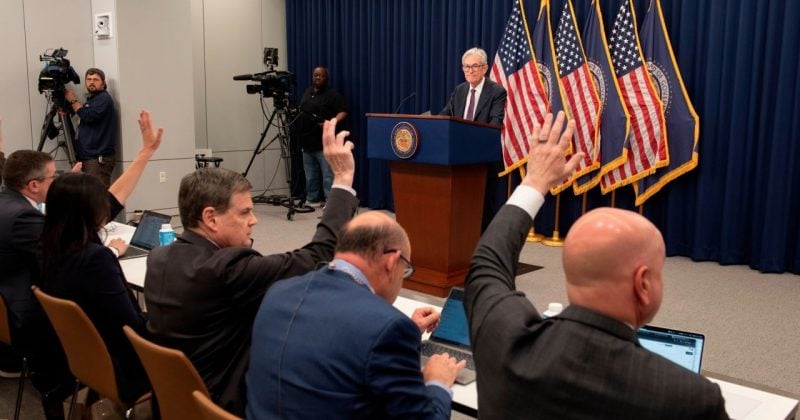
Federal Reserve faces its most divided vote in years as three officials push for rate hike

Via cnn.com

Federal Reserve faces its most divided vote in years as three officials push for rate hike

The 9-3 split at the July FOMC meeting signals growing internal tension under Chair Kevin Warsh, with market odds for a September hike already fading.

The Federal Reserve held its benchmark interest rate steady at 3.50% to 3.75% on July 29, but the decision was anything but smooth. Three FOMC members broke ranks and voted in favor of a quarter-point rate hike, marking the most significant internal dissent under Chair Kevin Warsh’s leadership.

Reuters reporter Ann Saphir noted that policymakers resisted supporting the rate hike and did not defer to the chairman during the meeting.

Three dissenters, one message

Dallas Fed President Lorie Logan, Minneapolis Fed President Neel Kashkari, and Cleveland Fed President Beth Hammack all voted against holding rates steady. Each wanted a 25 basis point increase to push the benchmark range to 3.75% to 4.00%.

Advertisement

The trio had previously opposed tighter policy back in April 2026, which means their hawkish pivot isn’t exactly a new development. It’s been building.

What makes this vote significant isn’t just the number of dissenters. It’s the fact that three officials were willing to publicly break from the chair on a closely watched decision after ten consecutive rate hikes had already been implemented. A 9-3 vote sounds like a comfortable majority on paper, but in the context of FOMC history, three dissenting votes is a flashing yellow light.

What the market heard

Markets processed the division quickly. The odds of a rate hike at the September meeting dropped to roughly 57%, reflecting traders’ growing uncertainty about whether the hawks can build a coalition or whether the hold-steady camp will continue to prevail.

For sectors like real estate and utilities, which tend to move inversely with rate expectations, the pause should theoretically be welcome news. But the persistent dissent from three voting members means the relief rally has a shelf life. If inflation data between now and September comes in hot, those dissenters could find more allies.

The crypto and risk asset angle

Ten consecutive rate hikes had been steadily tightening financial conditions and pulling liquidity out of speculative markets. A pause in that cycle, even a contested one, tends to ease pressure on risk assets broadly.

A sustained hold at 3.50% to 3.75% could gradually improve conditions for crypto markets by stabilizing the dollar and reducing the opportunity cost of holding non-yielding assets. But if the dissenters eventually win the argument and rates resume their climb, the liquidity tightening that hammered crypto in previous cycles would return. The 57% probability of a September hike means this outcome is very much on the table.

Traders watching the September meeting should pay close attention to incoming inflation prints and any public commentary from Logan, Kashkari, or Hammack. Their willingness to dissent publicly suggests they’re building a case for resuming hikes, and the data between now and September will determine whether that case finds a wider audience on the committee.

Disclosure: This article was edited by Editorial Team. For more information on how we create and review content, see our Editorial Policy.

Federal Reserve faces its most divided vote in years as three officials push for rate hike

Federal Reserve faces its most divided vote in years as three officials push for rate hike

The 9-3 split at the July FOMC meeting signals growing internal tension under Chair Kevin Warsh, with market odds for a September hike already fading.

Via cnn.com

The Federal Reserve held its benchmark interest rate steady at 3.50% to 3.75% on July 29, but the decision was anything but smooth. Three FOMC members broke ranks and voted in favor of a quarter-point rate hike, marking the most significant internal dissent under Chair Kevin Warsh’s leadership.

Reuters reporter Ann Saphir noted that policymakers resisted supporting the rate hike and did not defer to the chairman during the meeting.

Three dissenters, one message

Dallas Fed President Lorie Logan, Minneapolis Fed President Neel Kashkari, and Cleveland Fed President Beth Hammack all voted against holding rates steady. Each wanted a 25 basis point increase to push the benchmark range to 3.75% to 4.00%.

Advertisement

The trio had previously opposed tighter policy back in April 2026, which means their hawkish pivot isn’t exactly a new development. It’s been building.

What makes this vote significant isn’t just the number of dissenters. It’s the fact that three officials were willing to publicly break from the chair on a closely watched decision after ten consecutive rate hikes had already been implemented. A 9-3 vote sounds like a comfortable majority on paper, but in the context of FOMC history, three dissenting votes is a flashing yellow light.

What the market heard

Markets processed the division quickly. The odds of a rate hike at the September meeting dropped to roughly 57%, reflecting traders’ growing uncertainty about whether the hawks can build a coalition or whether the hold-steady camp will continue to prevail.

For sectors like real estate and utilities, which tend to move inversely with rate expectations, the pause should theoretically be welcome news. But the persistent dissent from three voting members means the relief rally has a shelf life. If inflation data between now and September comes in hot, those dissenters could find more allies.

The crypto and risk asset angle

Ten consecutive rate hikes had been steadily tightening financial conditions and pulling liquidity out of speculative markets. A pause in that cycle, even a contested one, tends to ease pressure on risk assets broadly.

A sustained hold at 3.50% to 3.75% could gradually improve conditions for crypto markets by stabilizing the dollar and reducing the opportunity cost of holding non-yielding assets. But if the dissenters eventually win the argument and rates resume their climb, the liquidity tightening that hammered crypto in previous cycles would return. The 57% probability of a September hike means this outcome is very much on the table.

Traders watching the September meeting should pay close attention to incoming inflation prints and any public commentary from Logan, Kashkari, or Hammack. Their willingness to dissent publicly suggests they’re building a case for resuming hikes, and the data between now and September will determine whether that case finds a wider audience on the committee.

Disclosure: This article was edited by Editorial Team. For more information on how we create and review content, see our Editorial Policy.