
Federal Reserve loan officer survey plunges to -27%, signaling a credit crunch that matters for crypto

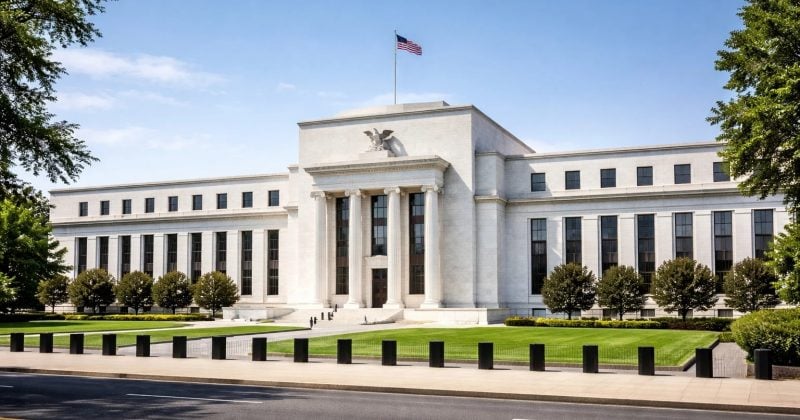
Via thehotelwashington.com

Federal Reserve loan officer survey plunges to -27%, signaling a credit crunch that matters for crypto

Banks are tightening the lending spigot at the fastest pace in quarters, and risk assets should be paying attention.

The Federal Reserve’s latest Senior Loan Officer Opinion Survey, released May 4, landed like a cold shower on anyone hoping for easy money. The net percentage measuring lending standards dropped to -26.8%, more than doubling the previous quarter’s -12.9% reading. In English: banks aren’t just being cautious, they’re actively pulling back from lending at a pace that should make every investor sit up straighter.

For context, the Fed considers readings in the 0% to 5% range “basically unchanged.” A reading near -27% is well past the point of polite caution.

Advertisement

What the SLOOS actually measures

The Senior Loan Officer Opinion Survey, or SLOOS, is one of those wonky quarterly reports that punches above its weight. The Fed polls roughly 80 large domestic banks and 24 US branches of foreign institutions, asking senior loan officers whether they’ve tightened or eased credit standards, how loan demand is shifting, and what terms they’re offering borrowers.

The net percentage works like a sentiment thermometer. It takes the share of banks reporting tighter standards and subtracts the share reporting easier ones. A deeply negative number means the tightening camp is winning by a landslide.

This quarter’s -26.8% covers changes observed during Q1 2026. The previous reading of -12.9% already suggested banks were growing more selective.

The survey feeds directly into the Federal Open Market Committee’s policy deliberations. When banks collectively decide to restrict credit, it functions as a form of monetary tightening that operates independently of whatever the Fed does with interest rates.

What to watch next

The Fed releases its next SLOOS in August. Traders should also monitor commercial and industrial loan growth data from the Fed’s weekly H.8 report for real-time confirmation of what the SLOOS is signaling.

Disclosure: This article was edited by Editorial Team. For more information on how we create and review content, see our Editorial Policy.

Federal Reserve loan officer survey plunges to -27%, signaling a credit crunch that matters for crypto

Federal Reserve loan officer survey plunges to -27%, signaling a credit crunch that matters for crypto

Banks are tightening the lending spigot at the fastest pace in quarters, and risk assets should be paying attention.

Via thehotelwashington.com

The Federal Reserve’s latest Senior Loan Officer Opinion Survey, released May 4, landed like a cold shower on anyone hoping for easy money. The net percentage measuring lending standards dropped to -26.8%, more than doubling the previous quarter’s -12.9% reading. In English: banks aren’t just being cautious, they’re actively pulling back from lending at a pace that should make every investor sit up straighter.

For context, the Fed considers readings in the 0% to 5% range “basically unchanged.” A reading near -27% is well past the point of polite caution.

Advertisement

What the SLOOS actually measures

The Senior Loan Officer Opinion Survey, or SLOOS, is one of those wonky quarterly reports that punches above its weight. The Fed polls roughly 80 large domestic banks and 24 US branches of foreign institutions, asking senior loan officers whether they’ve tightened or eased credit standards, how loan demand is shifting, and what terms they’re offering borrowers.

The net percentage works like a sentiment thermometer. It takes the share of banks reporting tighter standards and subtracts the share reporting easier ones. A deeply negative number means the tightening camp is winning by a landslide.

This quarter’s -26.8% covers changes observed during Q1 2026. The previous reading of -12.9% already suggested banks were growing more selective.

The survey feeds directly into the Federal Open Market Committee’s policy deliberations. When banks collectively decide to restrict credit, it functions as a form of monetary tightening that operates independently of whatever the Fed does with interest rates.

What to watch next

The Fed releases its next SLOOS in August. Traders should also monitor commercial and industrial loan growth data from the Fed’s weekly H.8 report for real-time confirmation of what the SLOOS is signaling.

Disclosure: This article was edited by Editorial Team. For more information on how we create and review content, see our Editorial Policy.