
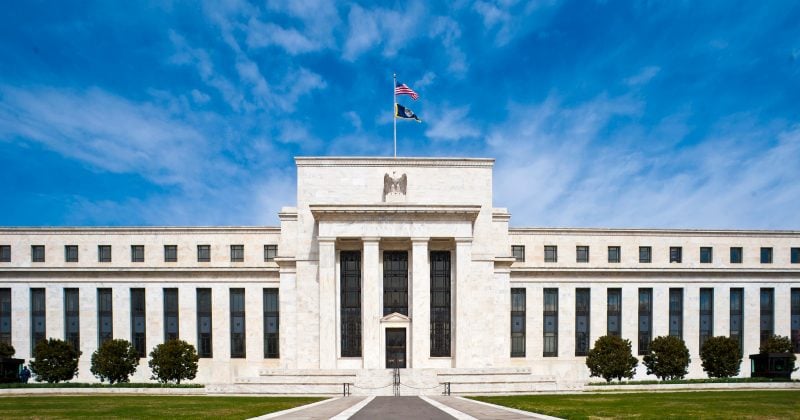
Federal Reserve conducts $30M reverse repo operation with 6 counterparties

Federal Reserve conducts $30M reverse repo operation with 6 counterparties

The Fed's overnight reverse repo facility has shrunk from multi-trillion-dollar peaks to near-zero usage, and that shift matters for every asset class including crypto.

The Federal Reserve just ran a $30 million overnight reverse repurchase agreement operation with six counterparties. To put that number in perspective, this facility once absorbed over $2 trillion in cash on a daily basis.

Overall ON RRP balances have cratered to approximately $100 million as of mid-July 2026. That’s a decline of roughly 99.99% from the peaks seen during the 2020-2023 era.

What the reverse repo facility actually does

The Fed’s overnight reverse repo facility is essentially a parking lot for cash. Money market funds, banks, and other eligible counterparties lend money to the Fed overnight and receive Treasury securities as collateral. In return, they earn the ON RRP rate.

Advertisement

The facility launched in its current form around 2013 and became a juggernaut during the pandemic era, when the Fed was flooding markets with liquidity through quantitative easing. At its peak, the ON RRP was absorbing north of $2 trillion daily.

The current $30 million operation looks more like a routine small-value test conducted by the New York Fed. These tests are standard operating procedure, designed to ensure the plumbing of the facility works correctly.

Why the drain matters for markets

The near-total drainage of the RRP facility tells us something important about liquidity conditions in the US financial system. The massive decline from $2 trillion-plus to roughly $100 million means that enormous pool of sidelined capital has been redeployed. Some of it was absorbed by Treasury issuance. The net effect is that the banking system currently holds ample reserves without needing the Fed’s overnight liquidity backstop.

What this means for crypto investors

When the RRP was at $2 trillion, it represented a massive reservoir of capital sitting on the sidelines earning a risk-free rate. The current minimal RRP usage suggests that the easy liquidity tailwind from RRP drainage is largely played out. The facility is essentially empty. There’s no more $2 trillion reservoir waiting to flood into markets.

The research identifies no direct links between the RRP facility and digital assets or crypto tokens. Traditional monetary plumbing operates in a parallel universe from DeFi and crypto markets, but the gravitational pull of macro liquidity conditions still exerts force on token prices.

Disclosure: This article was edited by Editorial Team. For more information on how we create and review content, see our Editorial Policy.

Federal Reserve conducts $30M reverse repo operation with 6 counterparties

Federal Reserve conducts $30M reverse repo operation with 6 counterparties

The Fed's overnight reverse repo facility has shrunk from multi-trillion-dollar peaks to near-zero usage, and that shift matters for every asset class including crypto.

The Federal Reserve just ran a $30 million overnight reverse repurchase agreement operation with six counterparties. To put that number in perspective, this facility once absorbed over $2 trillion in cash on a daily basis.

Overall ON RRP balances have cratered to approximately $100 million as of mid-July 2026. That’s a decline of roughly 99.99% from the peaks seen during the 2020-2023 era.

What the reverse repo facility actually does

The Fed’s overnight reverse repo facility is essentially a parking lot for cash. Money market funds, banks, and other eligible counterparties lend money to the Fed overnight and receive Treasury securities as collateral. In return, they earn the ON RRP rate.

Advertisement

The facility launched in its current form around 2013 and became a juggernaut during the pandemic era, when the Fed was flooding markets with liquidity through quantitative easing. At its peak, the ON RRP was absorbing north of $2 trillion daily.

The current $30 million operation looks more like a routine small-value test conducted by the New York Fed. These tests are standard operating procedure, designed to ensure the plumbing of the facility works correctly.

Why the drain matters for markets

The near-total drainage of the RRP facility tells us something important about liquidity conditions in the US financial system. The massive decline from $2 trillion-plus to roughly $100 million means that enormous pool of sidelined capital has been redeployed. Some of it was absorbed by Treasury issuance. The net effect is that the banking system currently holds ample reserves without needing the Fed’s overnight liquidity backstop.

What this means for crypto investors

When the RRP was at $2 trillion, it represented a massive reservoir of capital sitting on the sidelines earning a risk-free rate. The current minimal RRP usage suggests that the easy liquidity tailwind from RRP drainage is largely played out. The facility is essentially empty. There’s no more $2 trillion reservoir waiting to flood into markets.

The research identifies no direct links between the RRP facility and digital assets or crypto tokens. Traditional monetary plumbing operates in a parallel universe from DeFi and crypto markets, but the gravitational pull of macro liquidity conditions still exerts force on token prices.

Disclosure: This article was edited by Editorial Team. For more information on how we create and review content, see our Editorial Policy.