
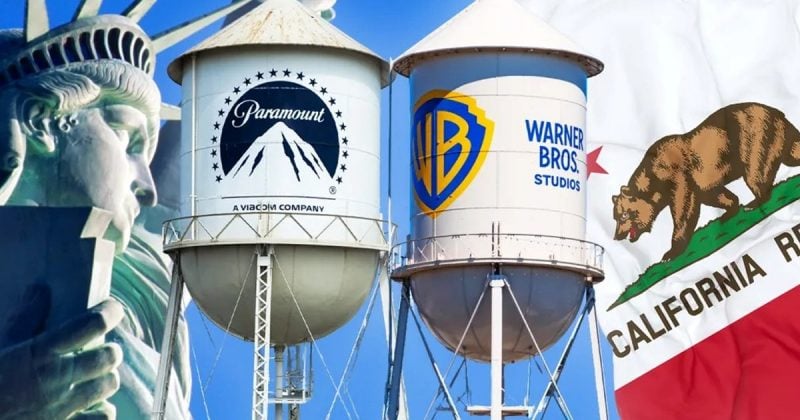
Federal judge temporarily halts Paramount and Warner Bros. Discovery merger

Federal judge temporarily halts Paramount and Warner Bros. Discovery merger

A California federal court puts the brakes on a mega-media deal worth over $110 billion, with a ruling deadline set for July 22


Paramount Skydance’s proposed $110 billion acquisition of Warner Bros. Discovery has been temporarily halted after a federal judge granted a request from 12 state attorneys general seeking to block the deal.

US District Judge Araceli Martínez Olguín issued a temporary restraining order Monday preventing Paramount from completing the acquisition for 14 days. A hearing on the states’ request for a preliminary injunction is scheduled for Aug. 3.

A preliminary injunction would prevent the transaction from closing while the broader antitrust lawsuit proceeds, potentially delaying the merger for months.

California Attorney General Rob Bonta led the coalition’s lawsuit, which was filed on July 13. The states allege that combining two of Hollywood’s five remaining major studios would substantially reduce competition and violate Section 7 of the Clayton Antitrust Act.

Advertisement

The proposed transaction would place Paramount Pictures and Warner Bros. under the same ownership while combining Paramount+ and HBO Max. It would also unite CBS and CNN within an entertainment group controlled by Paramount CEO David Ellison.

The lawsuit focuses on three markets: wide release theatrical film distribution, the distribution of movies expected to become major box office releases and the licensing of basic cable channels to television providers.

The states argue that the combined company would control about 27% of wide release theatrical film distribution, giving it greater leverage over movie theaters and cable providers. They claim the consolidation could lead to higher prices, fewer releases and reduced competition for content.

Paramount has rejected the allegations, describing the case as one of the weakest merger challenges in modern antitrust history. The company argues that the transaction would create a stronger competitor to technology and streaming companies such as Netflix.

The Justice Department closed its investigation into the deal on June 12 after concluding that the transaction was unlikely to harm competition in streaming, linear television or theatrical film production and distribution. The state attorneys general can still pursue a separate challenge despite that federal clearance.

Paramount now faces pressure to complete the acquisition before Sept. 30. Under the merger agreement, delays beyond that date could require the company to pay Warner Bros. shareholders approximately $7 million per day, equivalent to more than $600 million per quarter.

The deal also remains under review outside the US. European regulators are examining the transaction, while the UK government has raised concerns about media ownership and the impact on news and children’s programming.

The temporary order does not determine whether the merger ultimately violates antitrust law. However, it prevents Paramount from closing the largest acquisition in its history while the court considers whether the transaction should remain frozen throughout the states’ legal challenge.

Disclosure: This article was edited by Editorial Team. For more information on how we create and review content, see our Editorial Policy.

Federal judge temporarily halts Paramount and Warner Bros. Discovery merger

Federal judge temporarily halts Paramount and Warner Bros. Discovery merger

A California federal court puts the brakes on a mega-media deal worth over $110 billion, with a ruling deadline set for July 22

Share

Add us on Google

Paramount Skydance’s proposed $110 billion acquisition of Warner Bros. Discovery has been temporarily halted after a federal judge granted a request from 12 state attorneys general seeking to block the deal.

US District Judge Araceli Martínez Olguín issued a temporary restraining order Monday preventing Paramount from completing the acquisition for 14 days. A hearing on the states’ request for a preliminary injunction is scheduled for Aug. 3.

A preliminary injunction would prevent the transaction from closing while the broader antitrust lawsuit proceeds, potentially delaying the merger for months.

California Attorney General Rob Bonta led the coalition’s lawsuit, which was filed on July 13. The states allege that combining two of Hollywood’s five remaining major studios would substantially reduce competition and violate Section 7 of the Clayton Antitrust Act.

Advertisement

The proposed transaction would place Paramount Pictures and Warner Bros. under the same ownership while combining Paramount+ and HBO Max. It would also unite CBS and CNN within an entertainment group controlled by Paramount CEO David Ellison.

The lawsuit focuses on three markets: wide release theatrical film distribution, the distribution of movies expected to become major box office releases and the licensing of basic cable channels to television providers.

The states argue that the combined company would control about 27% of wide release theatrical film distribution, giving it greater leverage over movie theaters and cable providers. They claim the consolidation could lead to higher prices, fewer releases and reduced competition for content.

Paramount has rejected the allegations, describing the case as one of the weakest merger challenges in modern antitrust history. The company argues that the transaction would create a stronger competitor to technology and streaming companies such as Netflix.

The Justice Department closed its investigation into the deal on June 12 after concluding that the transaction was unlikely to harm competition in streaming, linear television or theatrical film production and distribution. The state attorneys general can still pursue a separate challenge despite that federal clearance.

Paramount now faces pressure to complete the acquisition before Sept. 30. Under the merger agreement, delays beyond that date could require the company to pay Warner Bros. shareholders approximately $7 million per day, equivalent to more than $600 million per quarter.

The deal also remains under review outside the US. European regulators are examining the transaction, while the UK government has raised concerns about media ownership and the impact on news and children’s programming.

The temporary order does not determine whether the merger ultimately violates antitrust law. However, it prevents Paramount from closing the largest acquisition in its history while the court considers whether the transaction should remain frozen throughout the states’ legal challenge.

Disclosure: This article was edited by Editorial Team. For more information on how we create and review content, see our Editorial Policy.