
France lowers foreign ownership threshold for sensitive firms to 10%, with crypto explicitly in scope

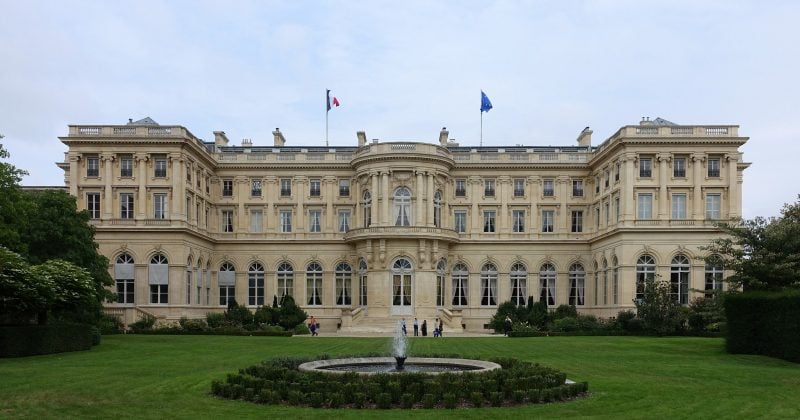
Photo: Guilhem Vellut from Paris, France / Wikimedia Commons / CC BY 2.0 (https://creativecommons.org/licenses/by/2.0)

France lowers foreign ownership threshold for sensitive firms to 10%, with crypto explicitly in scope

Non-European investors now need government approval to acquire even a 10% stake in French companies operating in cryptology, AI, semiconductors, and other critical sectors.

France just made it significantly harder for non-European investors to buy their way into the country’s most sensitive industries. A decree enacted on August 2, 2026, drops the foreign direct investment screening threshold from 25% to 10% of voting rights, meaning the French Economy Ministry now gets a say on deals that would have previously flown under the radar.

Here’s the thing that should catch crypto investors’ attention: cryptology is explicitly listed among the sensitive sectors covered by the new rules. That puts blockchain infrastructure companies, encryption firms, and potentially a range of Web3 ventures squarely in the regulatory crosshairs.

What actually changed

The mechanics are straightforward. Previously, the Economy Ministry only stepped in when a foreign company acquired 25% or more of a French business in a sensitive sector. That threshold has been slashed to 10% for non-European investors.

The 10% figure isn’t entirely new. France first introduced it as a temporary measure for listed companies during the COVID-19 pandemic, when governments across Europe were scrambling to prevent opportunistic foreign acquisitions of distressed firms. That temporary threshold was made permanent effective January 1, 2024.

Advertisement

What’s new with this August 2026 decree is the expansion. The 10% threshold now applies more broadly, including to firms listed on foreign exchanges, and the list of what counts as “sensitive” has been beefed up considerably.

The sectors requiring authorization now explicitly include cryptology, cybersecurity, artificial intelligence, semiconductors, quantum technologies, dual-use goods, and critical R&D activities.

One important distinction: these new rules primarily target non-European investors. EU and European Economic Area investors face different, generally less restrictive thresholds. This decree does not change the existing thresholds for EU/EEA investors or non-sensitive sectors.

Market implications for crypto and tech investors

A 10% threshold is remarkably low. In venture capital and growth equity, a 10% stake is a routine investment size, not a controlling position. By setting the bar this low, France is essentially requiring government approval for what many investors would consider a minority, non-controlling position.

Authorization requests for sensitive investments are handled by the Economy Ministry, with fast-tracked reviews available within 10 business days.

The US has its CFIUS reviews. The UK has its National Security and Investment Act. Germany has tightened its own FDI screening. France is following a well-established playbook, just applying it with particular vigor.

The firms most likely to feel the impact are mid-stage crypto companies in France that rely on global capital markets for growth funding. Early-stage startups raising small rounds may stay below the 10% threshold per investor. It’s the companies in between — the ones raising tens of millions from a concentrated group of international investors — that will need to factor this new screening into their capital strategies.

Disclosure: This article was edited by Editorial Team. For more information on how we create and review content, see our Editorial Policy.

France lowers foreign ownership threshold for sensitive firms to 10%, with crypto explicitly in scope

France lowers foreign ownership threshold for sensitive firms to 10%, with crypto explicitly in scope

Non-European investors now need government approval to acquire even a 10% stake in French companies operating in cryptology, AI, semiconductors, and other critical sectors.

Photo: Guilhem Vellut from Paris, France / Wikimedia Commons / CC BY 2.0 (https://creativecommons.org/licenses/by/2.0)

France just made it significantly harder for non-European investors to buy their way into the country’s most sensitive industries. A decree enacted on August 2, 2026, drops the foreign direct investment screening threshold from 25% to 10% of voting rights, meaning the French Economy Ministry now gets a say on deals that would have previously flown under the radar.

Here’s the thing that should catch crypto investors’ attention: cryptology is explicitly listed among the sensitive sectors covered by the new rules. That puts blockchain infrastructure companies, encryption firms, and potentially a range of Web3 ventures squarely in the regulatory crosshairs.

What actually changed

The mechanics are straightforward. Previously, the Economy Ministry only stepped in when a foreign company acquired 25% or more of a French business in a sensitive sector. That threshold has been slashed to 10% for non-European investors.

The 10% figure isn’t entirely new. France first introduced it as a temporary measure for listed companies during the COVID-19 pandemic, when governments across Europe were scrambling to prevent opportunistic foreign acquisitions of distressed firms. That temporary threshold was made permanent effective January 1, 2024.

Advertisement

What’s new with this August 2026 decree is the expansion. The 10% threshold now applies more broadly, including to firms listed on foreign exchanges, and the list of what counts as “sensitive” has been beefed up considerably.

The sectors requiring authorization now explicitly include cryptology, cybersecurity, artificial intelligence, semiconductors, quantum technologies, dual-use goods, and critical R&D activities.

One important distinction: these new rules primarily target non-European investors. EU and European Economic Area investors face different, generally less restrictive thresholds. This decree does not change the existing thresholds for EU/EEA investors or non-sensitive sectors.

Market implications for crypto and tech investors

A 10% threshold is remarkably low. In venture capital and growth equity, a 10% stake is a routine investment size, not a controlling position. By setting the bar this low, France is essentially requiring government approval for what many investors would consider a minority, non-controlling position.

Authorization requests for sensitive investments are handled by the Economy Ministry, with fast-tracked reviews available within 10 business days.

The US has its CFIUS reviews. The UK has its National Security and Investment Act. Germany has tightened its own FDI screening. France is following a well-established playbook, just applying it with particular vigor.

The firms most likely to feel the impact are mid-stage crypto companies in France that rely on global capital markets for growth funding. Early-stage startups raising small rounds may stay below the 10% threshold per investor. It’s the companies in between — the ones raising tens of millions from a concentrated group of international investors — that will need to factor this new screening into their capital strategies.

Disclosure: This article was edited by Editorial Team. For more information on how we create and review content, see our Editorial Policy.