
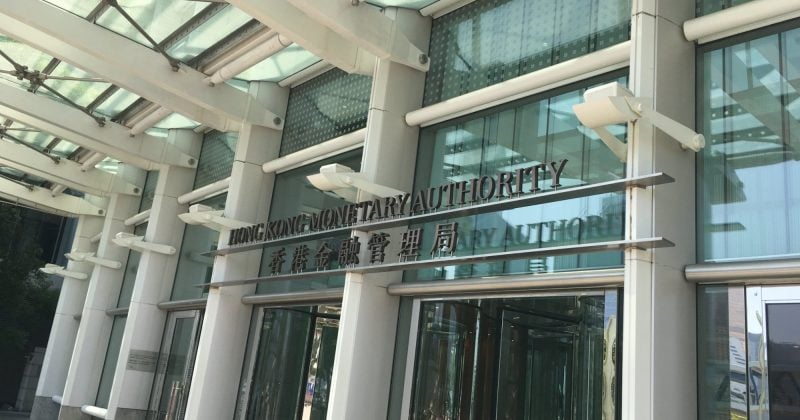
Via tripadvisor.com
HKMA prepares banks for quantum threats by 2030 amid tokenization push
Hong Kong's banking regulator scores its quantum readiness at 2.3 out of 10, giving itself four years to reach full preparedness as tokenized finance expands
Hong Kong’s banking regulator just gave itself a report card on quantum security. The grade: 2.3 out of 10. The deadline to fix it: 2030.
The Hong Kong Monetary Authority published its first Quantum Preparedness whitepaper on July 27, laying out a roadmap to make the city’s banking infrastructure resilient against the computational threats that quantum computing will eventually pose. The document introduces a Quantum Preparedness Index, or QPI, that benchmarks where Hong Kong’s financial sector stands today, and where it needs to be before quantum machines can crack the cryptographic locks protecting trillions in assets.
A 2.3 that needs to become a 10
The HKMA’s target is to push that score to a perfect 10 by 2030, which gives Hong Kong’s banks roughly four years to overhaul their cryptographic infrastructure. That means migrating from the encryption standards that have protected online banking for decades to post-quantum cryptography, or PQC.
This isn’t happening in a vacuum. The quantum preparedness effort sits under the “Resilience” pillar of the HKMA’s DART framework, which was introduced in November 2025 as part of the broader Fintech 2030 strategy. That strategy encompasses over 40 initiatives aimed at strengthening data infrastructure, payment systems, and cyber resilience across the banking sector.
To support the transition, the HKMA is collaborating with the Hong Kong University of Science and Technology to develop a PQC toolkit and run training workshops for banks.
The news moving money, markets, and the world—before your day starts.
Daily. Free. Join 34,000+ readers across crypto, finance, and policy.
Why tokenization makes this urgent
The HKMA has been building out its tokenization ambitions through Project Ensemble, a sandbox initiative that advanced to its live pilot phase, called Ensemble TX, in November 2025. The program facilitates tokenized deposits and real-value settlements, with participation from institutions including HSBC and BlackRock.
Beyond the pilot, the HKMA plans to regularize the issuance of tokenized government bonds and is exploring the tokenization of Exchange Fund papers, which are essentially Hong Kong’s equivalent of treasury bills. This represents a material expansion of blockchain-based financial infrastructure at the sovereign level.
Tokenized bonds, deposits, and real-world assets all rely on cryptographic signatures and keys to verify ownership and authorize transfers. If quantum computers can break those signatures, the entire premise of tokenized finance collapses.
The competitive landscape and market implications
The low baseline QPI score creates a near-term business opportunity. Technology vendors and consultancy firms specializing in post-quantum cryptography have an immediate opening to engage with Hong Kong’s banking sector during the early stages of this transition.
For global asset managers already exploring real-world asset tokenization, the HKMA’s framework offers something concrete: a regulatory body that is actively building infrastructure resilience into its tokenization strategy from the outset. That kind of institutional confidence-building matters when firms like BlackRock are evaluating where to scale their tokenized asset operations.