
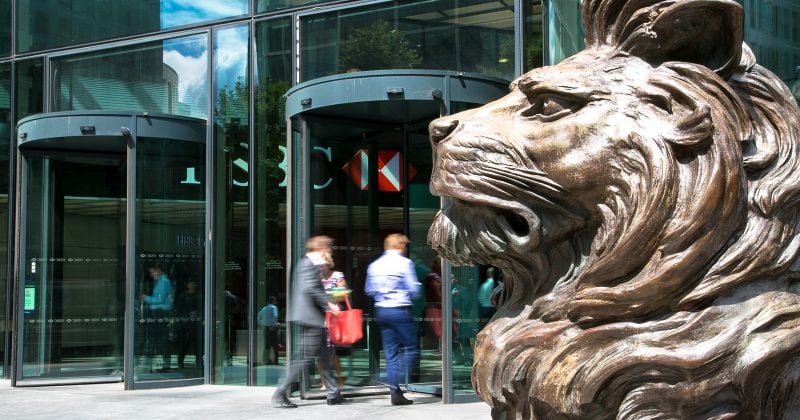
Via hsbc.com
HSBC beats earnings estimates, announces $1B buyback and raises cost-cutting target to $2B
The banking giant's strong Q2 results come as it quietly builds out digital asset infrastructure including a planned stablecoin launch
HSBC just posted a quarter that made analysts look conservative. The London-headquartered banking giant reported pretax profit of $10.1 billion for Q2 2026, sailing past the $9.5 billion that Wall Street had penciled in.
Alongside the earnings, HSBC announced a fresh $1 billion share buyback program and raised its cost-cutting target from $1.5 billion to $2 billion.
The numbers behind the beat
The $10.1 billion pretax profit included $2.6 billion in notable items, alongside what the bank described as strong growth in both banking and wealth revenue. Those two business lines have been focal points for CEO Georges Elhedery, who has been reshaping HSBC into Eastern and Western market divisions since taking the helm in late 2024.
HSBC had paused share repurchase activity during its recent acquisition of Hang Seng Bank, so the $1 billion program represents a resumption rather than a continuation.
Raising the cost-cutting target by a third, from $1.5 billion to $2 billion, signals that Elhedery’s restructuring is finding more savings than originally anticipated.
HSBC’s significant exposure to Hong Kong real estate and the broader Chinese economy remain sources of uncertainty, making the decision to return $1 billion to shareholders a meaningful statement about capital confidence.
The digital asset angle investors should watch
The earnings release itself didn’t mention crypto, blockchain, or digital assets. Not a single reference. But the bank has been developing a digital asset framework that includes plans to launch a Hong Kong dollar-denominated stablecoin later in 2026. It’s also reportedly working to expand its Tokenized Deposit Service into the United States.
The news moving money, markets, and the world—before your day starts.
Daily. Free. Join 34,000+ readers across crypto, finance, and policy.
Most stablecoin issuers today are crypto-native companies like Circle and Tether. A stablecoin from HSBC would represent one of the most significant entries by a traditional banking institution into the digital currency space.
Tokenized deposits allow banks to represent customer funds on blockchain infrastructure, potentially enabling faster settlement, programmable money, and 24/7 transaction capability.
What this means for investors
The immediate market read on HSBC’s results is straightforward: the bank is generating more profit than expected, returning capital to shareholders, and finding deeper cost savings than planned.
The buyback resumption after the Hang Seng Bank acquisition pause suggests HSBC’s capital position is strong enough to absorb a major deal and still have room for shareholder returns.
The elevated cost-cutting target of $2 billion does raise a question worth monitoring. Aggressive cost reduction programs can sometimes signal that revenue growth alone isn’t sufficient to hit profitability targets. Investors will want to see whether the savings come primarily from operational streamlining or whether they involve cuts to revenue-generating capabilities.
The planned Hong Kong dollar stablecoin launch later in 2026 could be particularly significant for the Asian crypto market. Hong Kong has been positioning itself as a regulated crypto hub, and a stablecoin backed by HSBC’s balance sheet would give the territory a credible institutional-grade digital currency option.
Elhedery’s East-West divisional structure positions HSBC to operate at scale across the US, Europe, and Asia as those regions develop different frameworks for stablecoins and tokenized assets.