
Explosions near Iran’s Arak nuclear site rattle regional tensions as crypto markets hold steady

Explosions near Iran’s Arak nuclear site rattle regional tensions as crypto markets hold steady

Reports of blasts in Delijan and Arak draw international scrutiny while Bitcoin and Ether show muted reactions to escalating Middle East conflict

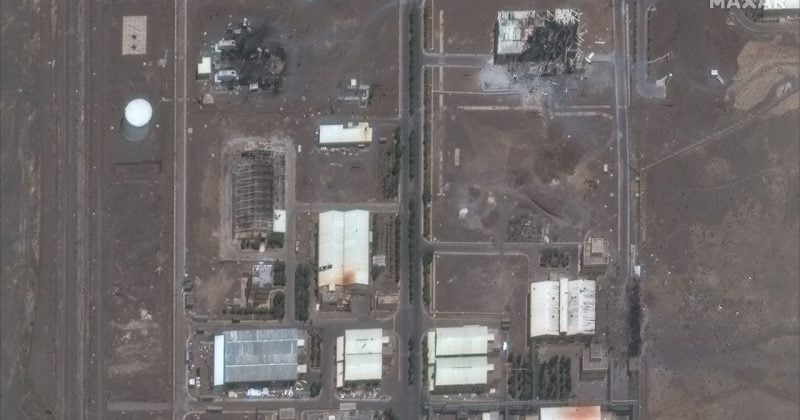
Explosions were reported in the Iranian cities of Delijan and Arak, according to Iranian media, with Saudi state television amplifying the coverage. The Arak region is home to one of Iran’s most closely watched nuclear facilities, a heavy-water reactor that has sat at the center of international nonproliferation debates for years.

What happened and why Arak keeps coming up

The UN’s nuclear watchdog previously confirmed the facility was no longer operational. Smoke and blast reports near Arak were also documented in March 2026, making the latest reports part of a pattern rather than an isolated incident. Additional explosions were recorded in Arak and Isfahan in late March 2026, and separate blasts in southern Iranian locations including Bushehr and Bandar Abbas occurred in July 2026.

Delijan, located in Markazi Province roughly between Tehran and Isfahan, is less internationally prominent than Arak but sits in a strategically sensitive corridor. Its inclusion in the latest reports broadens the geographic scope of what is being hit, or reported to be hit, inside Iranian territory.

Advertisement

The sourcing here is worth noting. Saudi state television reporting on explosions inside Iran is not a neutral act. Riyadh and Tehran have spent decades as regional rivals, and the choice to broadcast these reports carries its own geopolitical signal alongside the factual content.

Crypto markets: calm on the surface, stress underneath

Bitcoin traded within a range of $63,800 to $67,000 during the period covering the earlier March 2026 airstrikes, showing limited volatility despite the headlines. Ether held close to $1,800 during the same window.

That calm does not extend to Iran itself. Iranian crypto exchanges recorded outflows of approximately $10.3 million in early March 2026, with hourly spikes reaching around $2 million at peak moments. Iranian citizens have been using crypto as a financial escape valve for years, a consequence of the country being effectively locked out of the global banking system through successive rounds of sanctions.

Global institutional investors are watching and waiting. Iranians with savings in digital assets are moving.

What investors should watch from here

Bushehr, one of the sites reporting explosions in July 2026, hosts Iran’s only operational nuclear power plant. The Iranian exchange outflow data is worth tracking as a leading indicator. When domestic participants in a conflict zone start moving assets at $2 million per hour in spikes, they are often pricing in an escalation that global markets have not yet fully discounted.

Defensive positioning in crypto during geopolitical stress historically gravitates toward Bitcoin over altcoins. Ether’s stability near $1,800 suggests that dynamic has not fully activated yet.

Disclosure: This article was edited by Editorial Team. For more information on how we create and review content, see our Editorial Policy.

Explosions near Iran’s Arak nuclear site rattle regional tensions as crypto markets hold steady

Explosions near Iran’s Arak nuclear site rattle regional tensions as crypto markets hold steady

Reports of blasts in Delijan and Arak draw international scrutiny while Bitcoin and Ether show muted reactions to escalating Middle East conflict

Explosions were reported in the Iranian cities of Delijan and Arak, according to Iranian media, with Saudi state television amplifying the coverage. The Arak region is home to one of Iran’s most closely watched nuclear facilities, a heavy-water reactor that has sat at the center of international nonproliferation debates for years.

What happened and why Arak keeps coming up

The UN’s nuclear watchdog previously confirmed the facility was no longer operational. Smoke and blast reports near Arak were also documented in March 2026, making the latest reports part of a pattern rather than an isolated incident. Additional explosions were recorded in Arak and Isfahan in late March 2026, and separate blasts in southern Iranian locations including Bushehr and Bandar Abbas occurred in July 2026.

Delijan, located in Markazi Province roughly between Tehran and Isfahan, is less internationally prominent than Arak but sits in a strategically sensitive corridor. Its inclusion in the latest reports broadens the geographic scope of what is being hit, or reported to be hit, inside Iranian territory.

Advertisement

The sourcing here is worth noting. Saudi state television reporting on explosions inside Iran is not a neutral act. Riyadh and Tehran have spent decades as regional rivals, and the choice to broadcast these reports carries its own geopolitical signal alongside the factual content.

Crypto markets: calm on the surface, stress underneath

Bitcoin traded within a range of $63,800 to $67,000 during the period covering the earlier March 2026 airstrikes, showing limited volatility despite the headlines. Ether held close to $1,800 during the same window.

That calm does not extend to Iran itself. Iranian crypto exchanges recorded outflows of approximately $10.3 million in early March 2026, with hourly spikes reaching around $2 million at peak moments. Iranian citizens have been using crypto as a financial escape valve for years, a consequence of the country being effectively locked out of the global banking system through successive rounds of sanctions.

Global institutional investors are watching and waiting. Iranians with savings in digital assets are moving.

What investors should watch from here

Bushehr, one of the sites reporting explosions in July 2026, hosts Iran’s only operational nuclear power plant. The Iranian exchange outflow data is worth tracking as a leading indicator. When domestic participants in a conflict zone start moving assets at $2 million per hour in spikes, they are often pricing in an escalation that global markets have not yet fully discounted.

Defensive positioning in crypto during geopolitical stress historically gravitates toward Bitcoin over altcoins. Ether’s stability near $1,800 suggests that dynamic has not fully activated yet.

Disclosure: This article was edited by Editorial Team. For more information on how we create and review content, see our Editorial Policy.