
Israeli PM’s office says US-Iran military pressure opens door for Abraham Accords expansion

Israeli PM’s office says US-Iran military pressure opens door for Abraham Accords expansion

Israeli officials frame military coordination with Washington as a geopolitical opening to bring more Arab nations into normalization agreements

The Israeli Prime Minister’s office is reading the current US-Israeli military posture toward Iran less as an end in itself and more as a diplomatic lever. According to statements from Netanyahu’s office, coordinated pressure on Tehran creates the conditions for expanding the Abraham Accords, the normalization framework that reshaped Middle Eastern geopolitics starting in 2020.

What the Abraham Accords actually are, and where they stand

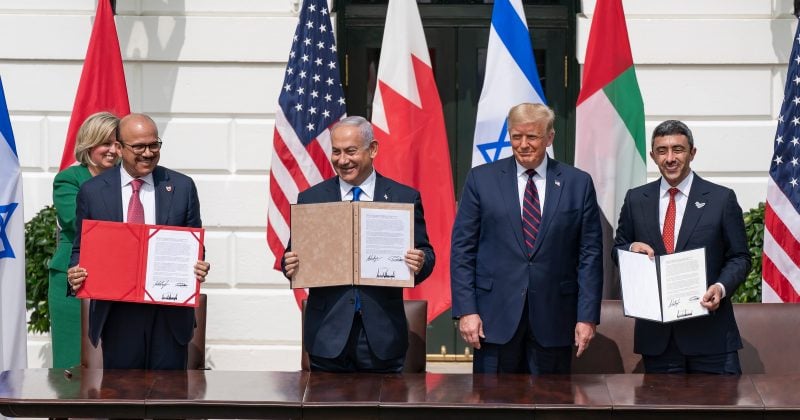
The Abraham Accords launched in September 2020 with the UAE and Bahrain, then expanded to include Morocco and Sudan shortly after the original signings, and by late 2025 the agreement had expanded further to include Kazakhstan and Somaliland.

Mid-2025 reporting indicated the Trump administration was making overtures to bring Syria, Lebanon, and most significantly Saudi Arabia into the Accords framework.

Advertisement

Iran as the variable that ties everything together

Netanyahu’s office, in statements dated June 11, 2026, expressed appreciation for US commitments on Iran, specifically the removal of enriched nuclear material and measures to constrain Iranian missile capabilities. From Jerusalem’s perspective, each step that degrades Iran’s nuclear and conventional threat posture makes it easier for Gulf states to justify public normalization.

Israeli officials have outlined a decade-long strategy aimed at reducing direct reliance on American military aid, focusing instead on joint programs and co-development initiatives. The current ten-year military assistance agreement between the two countries runs until 2028.

What investors and market watchers should actually track

The UAE-Israel relationship that emerged from the 2020 accords has already generated billions in bilateral trade, direct flights, and joint venture activity across sectors from technology to agriculture.

Saudi normalization, if it happens, would be the largest single addition to that network. Saudi Arabia’s sovereign wealth fund, its energy infrastructure, and its Vision 2030 investment program represent a pool of capital and commercial activity that dwarfs every other potential Accords partner.

Investors with exposure to Israeli equities, Gulf sovereign funds, or regional infrastructure plays should treat the Accords expansion narrative as a genuine medium-term catalyst, while keeping one eye on whether the Iranian pressure campaign stays contained or tips into something messier.

Disclosure: This article was edited by Editorial Team. For more information on how we create and review content, see our Editorial Policy.

Israeli PM’s office says US-Iran military pressure opens door for Abraham Accords expansion

Israeli PM’s office says US-Iran military pressure opens door for Abraham Accords expansion

Israeli officials frame military coordination with Washington as a geopolitical opening to bring more Arab nations into normalization agreements

The Israeli Prime Minister’s office is reading the current US-Israeli military posture toward Iran less as an end in itself and more as a diplomatic lever. According to statements from Netanyahu’s office, coordinated pressure on Tehran creates the conditions for expanding the Abraham Accords, the normalization framework that reshaped Middle Eastern geopolitics starting in 2020.

What the Abraham Accords actually are, and where they stand

The Abraham Accords launched in September 2020 with the UAE and Bahrain, then expanded to include Morocco and Sudan shortly after the original signings, and by late 2025 the agreement had expanded further to include Kazakhstan and Somaliland.

Mid-2025 reporting indicated the Trump administration was making overtures to bring Syria, Lebanon, and most significantly Saudi Arabia into the Accords framework.

Advertisement

Iran as the variable that ties everything together

Netanyahu’s office, in statements dated June 11, 2026, expressed appreciation for US commitments on Iran, specifically the removal of enriched nuclear material and measures to constrain Iranian missile capabilities. From Jerusalem’s perspective, each step that degrades Iran’s nuclear and conventional threat posture makes it easier for Gulf states to justify public normalization.

Israeli officials have outlined a decade-long strategy aimed at reducing direct reliance on American military aid, focusing instead on joint programs and co-development initiatives. The current ten-year military assistance agreement between the two countries runs until 2028.

What investors and market watchers should actually track

The UAE-Israel relationship that emerged from the 2020 accords has already generated billions in bilateral trade, direct flights, and joint venture activity across sectors from technology to agriculture.

Saudi normalization, if it happens, would be the largest single addition to that network. Saudi Arabia’s sovereign wealth fund, its energy infrastructure, and its Vision 2030 investment program represent a pool of capital and commercial activity that dwarfs every other potential Accords partner.

Investors with exposure to Israeli equities, Gulf sovereign funds, or regional infrastructure plays should treat the Accords expansion narrative as a genuine medium-term catalyst, while keeping one eye on whether the Iranian pressure campaign stays contained or tips into something messier.

Disclosure: This article was edited by Editorial Team. For more information on how we create and review content, see our Editorial Policy.