
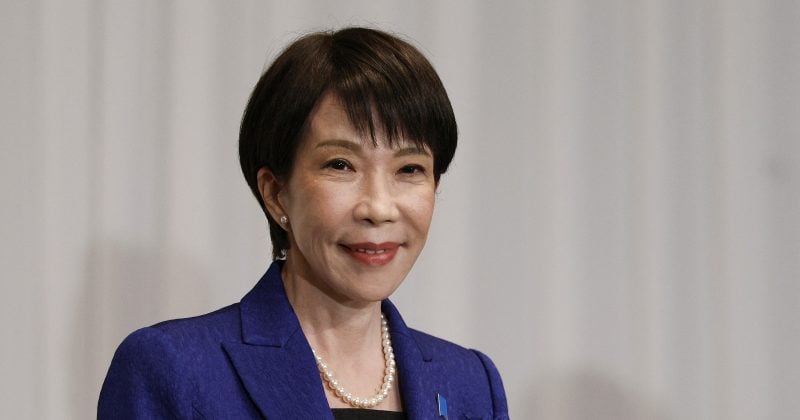
Photo: FRANCK ROBICHON / time.com
Japan’s PM Takaichi faces sliding approval ratings, and crypto markets should pay attention
A potential pivot to looser fiscal spending could ripple through the yen, Japanese equities, and risk assets like Bitcoin
Japan’s first female Prime Minister is hitting a rough patch. Sanae Takaichi, who rode a wave of pro-growth enthusiasm into office in October 2025, has watched her cabinet’s approval rating sink below 50% for the first time since her inauguration. Market strategists are now flagging what comes next: a likely pivot toward even looser spending policies that could send shockwaves through currency markets and risk assets.
From supermajority to sub-50
After taking office in October 2025, Takaichi called a snap election on February 8, 2026, and delivered the Liberal Democratic Party a historic supermajority. Her approval ratings climbed into the upper 60s, hitting 68% in June 2026 according to a Nikkei/TV Tokyo poll.
A Jiji Press poll dated July 16, 2026 showed her cabinet’s approval at 49%, the first time it dipped below the critical 50% threshold. The decline was especially pronounced among older voters, who grew increasingly uneasy about persistent inflation pressures and what they viewed as divisive legislative proposals.
The fiscal pivot and what it means for markets
For the yen, looser fiscal policy is potentially bad news. A softer yen has cascading effects across global markets. Japanese equities could benefit in the short term, since a weaker yen tends to boost export-heavy companies that dominate the Nikkei. Following her February 2026 election victory, the Nikkei surged past 56,000.
The crypto connection is real, if complicated
When Takaichi won her election victory in February 2026, Bitcoin briefly touched $72,000. A weaker yen also tends to drive Japanese retail investors toward dollar-denominated assets, including crypto, as a hedge against domestic currency depreciation.
The news moving money, markets, and the world—before your day starts.
Daily. Free. Join 34,000+ readers across crypto, finance, and policy.
In March 2026, a Solana-based meme coin named after the Prime Minister briefly hit a market cap of roughly $30 million before crashing spectacularly. Takaichi publicly disavowed the token, making clear she had no connection to it.
What investors should actually watch
For crypto investors specifically, yen dynamics deserve attention. The Japanese yen carry trade, where investors borrow in low-yielding yen to invest in higher-yielding assets, has historically been a stealth driver of crypto liquidity. If Takaichi’s spending pivot triggers a disorderly yen decline, the Bank of Japan might be forced to intervene or tighten monetary policy faster than expected, which has historically been brutal for crypto.
Takaichi still holds a supermajority, which means she has the legislative firepower to execute whatever fiscal pivot she chooses. A 49% approval rating is the kind of number that makes politicians do expensive things.