
Via independent.co.uk
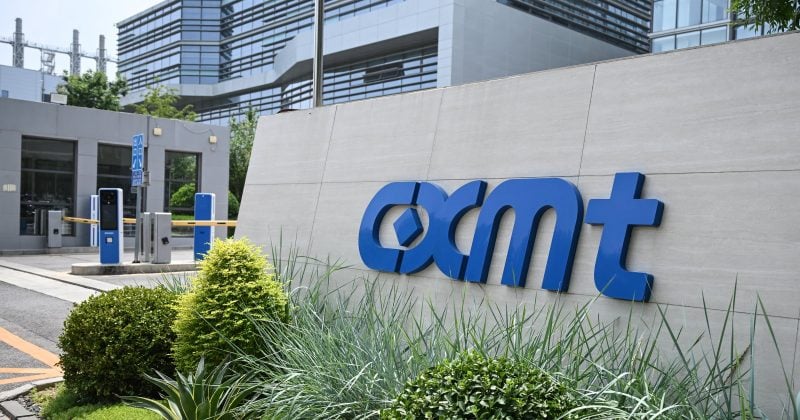
Micron and memory stocks slide as China’s CXMT surges 466% in debut
The Chinese chipmaker’s blockbuster listing and reports of domestic lithography progress renewed concerns about growing competition in the global memory market.


Shares of major memory chipmakers fell Monday after China’s ChangXin Memory Technologies surged 466% in its Shanghai market debut, raising concerns about intensifying competition from the country’s semiconductor industry.
Micron shares fell about 5% by midday, while Sandisk dropped 11.4% and US listed receipts of SK Hynix declined 8.5%. ASML shares lost more than 7%, according to MarketWatch.
CXMT reached a market capitalization of roughly $484 billion following its initial public offering, according to LSEG data.
The Hefei based company is the world’s fourth largest producer of dynamic random access memory chips, behind SK Hynix, Samsung Electronics, and Micron.
CXMT currently lacks access to ASML’s extreme ultraviolet lithography systems, limiting its ability to manufacture the advanced high bandwidth memory chips used in artificial intelligence infrastructure.
However, a report from The Information that China has begun producing domestic deep ultraviolet lithography equipment added to concerns that Chinese chip manufacturers could become more competitive.
AI, tech, and the markets they move—in one daily briefing.
Daily. Free. Join 34,000+ readers across crypto, finance, and policy.
CXMT has also benefited from a shortage of conventional memory chips as established producers redirect manufacturing capacity toward more profitable high bandwidth memory products for AI data centers.
The shift has reduced the supply of commodity memory used in consumer electronics, creating an opening for CXMT to expand its position in the market.
The selloff came despite a series of major agreements highlighting continued demand for advanced memory.
Nvidia and South Korea’s SK Group signed letters of intent for an initiative valued at more than $500 billion that includes developing future generations of AI memory chips with SK Hynix.
Broadcom also announced an agreement with Samsung covering advanced memory, foundry services, and packaging for AI and networking chips. The partnership is expected to be worth more than $200 billion through 2030.