
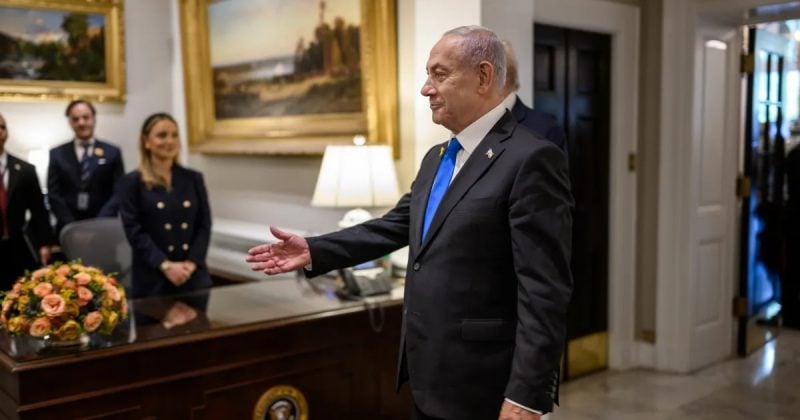
Netanyahu visits Dimona reactor amid Iran missile strikes, signals deterrence stance

https://www.whitehouse.gov/gallery/president-donald-trump-and-israeli-prime-minister-benjamin-netanyahu-hold-a-joint-press-conference-announcing-the-u-s-peace-plan-for-gaza/

Netanyahu visits Dimona reactor amid Iran missile strikes, signals deterrence stance

Israel x Hezbollah diplomatic meeting

In an unusual move, Israeli Prime Minister Benjamin Netanyahu publicly visited the Dimona nuclear reactor, officially known as the Shimon Peres Negev Nuclear Research Center. Netanyahu’s visit follows recent Iranian ballistic missile strikes on nearby cities, marking a significant escalation in the ongoing conflict between Israel and Iran. The Prime Minister’s visit to the reactor underscores Israel’s deterrence posture amid its policy of nuclear ambiguity. While the International Atomic Energy Agency confirmed the reactor remains undamaged, the visit suggests a strong message likely aimed at regional adversaries. This development appears to be influencing market perceptions regarding diplomatic engagement between Israel and Hezbollah.

Advertisement

Key Takeaways

  • Netanyahu’s public visit to the Dimona reactor appears to indicate a reinforced deterrence posture by Israel.
  • Market pricing suggests a decreased likelihood of a diplomatic meeting between Israel and Hezbollah by July 31, 2026.
  • Recent tensions in the region, including missile strikes and military posturing, are consistent with a hardening stance, reducing prospects for immediate diplomacy.

What to Watch

Observers should monitor any further escalations in the Israel-Iran conflict, as this could continue to impact diplomatic scenarios involving Hezbollah. Statements from key regional figures, such as Hezbollah’s Nasrallah or US Secretary of State Marco Rubio, could shift market perceptions. Additionally, any new developments regarding ceasefire agreements or direct talks could indicate changes in the likelihood of diplomatic meetings. Markets will likely respond to these developments, reflecting shifts in perceived probabilities of diplomatic engagement.

Get live prediction-market analysis, powered by Vera. Sign up for Vera.

Disclosure: This article was edited by Estefano Gomez. For more information on how we create and review content, see our Editorial Policy.

Netanyahu visits Dimona reactor amid Iran missile strikes, signals deterrence stance

Netanyahu visits Dimona reactor amid Iran missile strikes, signals deterrence stance

Israel x Hezbollah diplomatic meeting

https://www.whitehouse.gov/gallery/president-donald-trump-and-israeli-prime-minister-benjamin-netanyahu-hold-a-joint-press-conference-announcing-the-u-s-peace-plan-for-gaza/

In an unusual move, Israeli Prime Minister Benjamin Netanyahu publicly visited the Dimona nuclear reactor, officially known as the Shimon Peres Negev Nuclear Research Center. Netanyahu’s visit follows recent Iranian ballistic missile strikes on nearby cities, marking a significant escalation in the ongoing conflict between Israel and Iran. The Prime Minister’s visit to the reactor underscores Israel’s deterrence posture amid its policy of nuclear ambiguity. While the International Atomic Energy Agency confirmed the reactor remains undamaged, the visit suggests a strong message likely aimed at regional adversaries. This development appears to be influencing market perceptions regarding diplomatic engagement between Israel and Hezbollah.

Advertisement

Key Takeaways

  • Netanyahu’s public visit to the Dimona reactor appears to indicate a reinforced deterrence posture by Israel.
  • Market pricing suggests a decreased likelihood of a diplomatic meeting between Israel and Hezbollah by July 31, 2026.
  • Recent tensions in the region, including missile strikes and military posturing, are consistent with a hardening stance, reducing prospects for immediate diplomacy.

What to Watch

Observers should monitor any further escalations in the Israel-Iran conflict, as this could continue to impact diplomatic scenarios involving Hezbollah. Statements from key regional figures, such as Hezbollah’s Nasrallah or US Secretary of State Marco Rubio, could shift market perceptions. Additionally, any new developments regarding ceasefire agreements or direct talks could indicate changes in the likelihood of diplomatic meetings. Markets will likely respond to these developments, reflecting shifts in perceived probabilities of diplomatic engagement.

Get live prediction-market analysis, powered by Vera. Sign up for Vera.

Disclosure: This article was edited by Estefano Gomez. For more information on how we create and review content, see our Editorial Policy.