
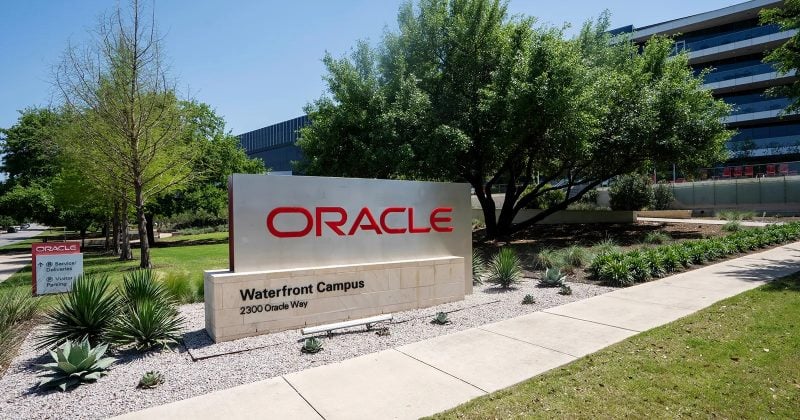
Oracle hits 52-week low as S&P cuts credit rating to one notch above junk
S&P's downgrade of Oracle to BBB- puts the tech giant's aggressive AI spending strategy under a harsh spotlight, with shares down roughly 65% from their peak.
Oracle has had better weeks. On July 9, S&P Global Ratings cut Oracle’s long-term issuer credit rating to BBB-, placing the enterprise software giant exactly one notch above junk territory. The stock responded accordingly, falling to a 52-week low of around $120.39, a number that looks especially painful when you remember Oracle was trading at $345.72 not so long ago.
That’s a drawdown of roughly 65% from peak.
What actually triggered the downgrade
S&P flagged escalating business risks tied to Oracle’s push into data centers and AI compute capacity, with projected expenditures running into the hundreds of billions. Capital-intensive bets of that scale tend to compress cash flow, and compressed cash flow is exactly the kind of thing that moves credit ratings in the wrong direction.
There’s a concentration risk angle here too. OpenAI is believed to account for roughly half of Oracle’s relevant cloud revenue. If that relationship shifts, Oracle’s revenue picture shifts with it.
AI, tech, and the markets they move—in one daily briefing.
Daily. Free. Join 34,000+ readers across crypto, finance, and policy.
BBB- is the last rung of investment-grade territory on S&P’s scale. One more downgrade and Oracle crosses into high-yield, or what the market bluntly calls junk. That matters because a lot of institutional investors, pension funds especially, have mandates that restrict them from holding sub-investment-grade debt. A further cut would force selling across Oracle’s bond holders, adding financial pressure at exactly the wrong time.
The broader AI-capex panic
Analysts at Sevens Report have flagged this downgrade as a potential warning signal for broader equity market trends, particularly for tech companies that have committed to massive AI-related capital expenditure programs.
Shares were trading between $124 and $126 in the days following the downgrade. The stock is now deep below the psychologically significant $200 level that many analysts had treated as medium-term support. With a credit rating that could deteriorate further and an AI spending program that isn’t slowing down, the near-term path for Oracle depends heavily on whether OpenAI and its other cloud customers convert pipeline into durable, growing contracts.