
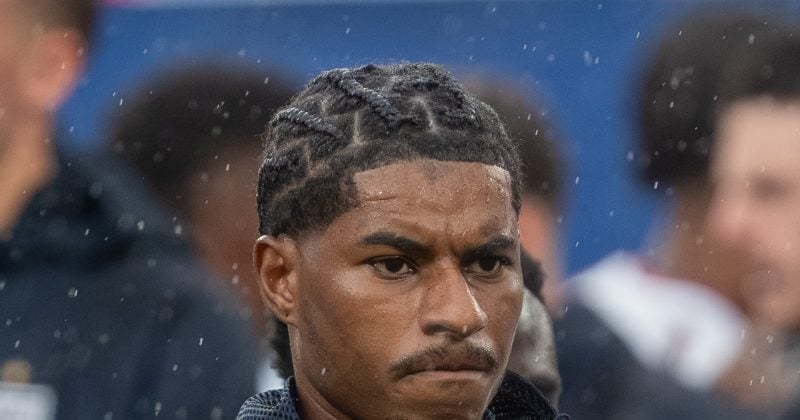
Photo: Bryan Berlin / Wikimedia Commons / CC BY-SA 4.0 (https://creativecommons.org/licenses/by-sa/4.0)
Marcus Rashford’s Manchester United return odds jump to 80%, and there’s a crypto-adjacent lesson here
A £325,000-per-week contract nobody wants to buy out is the ultimate illiquid asset, and it tells us something about how markets handle stranded value.
A month ago, Marcus Rashford’s chances of ever pulling on a Manchester United shirt again sat somewhere between 5% and 10%. Now, according to journalist Andy Mitten, that number has surged to 80%. In market terms, that’s the kind of repricing event that would trigger circuit breakers.
The story is straightforward on the surface. Rashford went on loan to Barcelona, did reasonably well, and then Barcelona simply didn’t exercise the €30 million buy option that expired on June 15, 2026. So now a player earning £325,000 per week is back at a club that wasn’t sure it wanted him. Manager Michael Carrick is reportedly open to bringing him back into the fold during pre-season.
The stranded asset problem
Here’s the thing. Rashford’s situation is a case study in what happens when an asset has enormous carrying costs and no willing buyer at the asking price. His contract runs until 2028, meaning Manchester United is on the hook for roughly £33.8 million in wages over the remaining two years, assuming no renegotiation. That’s before bonuses.
Barcelona had the chance to take that liability off United’s books for €30 million. They passed. And now United faces a choice: find a new buyer at a discount, eat the cost internally and try to extract value, or negotiate a termination that costs money upfront to save money later.
The club appears to be choosing option two. Mitten, writing for The National on July 26, reported that Rashford staying is “increasingly likely.” This is a complete reversal from his assessment on June 29, when the consensus was that Rashford was “not expected to play for the club again.”
A 5-10% probability becoming 80% in under a month. If Rashford were a prediction market contract, the people who bought the dip would be feeling pretty good right now.
The news moving money, markets, and the world—before your day starts.
Daily. Free. Join 34,000+ readers across crypto, finance, and policy.
Why markets mispriced the Rashford situation
The initial low probability made sense based on sentiment. Rashford had been frozen out before the loan. The relationship appeared broken. But sentiment ignored the structural reality: nobody else could afford to take on a £325,000-per-week wage bill for a player entering his late twenties with inconsistent form.
Barcelona’s decision to let the buy option expire was the catalyst that forced the repricing. Once the most obvious exit route closed, the probability of the default outcome, Rashford returning to United, had to increase mechanically.
Carrick’s willingness to work with Rashford adds a layer of pragmatism. United have made new signings, with Andrey Santos and Youri Tielemans reportedly joining the squad. But a manager inheriting a player of Rashford’s ability on those wages has every incentive to at least try to make it work.
What this tells us about illiquid positions
The broader lesson here applies well beyond football. When you hold a position that’s expensive to maintain and difficult to sell, the market has enormous leverage over you. United couldn’t force Barcelona to exercise that €30 million option. They can’t force any other club to match Rashford’s wages. The contract itself, once an expression of confidence in a homegrown star, became a constraint on everyone involved.
For United, making Rashford productive means putting him on the pitch and hoping his Barcelona loan, where he reportedly performed well enough to make the buy option a genuine conversation, reignited something. The pre-season will be telling.
Investors watching traditional sports finance and crypto markets alike should note how quickly consensus can flip when structural realities assert themselves over narrative. A month ago, the smart money said Rashford was finished at Old Trafford. Now, 80% odds say he’s staying. The underlying facts, his contract, his wages, the lack of buyers, didn’t change. The market’s willingness to acknowledge those facts did.