
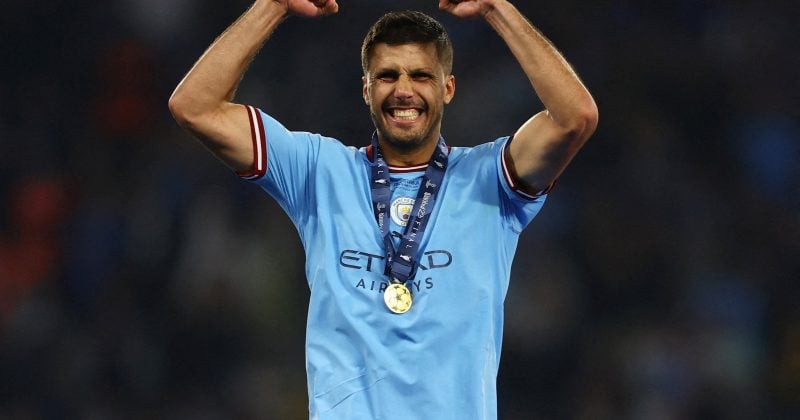
Real Madrid’s potential Rodri transfer highlights how sports mega-deals are reshaping club finance strategies
The estimated €50 million move for Manchester City's Ballon d'Or winner signals broader trends in how elite football clubs manage liquidity, squad valuations, and financial fair play in an era of crypto-adjacent sports finance.
Real Madrid is reportedly open to signing Manchester City’s Rodri after president Florentino Pérez reversed his earlier stance. The deal, estimated at around €50 million, hasn’t reached the negotiation table with Manchester City yet. But Rodri has reportedly agreed in principle to join.
What changed and why it matters financially
Pérez was reportedly uninterested in pursuing Rodri as recently as early 2026. The 2024 Ballon d’Or winner was apparently not on the shopping list despite being widely considered the best defensive midfielder on the planet.
Then Spain won the 2026 FIFA World Cup. Presidential candidate Enrique Riquelme had publicly supported a Rodri signing ahead of Real Madrid’s June 2026 elections. Political pressure within the club, combined with post-World Cup momentum, appears to have shifted the calculus for Pérez.
Rodri’s contract with Manchester City runs until 2027, which gives City considerable leverage in any negotiation. The €50 million estimated price tag could easily climb once formal talks begin.
The news moving money, markets, and the world—before your day starts.
Daily. Free. Join 34,000+ readers across crypto, finance, and policy.
What investors in sports and crypto should watch
The absence of formal negotiations is the most important detail here. Rodri may want to join. Pérez may have warmed to the idea. But Manchester City hasn’t been called yet.
City’s negotiating position is strong. One year remaining on a contract still gives the selling club leverage, particularly when the player in question is a reigning Ballon d’Or holder. If City demands significantly more than €50 million, Real Madrid’s willingness to restructure its finances gets tested in real time. The transfer hinges on potential squad sales and internal financial restructuring within the club.