
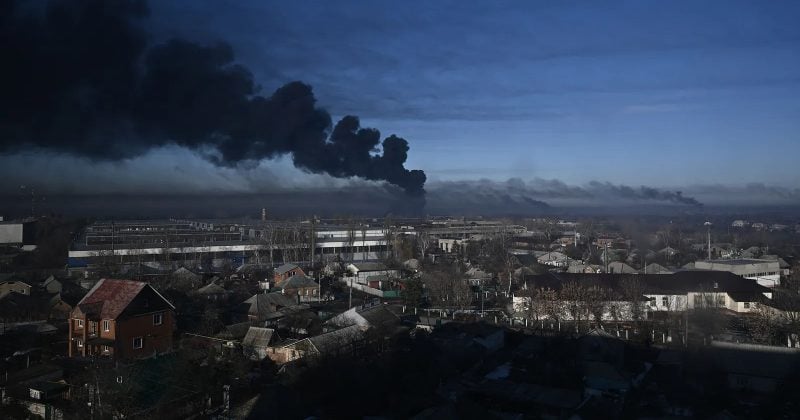
Russia launches largest aerial attacks of the war as crypto markets watch geopolitical risk signals

Russia launches largest aerial attacks of the war as crypto markets watch geopolitical risk signals

Unprecedented drone and missile barrages against Ukraine are reshaping the global risk landscape that crypto investors cannot afford to ignore.

Russia unleashed what Ukrainian officials are calling the most extensive aerial assault since the full-scale invasion began in February 2022, deploying 948 drones in a single 24-hour period.

The sheer scale of the attack dwarfs previous records. In September 2025, Russia had already set a grim benchmark with 810 drones, four ballistic missiles, and nine cruise missiles fired at Ukrainian cities. That was called the largest aerial offensive of the conflict at the time. The latest barrage blew past it by a wide margin.

Advertisement

A war of attrition in the sky

Around July 2026, Russian strikes included approximately 40 to 41 ballistic missiles aimed directly at Kyiv. Ukrainian air defenses managed to intercept some.

Ukrainian President Volodymyr Zelenskyy has repeatedly condemned the attacks in public statements, emphasizing the urgent need for enhanced air defense systems from Western allies.

The progression from 810 drones in September 2025 to 948 drones in a single day represents roughly a 17% increase in attack density.

What geopolitical escalation means for digital assets

Sanctions enforcement and the geopolitics of money flows have been central to the crypto regulatory conversation since Russia’s initial invasion. Every major escalation renews political attention on whether digital assets are being used to circumvent financial restrictions.

What investors should actually be watching

The immediate market implications of aerial strikes on Ukraine are more likely to manifest in traditional asset classes first. Energy prices, European equities, and defense sector stocks are the frontline indicators.

Disclosure: This article was edited by Editorial Team. For more information on how we create and review content, see our Editorial Policy.
Russia launches largest aerial attacks of the war as crypto markets watch geopolitical risk signals

Unprecedented drone and missile barrages against Ukraine are reshaping the global risk landscape that crypto investors cannot afford to ignore.

Russia unleashed what Ukrainian officials are calling the most extensive aerial assault since the full-scale invasion began in February 2022, deploying 948 drones in a single 24-hour period.

The sheer scale of the attack dwarfs previous records. In September 2025, Russia had already set a grim benchmark with 810 drones, four ballistic missiles, and nine cruise missiles fired at Ukrainian cities. That was called the largest aerial offensive of the conflict at the time. The latest barrage blew past it by a wide margin.

Advertisement

A war of attrition in the sky

Around July 2026, Russian strikes included approximately 40 to 41 ballistic missiles aimed directly at Kyiv. Ukrainian air defenses managed to intercept some.

Ukrainian President Volodymyr Zelenskyy has repeatedly condemned the attacks in public statements, emphasizing the urgent need for enhanced air defense systems from Western allies.

The progression from 810 drones in September 2025 to 948 drones in a single day represents roughly a 17% increase in attack density.

What geopolitical escalation means for digital assets

Sanctions enforcement and the geopolitics of money flows have been central to the crypto regulatory conversation since Russia’s initial invasion. Every major escalation renews political attention on whether digital assets are being used to circumvent financial restrictions.

What investors should actually be watching

The immediate market implications of aerial strikes on Ukraine are more likely to manifest in traditional asset classes first. Energy prices, European equities, and defense sector stocks are the frontline indicators.

Disclosure: This article was edited by Editorial Team. For more information on how we create and review content, see our Editorial Policy.