
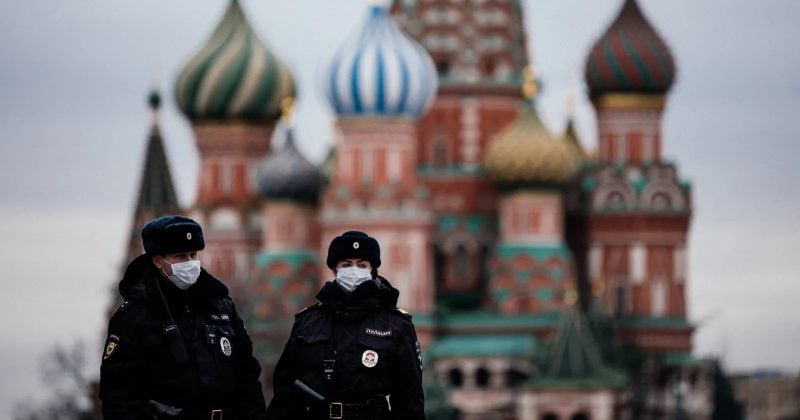
Via newsweek.com
Russian law enforcement raids crypto exchanges in Moscow over $2M theft
Dozens detained after authorities storm Federation Vostok tower offices in connection with a 144 million ruble embezzlement scheme involving fake FSB agents
Russian law enforcement descended on cryptocurrency exchange offices inside Moscow’s Federation Vostok tower on July 31, executing coordinated searches tied to a 144 million ruble (roughly $2 million) embezzlement case. Dozens of individuals were detained during the operation, with eight placed under pre-trial detention as investigators work to untangle the flow of stolen funds.
The victim, identified only as Vladimir R., was reportedly conned by individuals posing as agents of Russia’s Federal Security Service, the FSB. The scammers allegedly convinced him to transfer a substantial sum through one of the crypto platforms operating out of the tower, a scheme that blends old-school social engineering with the relative anonymity of digital asset transfers.
Inside the Moscow tower raids
The affected exchange offices were temporarily shuttered as investigators combed through records and digital infrastructure to trace the fraudulent transactions.
The operation reflects a broader pattern that has been accelerating since 2025. Russian authorities have conducted numerous raids on Moscow-based crypto exchanges, frequently citing concerns around fraud, money laundering, and sanctions evasion.
Russia’s evolving crypto regulatory landscape
A new law passed by the State Duma in July 2026 will require cryptocurrency exchanges to formally register with Russian authorities. That mandate is set to take effect in 2027, giving platforms roughly a year to get their compliance houses in order. Separately, mining restrictions are being imposed in the Moscow region starting in August 2026, part of a patchwork approach to managing the industry’s energy consumption and regulatory footprint.
The news moving money, markets, and the world—before your day starts.
Daily. Free. Join 34,000+ readers across crypto, finance, and policy.
The registration requirement represents a meaningful shift. Until now, many Russian crypto exchanges have operated in a regulatory gray zone, not explicitly illegal but not formally supervised either.
What this means for investors and the market
The upcoming registration requirements could reshape the competitive landscape among Russian exchanges. Platforms that invest in know-your-customer procedures and transaction monitoring will be better positioned to survive the regulatory transition.
The detention of eight individuals with pre-trial holds suggests prosecutors believe they have substantial evidence and intend to pursue serious charges. How those cases proceed will set precedent for how aggressively Russia enforces its emerging crypto regulations.