
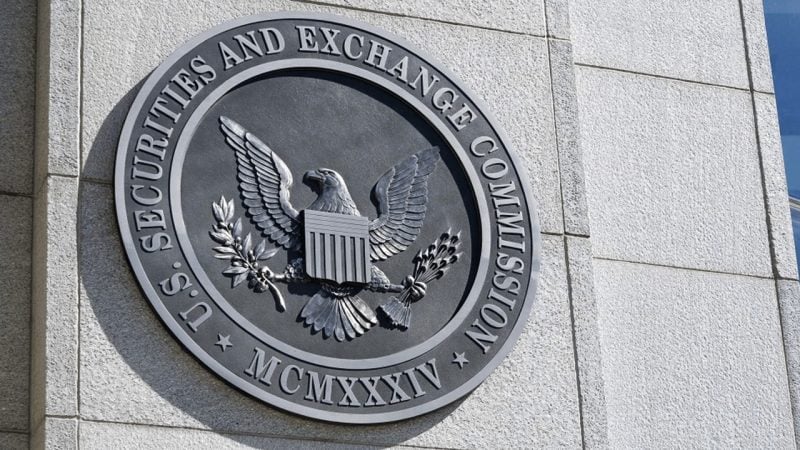
SEC proposes to rescind Rule 14a-8, shifting shareholder proposal power back to states

Editor-selected (CryptoBriefing)

SEC proposes to rescind Rule 14a-8, shifting shareholder proposal power back to states

The agency's sweeping proxy rule overhaul would eliminate a decades-old federal mandate and hand corporate governance authority back to state law and company boards.

The Securities and Exchange Commission has put forward one of its most consequential corporate governance proposals in years: scrapping Rule 14a-8, the federal rule that has required public companies to include shareholder proposals in their proxy materials since the Securities Exchange Act of 1934. The proposal, announced September 16, 2026, would also amend Rule 14a-4(c) to expand how companies can exercise discretionary voting authority during shareholder meetings.

What the proposal actually does

The rescission of Rule 14a-8 eliminates the federal mandate requiring companies to include shareholder proposals in proxy statements. Going forward, whether a shareholder gets to put something to a vote at an annual meeting would be governed by state law, the company’s own charter, and its board, not federal securities regulation.

The companion amendment to Rule 14a-4(c) does two things simultaneously. It broadens the discretionary voting authority that companies hold over matters not formally included on a meeting agenda, while also giving individual shareholders a mechanism to opt out and prevent that authority from being applied to their own shares.

Advertisement

Commissioner Mark T. Uyeda framed the move explicitly as a correction of regulatory overreach.

“Corporate governance and internal affairs have traditionally been governed by state law,” Uyeda said, arguing the SEC had exceeded its authority by mandating proposal inclusion through a federal rule.

The proposal also cited a practical concern: that Rule 14a-8 has increasingly been used as a vehicle for political or special-interest agendas rather than matters tied to the core economic interests of shareholders.

The runway leading here

The SEC staff began a phased withdrawal from the Rule 14a-8 no-action review process starting in November 2025. That process had historically allowed companies to seek SEC staff guidance on whether they could lawfully exclude a shareholder proposal from their proxy materials.

By August 14, 2026, the SEC staff had fully stopped responding to no-action requests under Rule 14a-8.

The SEC has also framed part of this overhaul as modernizing proxy solicitation rules for digital communication channels.

Disclosure: This article was edited by Editorial Team. For more information on how we create and review content, see our Editorial Policy.
SEC proposes to rescind Rule 14a-8, shifting shareholder proposal power back to states

The agency's sweeping proxy rule overhaul would eliminate a decades-old federal mandate and hand corporate governance authority back to state law and company boards.

Editor-selected (CryptoBriefing)

The Securities and Exchange Commission has put forward one of its most consequential corporate governance proposals in years: scrapping Rule 14a-8, the federal rule that has required public companies to include shareholder proposals in their proxy materials since the Securities Exchange Act of 1934. The proposal, announced September 16, 2026, would also amend Rule 14a-4(c) to expand how companies can exercise discretionary voting authority during shareholder meetings.

What the proposal actually does

The rescission of Rule 14a-8 eliminates the federal mandate requiring companies to include shareholder proposals in proxy statements. Going forward, whether a shareholder gets to put something to a vote at an annual meeting would be governed by state law, the company’s own charter, and its board, not federal securities regulation.

The companion amendment to Rule 14a-4(c) does two things simultaneously. It broadens the discretionary voting authority that companies hold over matters not formally included on a meeting agenda, while also giving individual shareholders a mechanism to opt out and prevent that authority from being applied to their own shares.

Advertisement

Commissioner Mark T. Uyeda framed the move explicitly as a correction of regulatory overreach.

“Corporate governance and internal affairs have traditionally been governed by state law,” Uyeda said, arguing the SEC had exceeded its authority by mandating proposal inclusion through a federal rule.

The proposal also cited a practical concern: that Rule 14a-8 has increasingly been used as a vehicle for political or special-interest agendas rather than matters tied to the core economic interests of shareholders.

The runway leading here

The SEC staff began a phased withdrawal from the Rule 14a-8 no-action review process starting in November 2025. That process had historically allowed companies to seek SEC staff guidance on whether they could lawfully exclude a shareholder proposal from their proxy materials.

By August 14, 2026, the SEC staff had fully stopped responding to no-action requests under Rule 14a-8.

The SEC has also framed part of this overhaul as modernizing proxy solicitation rules for digital communication channels.

Disclosure: This article was edited by Editorial Team. For more information on how we create and review content, see our Editorial Policy.