
Via axios.com
US Senate advances Russia sanctions bill 86-0 after Zelensky lobbies all 100 senators
The sweeping legislation authorizes 200% tariffs on Russian energy buyers and could tighten the noose on crypto-based sanctions evasion
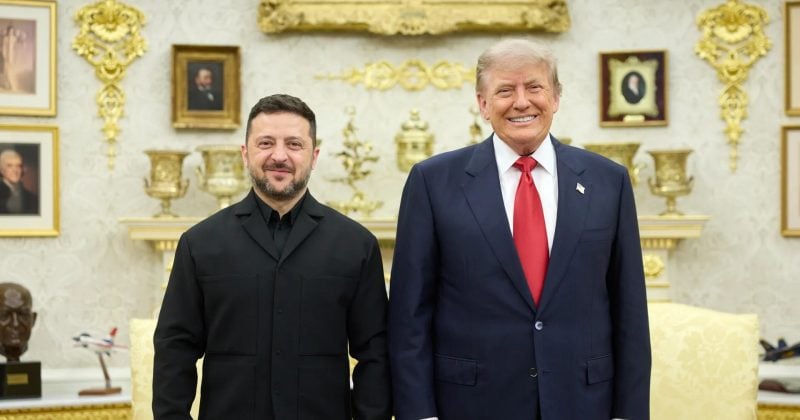
The US Senate voted 86-0 on July 29 to advance the Lindsey O. Graham Sanctioning Russia and Iran Act of 2026, a sweeping sanctions package that grants the president authority to slap tariffs as high as 200% on major buyers of Russian oil and gas. The unanimous result came one day after Ukrainian President Volodymyr Zelensky met with all 100 senators behind closed doors on Capitol Hill.
Zelensky’s direct appeal to lawmakers, during which he reportedly argued that Russia is losing ground in the conflict now four and a half years old, appears to have consolidated Democratic support that had been wavering in recent months.
What the bill actually does
The legislation targets Russia’s economic lifelines with a multi-pronged approach. At its core, the bill authorizes tariffs of up to 200% on countries and entities that are primary purchasers of Russian oil and gas. Beyond energy, the bill extends sanctions to Russian financial institutions, oligarchs, and political elites. It also includes parallel provisions targeting Iran, broadening the scope well beyond a single-country measure.
The legislation is named after the late Senator Lindsey Graham, who died in July 2026 and had been one of the most vocal champions of aggressive sanctions against Moscow. Zelensky’s visit to Washington reportedly followed a memorial service for Graham, adding a layer of political symbolism that likely helped drive the bipartisan consensus.
The crypto angle no one’s talking about yet
The bill itself doesn’t mention Bitcoin or crypto directly. But its expansion of sanctions to Russian financial institutions and political elites creates a wider net that inevitably catches digital asset flows. When the US Treasury’s Office of Foreign Assets Control (OFAC) enforces sanctions of this magnitude, compliance requirements ripple through every layer of the financial system, including crypto exchanges, stablecoin issuers, and DeFi protocols that touch sanctioned wallets.
Macro, rates, and crypto—what moved markets and what matters next.
Daily. Free. Join 34,000+ readers across crypto, finance, and policy.
After earlier rounds of Russia sanctions, OFAC sanctioned the Tornado Cash mixing service in 2022, setting off a legal and philosophical firestorm in the crypto industry. The Graham Act’s broader sanctions framework could lead to similar enforcement actions against platforms or protocols that facilitate transactions with newly sanctioned Russian entities.
Tether and other dollar-denominated stablecoins have been cited in various reports as tools used to move value across sanctioned borders. If the Graham Act triggers a new wave of enforcement, stablecoin issuers may face additional pressure to demonstrate that their tokens aren’t facilitating prohibited transactions.
What this means for investors
Tariffs of up to 200% on Russian energy buyers would significantly disrupt global oil and gas trade flows. Countries that currently purchase Russian crude at a discount would face a stark choice: pay dramatically more for the privilege, or find alternative suppliers.
The bill still needs to clear the full Senate and the House before reaching the president’s desk. An 86-0 procedural vote suggests the political will is overwhelming.