
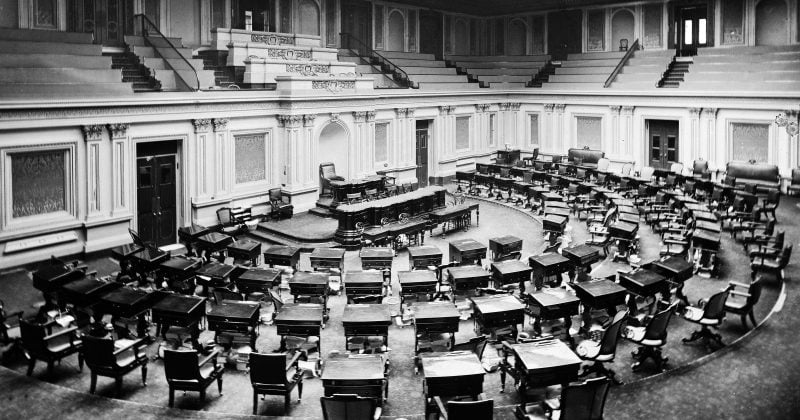
Photo: Library of Congress / en.wikipedia.org
US Senate to vote on crypto market structure bill in 7 days
The Digital Asset Market Clarity Act heads to a floor vote as lawmakers race to pass landmark crypto regulation before August recess
The US Senate is preparing to vote on the most consequential piece of crypto legislation in years. The Digital Asset Market Clarity Act, formally known as H.R. 3633, is expected to hit the Senate floor during the week of August 3, with a procedural motion to proceed anticipated as early as July 27-28.
If it passes, the bill would finally draw clear jurisdictional lines between the SEC and CFTC over digital assets.
What’s in the bill and how it got here
The Clarity Act emerged from a merged draft combining input from both the Senate Banking Committee and the Agriculture Committee.
The Senate Banking Committee advanced the legislation with a 15-9 vote back on May 14, 2026.
The merged draft released around July 27 also includes an ethics provision addressing conflicts of interest for government officials. President Trump engaged directly on the ethics language on July 21, following a meeting with senators on July 16. His involvement has been a key factor in accelerating the bill’s timeline.
The news moving money, markets, and the world—before your day starts.
Daily. Free. Join 34,000+ readers across crypto, finance, and policy.
The House already passed its version of the legislation back in July 2025, meaning the Senate vote represents the final major legislative hurdle before the bill could reach the president’s desk.
Why regulatory clarity is the whole ballgame
The Clarity Act aims to fix jurisdictional ambiguity by explicitly delineating which agency oversees what. Digital commodities and stablecoins would get defined treatment, reducing the kind of regulatory ambiguity that has chilled institutional participation and driven some crypto companies overseas.
Market reaction and prediction odds
Crypto-related stocks have rallied on news of the bill’s progress. Prediction markets are assigning only a 41% likelihood that the bill actually passes, up from where prediction odds sat before Trump’s direct engagement on the ethics provisions.
The ethics provision could prove to be either the bill’s saving grace or its stumbling block. If the motion to proceed clears the Senate floor without significant opposition, that tells you a lot about the final vote’s chances.