
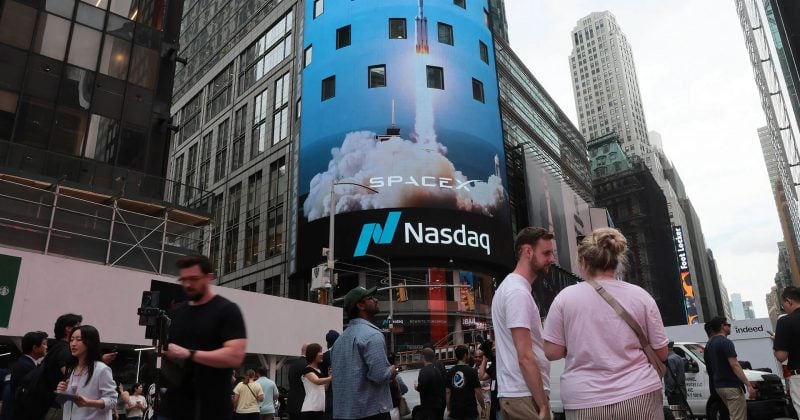
Short sellers have pocketed $15.5 billion betting against SpaceX since its IPO
Nearly half of SpaceX's free float is now on loan to short sellers, setting up what could become one of the most dramatic bull-bear battles in recent market history.
Betting against Elon Musk has historically been a losing proposition. But short sellers have banked an estimated $8.7 billion in paper profits since SpaceX’s IPO, according to data from Ortex.
From $225 to below the IPO price
SpaceX went public on June 12, 2026, at $135 per share. The stock touched $225.64 in the days that followed, then fell back below its IPO price. Each $1 decline in SpaceX’s share price corresponds to over $300 million in short exposure, according to Ortex data.
Short interest has ballooned to roughly 49% of SpaceX’s free float. Nearly half of all freely tradable shares are currently on loan to traders betting the stock goes lower.
Why bears are feasting
The short thesis isn’t complicated. Investors grew nervous about SpaceX’s valuation relative to its actual revenue streams, and concerns about the company’s debt-funded push into artificial intelligence have added fuel to the skepticism.
The news moving money, markets, and the world—before your day starts.
Daily. Free. Join 34,000+ readers across crypto, finance, and policy.
Ortex co-founder Peter Hillerberg noted that the short selling environment has been favorable for bears. Short interest jumped from 8% to 13% of the free float in late June alone, barely two weeks after the IPO. It’s nearly quadrupled since then.
The Musk factor cuts both ways
Musk has a well-documented history of pushing back against short sellers. With nearly 49% of the float on loan, even a modest catalyst could trigger significant upward pressure. If SpaceX’s stock rallied just $10 from current levels, short sellers would face over $3 billion in paper losses.