
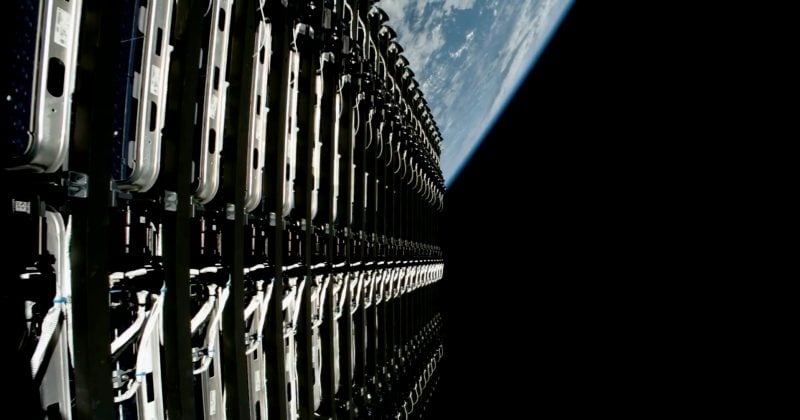
SpaceX and xAI are building an 11-million-square-foot satellite factory in Texas to move AI computing into orbit

SpaceX and xAI are building an 11-million-square-foot satellite factory in Texas to move AI computing into orbit

The Gigasat facility in Bastrop marks the most aggressive bet yet that the future of AI infrastructure is above the atmosphere, not below it

Elon Musk has a straightforward theory about the bottleneck choking AI development: the problem is Earth itself. Power grids are strained. Water supplies for cooling are finite. Land near reliable energy sources is contested.

SpaceX and xAI announced the Gigasat facility in Bastrop, Texas in June 2026, a manufacturing campus spanning 11 million square feet. The factory’s sole purpose is to build AI satellites destined for orbital data centers, effectively shifting heavy compute workloads off the ground and into space.

One acquisition, one very large factory

The groundwork for this project was laid in February 2026, when SpaceX acquired xAI in an all-stock deal valued at $250 billion. The combined entity carries an estimated valuation of $1.25 trillion, making it one of the most valuable private technology companies ever assembled.

The production target is 1 gigawatt per year of orbital AI compute capacity, with that milestone set for the end of 2027.

Advertisement

Musk has framed orbital data centers explicitly as a response to these terrestrial constraints. The pitch is essentially: instead of fighting over power capacity in Texas or water rights in Arizona, build the infrastructure somewhere that has neither scarcity nor a zoning board.

The Bastrop cluster and what else is being built nearby

In March 2026, SpaceX, xAI, and Tesla announced a joint chip development initiative called Terafab, also based in Austin. The three companies, now increasingly intertwined operationally, are positioning the Austin metro region as the physical headquarters of a vertically integrated AI and space technology stack.

That kind of vertical integration matters for understanding the competitive dynamics here. Terafab means the combined entity is working on its own silicon, not solely dependent on Nvidia or other third-party chip suppliers. Gigasat means it controls the manufacturing of the satellites that will host that silicon in orbit. SpaceX’s existing Starlink constellation and launch infrastructure means it controls the rockets and the network that gets those satellites into position.

What this means for investors and the broader AI infrastructure market

Investors watching this space should think about a few distinct angles. First, the satellite manufacturing supply chain becomes newly important. Companies producing radiation-hardened components, power systems for space applications, and thermal management hardware for orbital environments all become relevant in a way they were not when AI infrastructure meant building more sheds in Northern Virginia.

Second, the 1 gigawatt annual production target at Gigasat creates a concrete benchmark to track. If SpaceX and xAI hit that number by late 2027, it validates the orbital compute thesis and likely accelerates capital flows toward adjacent companies.

Third, the Terafab chip project introduces real uncertainty into the semiconductor supply chain conversation. A vertically integrated entity designing its own chips for its own orbital hardware is a direct challenge to the assumption that Nvidia’s dominance in AI compute is permanent.

The combined $1.25 trillion valuation of the SpaceX-xAI entity means this is no longer a story about startups taking swings at incumbents. This is a trillion-dollar organization making trillion-dollar infrastructure decisions, and the Texas projects are the most visible expression of where that capital is being directed.

Disclosure: This article was edited by Editorial Team. For more information on how we create and review content, see our Editorial Policy.

SpaceX and xAI are building an 11-million-square-foot satellite factory in Texas to move AI computing into orbit

SpaceX and xAI are building an 11-million-square-foot satellite factory in Texas to move AI computing into orbit

The Gigasat facility in Bastrop marks the most aggressive bet yet that the future of AI infrastructure is above the atmosphere, not below it

Elon Musk has a straightforward theory about the bottleneck choking AI development: the problem is Earth itself. Power grids are strained. Water supplies for cooling are finite. Land near reliable energy sources is contested.

SpaceX and xAI announced the Gigasat facility in Bastrop, Texas in June 2026, a manufacturing campus spanning 11 million square feet. The factory’s sole purpose is to build AI satellites destined for orbital data centers, effectively shifting heavy compute workloads off the ground and into space.

One acquisition, one very large factory

The groundwork for this project was laid in February 2026, when SpaceX acquired xAI in an all-stock deal valued at $250 billion. The combined entity carries an estimated valuation of $1.25 trillion, making it one of the most valuable private technology companies ever assembled.

The production target is 1 gigawatt per year of orbital AI compute capacity, with that milestone set for the end of 2027.

Advertisement

Musk has framed orbital data centers explicitly as a response to these terrestrial constraints. The pitch is essentially: instead of fighting over power capacity in Texas or water rights in Arizona, build the infrastructure somewhere that has neither scarcity nor a zoning board.

The Bastrop cluster and what else is being built nearby

In March 2026, SpaceX, xAI, and Tesla announced a joint chip development initiative called Terafab, also based in Austin. The three companies, now increasingly intertwined operationally, are positioning the Austin metro region as the physical headquarters of a vertically integrated AI and space technology stack.

That kind of vertical integration matters for understanding the competitive dynamics here. Terafab means the combined entity is working on its own silicon, not solely dependent on Nvidia or other third-party chip suppliers. Gigasat means it controls the manufacturing of the satellites that will host that silicon in orbit. SpaceX’s existing Starlink constellation and launch infrastructure means it controls the rockets and the network that gets those satellites into position.

What this means for investors and the broader AI infrastructure market

Investors watching this space should think about a few distinct angles. First, the satellite manufacturing supply chain becomes newly important. Companies producing radiation-hardened components, power systems for space applications, and thermal management hardware for orbital environments all become relevant in a way they were not when AI infrastructure meant building more sheds in Northern Virginia.

Second, the 1 gigawatt annual production target at Gigasat creates a concrete benchmark to track. If SpaceX and xAI hit that number by late 2027, it validates the orbital compute thesis and likely accelerates capital flows toward adjacent companies.

Third, the Terafab chip project introduces real uncertainty into the semiconductor supply chain conversation. A vertically integrated entity designing its own chips for its own orbital hardware is a direct challenge to the assumption that Nvidia’s dominance in AI compute is permanent.

The combined $1.25 trillion valuation of the SpaceX-xAI entity means this is no longer a story about startups taking swings at incumbents. This is a trillion-dollar organization making trillion-dollar infrastructure decisions, and the Texas projects are the most visible expression of where that capital is being directed.

Disclosure: This article was edited by Editorial Team. For more information on how we create and review content, see our Editorial Policy.