
Tesla surpasses the combined valuation of 37 automakers

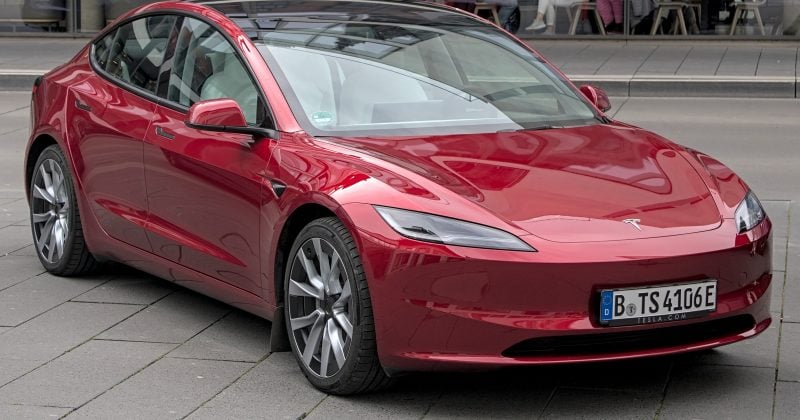
Photo: Alexander-93 / Wikimedia Commons / CC BY-SA 4.0 (https://creativecommons.org/licenses/by-sa/4.0)

Tesla surpasses the combined valuation of 37 automakers

At $1.423 trillion, Tesla is now worth more than the entire rest of the global auto industry put together

The global auto industry has spent decades perfecting the art of building cars at scale. Tesla, a company that makes a fraction of the vehicles Toyota produces in a slow quarter, is now worth more than all 37 of those legacy manufacturers combined.

As of July 21, 2026, Tesla’s market cap hit $1.423 trillion. The combined valuation of the 37 largest consumer vehicle and parts manufacturers sat at $1.415 trillion. Tesla crossed the finish line ahead by roughly $8 billion, which sounds narrow until you remember the field includes Toyota, Volkswagen, Stellantis, Ford, General Motors, and three dozen others.

Advertisement

A premium that defies the traditional scorecard

Toyota, the gold standard of automotive efficiency, posted profits roughly six times higher than Tesla’s in its last fiscal year. By every conventional manufacturing metric, Toyota is the better car company.

Investors are pricing Tesla less like a carmaker and more like a platform company with a car business attached to it. The valuation reflects bets on autonomous driving, on the Optimus humanoid robot, and on Tesla’s energy storage and generation division.

Tesla’s market cap fluctuated between $1.2 trillion and $1.6 trillion across July 2026, a range that illustrates just how much uncertainty is baked into that premium.

What this means for the broader market

For investors, the divergence creates a genuine strategic question. Buying traditional automakers means buying current cash flows, dividends, and the hope of a successful transition at a relatively modest multiple. Buying Tesla means paying a significant premium today for a future that has not arrived yet, and betting that the autonomous driving and robotics timelines the company is implying will actually materialize.

Tesla holds Bitcoin on its balance sheet as part of its treasury strategy. That position means Tesla’s financial health has a small but real correlation to Bitcoin price movements.

Disclosure: This article was edited by Editorial Team. For more information on how we create and review content, see our Editorial Policy.

Tesla surpasses the combined valuation of 37 automakers

Tesla surpasses the combined valuation of 37 automakers

At $1.423 trillion, Tesla is now worth more than the entire rest of the global auto industry put together

Photo: Alexander-93 / Wikimedia Commons / CC BY-SA 4.0 (https://creativecommons.org/licenses/by-sa/4.0)

The global auto industry has spent decades perfecting the art of building cars at scale. Tesla, a company that makes a fraction of the vehicles Toyota produces in a slow quarter, is now worth more than all 37 of those legacy manufacturers combined.

As of July 21, 2026, Tesla’s market cap hit $1.423 trillion. The combined valuation of the 37 largest consumer vehicle and parts manufacturers sat at $1.415 trillion. Tesla crossed the finish line ahead by roughly $8 billion, which sounds narrow until you remember the field includes Toyota, Volkswagen, Stellantis, Ford, General Motors, and three dozen others.

Advertisement

A premium that defies the traditional scorecard

Toyota, the gold standard of automotive efficiency, posted profits roughly six times higher than Tesla’s in its last fiscal year. By every conventional manufacturing metric, Toyota is the better car company.

Investors are pricing Tesla less like a carmaker and more like a platform company with a car business attached to it. The valuation reflects bets on autonomous driving, on the Optimus humanoid robot, and on Tesla’s energy storage and generation division.

Tesla’s market cap fluctuated between $1.2 trillion and $1.6 trillion across July 2026, a range that illustrates just how much uncertainty is baked into that premium.

What this means for the broader market

For investors, the divergence creates a genuine strategic question. Buying traditional automakers means buying current cash flows, dividends, and the hope of a successful transition at a relatively modest multiple. Buying Tesla means paying a significant premium today for a future that has not arrived yet, and betting that the autonomous driving and robotics timelines the company is implying will actually materialize.

Tesla holds Bitcoin on its balance sheet as part of its treasury strategy. That position means Tesla’s financial health has a small but real correlation to Bitcoin price movements.

Disclosure: This article was edited by Editorial Team. For more information on how we create and review content, see our Editorial Policy.