
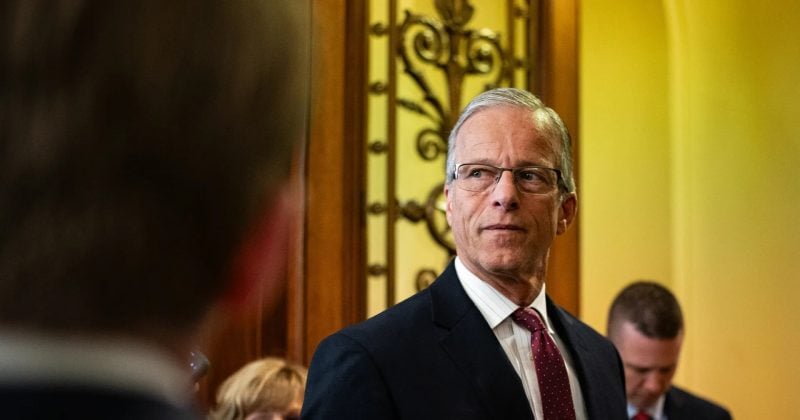
John Thune plans Senate vote on Trump’s crypto legislation next week
The Senate is set to vote on the Clarity Act, a Trump-backed bill defining federal oversight of digital assets.
John Thune, the Senate Majority Leader, is teeing up a legislative action that could define how Uncle Sam treats your Bitcoin. Thune has penciled in a vote next week for the Digital Asset Market Clarity Act, also known as the Clarity Act, aiming for a decisive moment in US cryptocurrency regulation.
This move comes off the back of President Donald Trump giving the bill a strong campaign push, as if talking up a new Trump Tower. The proposal has faced its share of political drama, especially with ethics concerns tied to Trump family business dynamics making their way into the legislative spotlight. But despite the theatrical hurdles, the Act is expected to be voted on before the Senate takes its August vacation.
The Clarity Act in Focus
The Clarity Act, known formally as H.R. 3633, seeks to make life easier for digital asset enthusiasts who can’t decide whether to send their concerns to the SEC or the CFTC. It’s supposed to sort out which federal agency gets a say in the emerging vibrant world of cryptos, making sure everyone is playing by the same rulebook.
Positioned on the Senate calendar since June 1, 2026, the bill aims to prevent the US from losing its footing in the digital currency race—think of this as a regulatory attempt to keep up with the Bitcoin equivalent of the Space Race. Trump has been vocal on social media, emphasizing this aim, presumably annoyed that China won’t just stick to manufacturing smartphones and leave crypto domination alone.
Support for the Act is substantial. With endorsements coming in from over 200 organizations, this legislation is not just a Trump show but a broad industry-backed production with high stakes for crypto’s US future.
Macro, rates, and crypto—what moved markets and what matters next.
Daily. Free. Join 34,000+ readers across crypto, finance, and policy.
Why This Matters
If the Senate gives the thumbs-up, the Clarity Act signals a seismic shift for crypto investors who often feel like they’re piloting spacecraft with blank manuals. A federal framework could grant the security blanket needed to reel in institutional and retail investors who’ve been hovering cautiously above the crypto playground.
The Act could also encourage firms to step off the sidelines and into the crypto arena. By clarifying compliance norms, companies that hesitated at the thought of SEC-CFTC regulatory limbo might now take the plunge, boosting market liquidity and growth. In crypto terms, that’s like finally knowing which password to use without triggering a 48-hour verification hold.
The Political Maze
However, getting this legislation through involves more delicate maneuvering than a dance-off in political ballet. The bill requires 60 votes to pass, which means bipartisan goodwill isn’t just nice to have, it’s essential. And existing issues, including ethics provisions concerning possible conflicts of interest, still need sorting.
As efforts intensify to push the bill through, the potential regulatory clarity it offers stands to integrate digital assets into the mainstream financial ecosystem effectively. Observers should keep a close watch on the vote’s outcome; its success or failure will send reverberations throughout the digital asset market.
In short, if Thune manages to clear this act through the Senate, expect a new normal for cryptocurrencies that includes more regulatory support than a central banker’s suit has pinstripes.