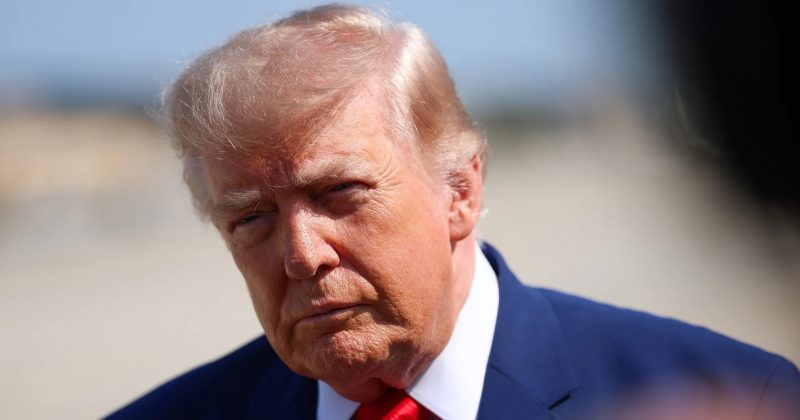
Donald Trump pushes back on Federal Reserve rate hike ahead of midterms

Donald Trump pushes back on Federal Reserve rate hike ahead of midterms

The president called the FOMC 'very hostile' and 'very political' after the first rate increase in three years landed weeks before November's elections

President Donald Trump fired off a broadside against the Federal Reserve on September 16 after the central bank voted to raise the federal funds rate by 25 basis points, lifting the target range to 3.75%–4.00%. It was the first rate hike since 2023, and it arrived at arguably the worst possible moment for the White House: just weeks before midterm elections that will determine whether Republicans keep control of Congress.

Trump took to Truth Social to make his displeasure known, writing that “Interest Rates in the United States should be 1%, or less…because we are the Best Credit in the World — BY FAR.” He called for rate cuts “FAST!” and described the Federal Open Market Committee as “very hostile” and “very political.”

The political calculus behind the criticism

The FOMC vote was unanimous, which means Fed Chair Kevin Warsh, Trump’s own appointee, sided with the rest of the board. Trump addressed that head-on, saying he had advised Warsh to “vote with the board because it’s just not going to matter.” In other words, the president publicly backed his guy while pinning blame on everyone else at the table.

Advertisement

During his first term, Trump regularly attacked then-Chair Jerome Powell for keeping rates too high. Installing a more sympathetic Fed chair was meant to grease the wheels for looser monetary policy. Instead, Warsh cast his vote alongside the same institutional machinery Trump has long viewed as adversarial.

Why the Fed moved now

The central bank has a mandate to keep inflation near 2%, and recent readings have been stubbornly above that target. Inflation has fluctuated between 3.4% and 4.2%, driven in part by energy price spikes linked to the ongoing conflict in Iran.

From the Fed’s perspective, raising rates is a textbook response. Higher interest rates cool demand by making borrowing more expensive, which in theory slows spending enough to bring prices down. The problem is that this particular bout of inflation has significant supply-side drivers, namely geopolitical disruptions to energy markets, that rate hikes can’t directly fix.

The three-year gap since the last hike is notable context. After an extended period of holding rates steady, the Fed’s decision to resume tightening suggests the committee sees inflation risks as genuinely persistent rather than transitory.

What this means for markets and the election

For the housing market, the implications are more direct. Mortgage rates track Treasury yields closely, and those yields respond to Fed policy shifts. Homebuyers who were already stretching to afford monthly payments now face even steeper costs.

Trump’s rhetorical strategy appears designed to inoculate himself against exactly that outcome. By framing the Fed as a hostile political actor, he preemptively shifts blame for any economic slowdown away from his administration’s fiscal and trade policies and onto an unelected body. Whether that framing sticks with voters is the multi-billion-dollar question heading into November.

Disclosure: This article was edited by Editorial Team. For more information on how we create and review content, see our Editorial Policy.
Donald Trump pushes back on Federal Reserve rate hike ahead of midterms

The president called the FOMC 'very hostile' and 'very political' after the first rate increase in three years landed weeks before November's elections

President Donald Trump fired off a broadside against the Federal Reserve on September 16 after the central bank voted to raise the federal funds rate by 25 basis points, lifting the target range to 3.75%–4.00%. It was the first rate hike since 2023, and it arrived at arguably the worst possible moment for the White House: just weeks before midterm elections that will determine whether Republicans keep control of Congress.

Trump took to Truth Social to make his displeasure known, writing that “Interest Rates in the United States should be 1%, or less…because we are the Best Credit in the World — BY FAR.” He called for rate cuts “FAST!” and described the Federal Open Market Committee as “very hostile” and “very political.”

The political calculus behind the criticism

The FOMC vote was unanimous, which means Fed Chair Kevin Warsh, Trump’s own appointee, sided with the rest of the board. Trump addressed that head-on, saying he had advised Warsh to “vote with the board because it’s just not going to matter.” In other words, the president publicly backed his guy while pinning blame on everyone else at the table.

Advertisement

During his first term, Trump regularly attacked then-Chair Jerome Powell for keeping rates too high. Installing a more sympathetic Fed chair was meant to grease the wheels for looser monetary policy. Instead, Warsh cast his vote alongside the same institutional machinery Trump has long viewed as adversarial.

Why the Fed moved now

The central bank has a mandate to keep inflation near 2%, and recent readings have been stubbornly above that target. Inflation has fluctuated between 3.4% and 4.2%, driven in part by energy price spikes linked to the ongoing conflict in Iran.

From the Fed’s perspective, raising rates is a textbook response. Higher interest rates cool demand by making borrowing more expensive, which in theory slows spending enough to bring prices down. The problem is that this particular bout of inflation has significant supply-side drivers, namely geopolitical disruptions to energy markets, that rate hikes can’t directly fix.

The three-year gap since the last hike is notable context. After an extended period of holding rates steady, the Fed’s decision to resume tightening suggests the committee sees inflation risks as genuinely persistent rather than transitory.

What this means for markets and the election

For the housing market, the implications are more direct. Mortgage rates track Treasury yields closely, and those yields respond to Fed policy shifts. Homebuyers who were already stretching to afford monthly payments now face even steeper costs.

Trump’s rhetorical strategy appears designed to inoculate himself against exactly that outcome. By framing the Fed as a hostile political actor, he preemptively shifts blame for any economic slowdown away from his administration’s fiscal and trade policies and onto an unelected body. Whether that framing sticks with voters is the multi-billion-dollar question heading into November.

Disclosure: This article was edited by Editorial Team. For more information on how we create and review content, see our Editorial Policy.