
Trump vows forceful US response to Iranian missile attack on troops as Treasury freezes $130M in crypto assets

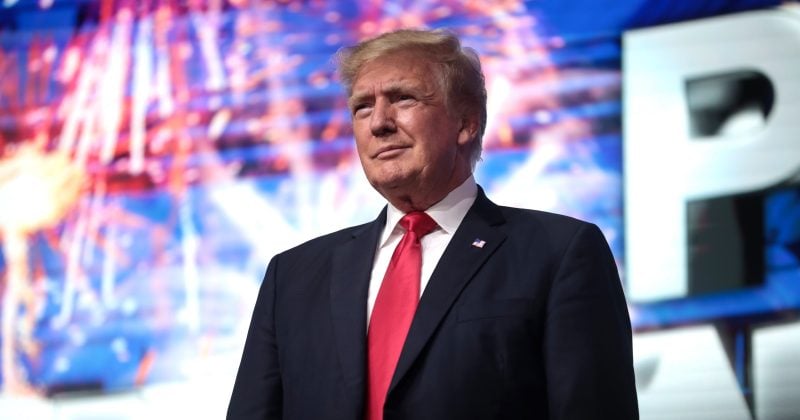
Photo: Gage Skidmore from Surprise, AZ, United States of America / Wikimedia Commons / CC BY-SA 2.0 (https://creativecommons.org/licenses/by-sa/2.0)

Trump vows forceful US response to Iranian missile attack on troops as Treasury freezes $130M in crypto assets

The escalating US-Iran conflict is spilling into digital asset markets as Washington targets Iranian crypto exchanges and freezes millions in sanctions evasion funds

President Donald Trump declared that US military strikes against Iran will continue indefinitely, following a wave of Iranian ballistic missile attacks targeting American forces stationed across the Middle East. The strikes hit US bases in Jordan, Bahrain, and Kuwait in mid-July 2026, though Jordanian forces intercepted at least three to five incoming missiles with no reported US casualties.

The US Treasury has frozen over $130 million in digital assets tied to Iran’s central bank, and Washington has started designating major Iranian cryptocurrency exchanges under counterterrorism authorities.

Advertisement

The military escalation

Trump’s statement on July 15, 2026 left little room for diplomatic interpretation. The president said US strikes on Iran would persist until he personally decided otherwise, going so far as to threaten extending operations to civilian infrastructure if diplomatic agreements weren’t reached.

The confrontation traces back to earlier in 2026, with Iranian missile strikes dating to March and coordinated US-Israeli military actions forming the backbone of what has become a sustained armed conflict. A brief window of hope opened in June 2026, when an interim peace deal aimed at de-escalating hostilities was negotiated. That deal collapsed, and the July strikes represent the sharpest escalation since.

The Strait of Hormuz, through which roughly a fifth of the world’s oil passes daily, has become a flashpoint. Renewed conflict in the region has dramatically affected energy transit through this chokepoint.

The crypto sanctions front

The US government designated major Iranian cryptocurrency exchanges, including Nobitex, Wallex, and Bitpin, under counterterrorism authorities. Their executives were individually named in the designations as well.

The $130 million freeze targeting Iran’s central bank represents one of the largest crypto-specific sanctions enforcement actions tied to a state actor. The designations go beyond simply blacklisting wallet addresses. By targeting exchanges and their leadership by name, the Treasury is attempting to collapse the institutional infrastructure that enables large-scale evasion.

Disclosure: This article was edited by Editorial Team. For more information on how we create and review content, see our Editorial Policy.

Trump vows forceful US response to Iranian missile attack on troops as Treasury freezes $130M in crypto assets

Trump vows forceful US response to Iranian missile attack on troops as Treasury freezes $130M in crypto assets

The escalating US-Iran conflict is spilling into digital asset markets as Washington targets Iranian crypto exchanges and freezes millions in sanctions evasion funds

Photo: Gage Skidmore from Surprise, AZ, United States of America / Wikimedia Commons / CC BY-SA 2.0 (https://creativecommons.org/licenses/by-sa/2.0)

President Donald Trump declared that US military strikes against Iran will continue indefinitely, following a wave of Iranian ballistic missile attacks targeting American forces stationed across the Middle East. The strikes hit US bases in Jordan, Bahrain, and Kuwait in mid-July 2026, though Jordanian forces intercepted at least three to five incoming missiles with no reported US casualties.

The US Treasury has frozen over $130 million in digital assets tied to Iran’s central bank, and Washington has started designating major Iranian cryptocurrency exchanges under counterterrorism authorities.

Advertisement

The military escalation

Trump’s statement on July 15, 2026 left little room for diplomatic interpretation. The president said US strikes on Iran would persist until he personally decided otherwise, going so far as to threaten extending operations to civilian infrastructure if diplomatic agreements weren’t reached.

The confrontation traces back to earlier in 2026, with Iranian missile strikes dating to March and coordinated US-Israeli military actions forming the backbone of what has become a sustained armed conflict. A brief window of hope opened in June 2026, when an interim peace deal aimed at de-escalating hostilities was negotiated. That deal collapsed, and the July strikes represent the sharpest escalation since.

The Strait of Hormuz, through which roughly a fifth of the world’s oil passes daily, has become a flashpoint. Renewed conflict in the region has dramatically affected energy transit through this chokepoint.

The crypto sanctions front

The US government designated major Iranian cryptocurrency exchanges, including Nobitex, Wallex, and Bitpin, under counterterrorism authorities. Their executives were individually named in the designations as well.

The $130 million freeze targeting Iran’s central bank represents one of the largest crypto-specific sanctions enforcement actions tied to a state actor. The designations go beyond simply blacklisting wallet addresses. By targeting exchanges and their leadership by name, the Treasury is attempting to collapse the institutional infrastructure that enables large-scale evasion.

Disclosure: This article was edited by Editorial Team. For more information on how we create and review content, see our Editorial Policy.