
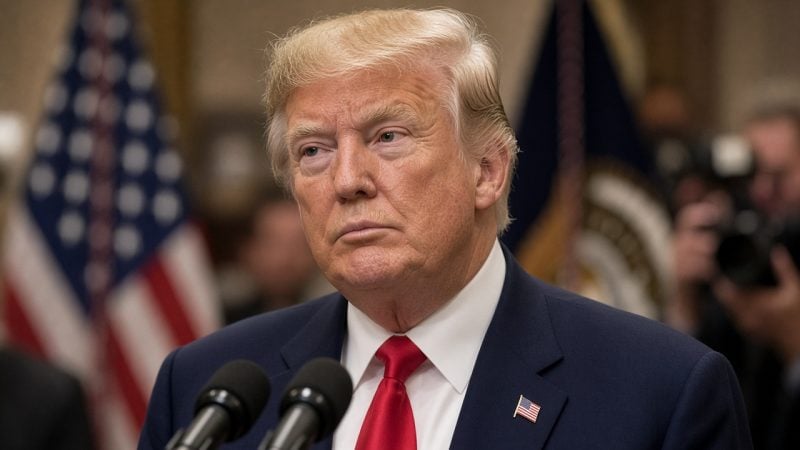
Trump signs commission appointing Rubio as National Security Advisor
The secretary of state now holds two of the most powerful foreign policy roles simultaneously, a first since Henry Kissinger in the 1970s.
President Donald Trump has formally signed the commission appointing Marco Rubio as National Security Advisor, cementing a consolidation of foreign policy power not seen in Washington for half a century.
Rubio, who already serves as Secretary of State, now holds both positions simultaneously. The last person to pull off that particular double shift was Henry Kissinger during the Nixon and Ford administrations in the 1970s.
How we got here
Trump announced the removal of former National Security Advisor Mike Waltz on May 1, 2025, tapping Rubio as interim replacement in the same breath. The move represented the first major personnel shake-up in Trump’s second-term national security apparatus.
Waltz’s departure followed months of reported friction with the White House, punctuated by a security breach in March 2025. During a group chat discussion about military operations in Yemen, Waltz accidentally added a journalist to the conversation.
Waltz wasn’t entirely cast aside, though. Trump nominated him to serve as US ambassador to the United Nations.
Rubio, meanwhile, had been building momentum inside the administration since his confirmation as Secretary of State on January 21, 2025. That confirmation came via a unanimous 99-0 Senate vote.
The news moving money, markets, and the world—before your day starts.
Daily. Free. Join 34,000+ readers across crypto, finance, and policy.
The Kissinger playbook
Beyond State and the NSC, Rubio has reportedly taken on additional oversight responsibilities at USAID and the National Archives, further expanding his portfolio.
A key structural detail makes this consolidation particularly smooth: the National Security Advisor role does not require Senate confirmation. Unlike cabinet positions that must survive the gauntlet of congressional hearings and floor votes, the NSA post is a presidential appointment.
Trump has publicly praised Rubio’s problem-solving abilities and indicated the dual arrangement could last indefinitely. As of the latest reporting, no permanent successor for the standalone National Security Advisor position has been named.
From rival to right hand
During the 2016 Republican primaries, the two exchanged some of the most personal insults in modern debate history. Trump mocked Rubio’s height and sweating. Rubio fired back with jokes about Trump’s hand size.
Rubio evolved into one of Trump’s most reliable allies during the second term, aligning himself closely with the administration’s America First foreign policy framework. Ongoing challenges involving Ukraine, Iran, Gaza, and escalating trade tensions with China mean Rubio’s dual portfolio comes with a dual-sized workload.
What this means for US foreign policy
Consolidating the Secretary of State and National Security Advisor roles under one person fundamentally changes how the US formulates and executes foreign policy. Traditionally, the two positions serve as a check on each other. The Secretary of State manages diplomacy and relationships with foreign governments. The National Security Advisor coordinates policy across all national security agencies and serves as the president’s primary advisor on threats.
Congress has limited leverage to push back. Since the NSA role requires no confirmation, lawmakers can voice objections but can’t block the arrangement through procedural means.