
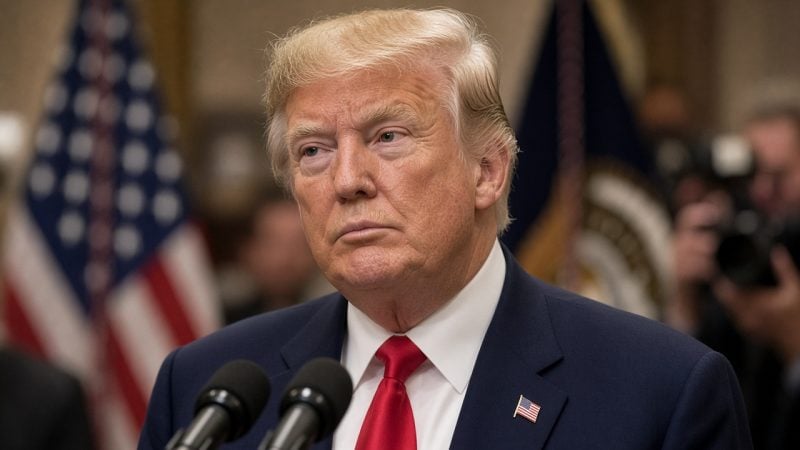
Trump and South Korea’s Lee Jae Myung hail progress on $350B investment deal

Trump and South Korea’s Lee Jae Myung hail progress on $350B investment deal

The two leaders announced the first concrete project under their long-stalled bilateral agreement, a $22.3 billion gas-fired power plant in Texas aimed at fueling AI infrastructure.

After more than a year of handshakes, headlines, and not much else, the US-South Korea investment mega-deal finally has something to show for itself.

President Donald Trump and South Korean President Lee Jae Myung met on the sidelines of the UN General Assembly in New York on September 22 and announced what both sides are calling “significant progress” on implementing their $350 billion bilateral investment and trade agreement. The centerpiece: a $22.3 billion gas-fired power plant in Encinal, Texas, designed to generate 6.3 gigawatts of electricity for AI data centers and semiconductor manufacturing facilities.

From framework to foundation

The deal was originally set in motion back in July 2025, when the two countries agreed on a broad framework that would see South Korea pour capital into US strategic projects in exchange for tariff relief. Under the terms, US tariffs on South Korean goods drop from 25% to 15%, a meaningful discount for Korean exporters who had been absorbing punishing levies.

The total package breaks down into $200 billion earmarked for strategic sectors and $150 billion for shipbuilding cooperation. To keep the arrangement from draining South Korea’s foreign exchange reserves, both sides agreed to an annual investment cap of $20 billion.

Advertisement

South Korea’s parliament passed legislation to implement the agreement on March 12, 2026, clearing a domestic hurdle that had contributed to months of delays. Critics in Seoul had questioned whether the deal’s commercial viability justified the scale of financial commitment, and the legislative process reflected that skepticism.

The Texas power plant is the first project to move from spreadsheet to shovel. Two additional initiatives, involving nuclear reactors and an Alaska LNG pipeline, remain under review. Neither has received formal approval yet, but both sit squarely within the agreement’s strategic energy focus.

Why a gas plant for AI

The 6.3 GW capacity of the planned Texas facility is enormous. For context, that’s roughly enough to power several million homes, or in this case, the increasingly voracious electricity demands of large-scale AI computing and chip fabrication.

For South Korea, the investment serves a dual purpose. It satisfies the deal’s requirement to fund US-based strategic infrastructure while also positioning Korean firms within the supply chain powering America’s AI ambitions.

The broader strategic picture

The investment framework extends well beyond energy. Discussions between Trump and Lee also touched on nuclear-powered submarines, shipbuilding cooperation, and the transfer of wartime operational control.

The tariff reduction from 25% to 15% is significant for Korean manufacturers, particularly in autos and electronics. Korean automakers like Hyundai and Kia have been expanding US production to sidestep tariffs, but a 10 percentage point cut eases the pressure on imports that still flow across the Pacific. Electronics giants like Samsung and LG stand to benefit similarly.

What to watch next

The annual $20 billion cap means this deal will take well over a decade to fully deploy. The two projects still under review, nuclear reactors and the Alaska LNG pipeline, will be the next test of whether the framework can produce results at scale.

Disclosure: This article was edited by Editorial Team. For more information on how we create and review content, see our Editorial Policy.
Trump and South Korea’s Lee Jae Myung hail progress on $350B investment deal

The two leaders announced the first concrete project under their long-stalled bilateral agreement, a $22.3 billion gas-fired power plant in Texas aimed at fueling AI infrastructure.

After more than a year of handshakes, headlines, and not much else, the US-South Korea investment mega-deal finally has something to show for itself.

President Donald Trump and South Korean President Lee Jae Myung met on the sidelines of the UN General Assembly in New York on September 22 and announced what both sides are calling “significant progress” on implementing their $350 billion bilateral investment and trade agreement. The centerpiece: a $22.3 billion gas-fired power plant in Encinal, Texas, designed to generate 6.3 gigawatts of electricity for AI data centers and semiconductor manufacturing facilities.

From framework to foundation

The deal was originally set in motion back in July 2025, when the two countries agreed on a broad framework that would see South Korea pour capital into US strategic projects in exchange for tariff relief. Under the terms, US tariffs on South Korean goods drop from 25% to 15%, a meaningful discount for Korean exporters who had been absorbing punishing levies.

The total package breaks down into $200 billion earmarked for strategic sectors and $150 billion for shipbuilding cooperation. To keep the arrangement from draining South Korea’s foreign exchange reserves, both sides agreed to an annual investment cap of $20 billion.

Advertisement

South Korea’s parliament passed legislation to implement the agreement on March 12, 2026, clearing a domestic hurdle that had contributed to months of delays. Critics in Seoul had questioned whether the deal’s commercial viability justified the scale of financial commitment, and the legislative process reflected that skepticism.

The Texas power plant is the first project to move from spreadsheet to shovel. Two additional initiatives, involving nuclear reactors and an Alaska LNG pipeline, remain under review. Neither has received formal approval yet, but both sit squarely within the agreement’s strategic energy focus.

Why a gas plant for AI

The 6.3 GW capacity of the planned Texas facility is enormous. For context, that’s roughly enough to power several million homes, or in this case, the increasingly voracious electricity demands of large-scale AI computing and chip fabrication.

For South Korea, the investment serves a dual purpose. It satisfies the deal’s requirement to fund US-based strategic infrastructure while also positioning Korean firms within the supply chain powering America’s AI ambitions.

The broader strategic picture

The investment framework extends well beyond energy. Discussions between Trump and Lee also touched on nuclear-powered submarines, shipbuilding cooperation, and the transfer of wartime operational control.

The tariff reduction from 25% to 15% is significant for Korean manufacturers, particularly in autos and electronics. Korean automakers like Hyundai and Kia have been expanding US production to sidestep tariffs, but a 10 percentage point cut eases the pressure on imports that still flow across the Pacific. Electronics giants like Samsung and LG stand to benefit similarly.

What to watch next

The annual $20 billion cap means this deal will take well over a decade to fully deploy. The two projects still under review, nuclear reactors and the Alaska LNG pipeline, will be the next test of whether the framework can produce results at scale.

Disclosure: This article was edited by Editorial Team. For more information on how we create and review content, see our Editorial Policy.