
Trump calls US-Japan yen purchases a signal of friendship, and crypto markets are paying attention

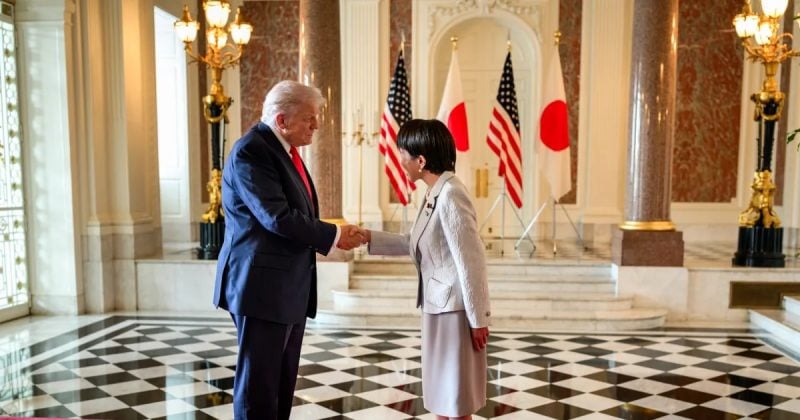
Via whitehouse.gov

Trump calls US-Japan yen purchases a signal of friendship, and crypto markets are paying attention

The first coordinated US-Japan currency intervention since 2011 moved the yen roughly eight points and revived fears of carry trade unwinding that rocked Bitcoin in 2024.

The US and Japan just tag-teamed the currency market for the first time in 15 years. President Donald Trump confirmed that the US Treasury coordinated with Japan on a massive yen-buying intervention on July 31, describing it as a “signal of friendship” with Tokyo. The yen had been sliding to a 40-year low against the dollar, and both governments apparently decided that friendship means not letting your ally’s currency crater into oblivion.

The intervention was substantial. Japanese authorities estimated the operation at approximately ¥8.45 trillion, or roughly $53 billion. USD/JPY dropped from near 164 to the 156-157 range in the aftermath.

What actually happened and why it matters

Coordinated currency interventions are rare. The last time the US and Japan jointly stepped into currency markets was 2011, back when the yen was surging after the Fukushima disaster and both countries needed to prevent a deflationary spiral in Japan. This time, the problem was reversed: the yen was too weak, not too strong.

The yen’s decline through 2026 has been driven largely by interest rate differentials. Japan has kept rates relatively low compared to the US, making the dollar far more attractive for yield-seeking capital. That dynamic created a persistent sell-off in the yen that eventually pushed it to levels not seen since the mid-1980s.

Advertisement

Japanese Finance Minister Satsuki Katayama confirmed the intervention and signaled that more could follow. US Treasury Secretary Scott Bessent struck a similar tone, saying additional actions would be considered against “disorderly” market movements.

Trump framed the whole thing as geopolitically constructive, emphasizing financial benefits for both the US and the global economy. The relationship between the US under Trump and Japan under Prime Minister Sanae Takaichi is being characterized as entering a new phase, one where currency coordination apparently serves as diplomatic currency.

The carry trade ghost that haunts crypto

The yen carry trade, borrowing cheap yen to invest in higher-yielding assets elsewhere, has been one of the most popular trades in global finance for years. When the yen suddenly strengthens, those trades start losing money. Traders rush to unwind positions, selling risk assets to cover their yen-denominated borrowing.

In August 2024, a Bank of Japan rate hike triggered a rapid yen strengthening that contributed to a sharp Bitcoin sell-off. The correlation between yen carry trade unwinding and crypto volatility isn’t theoretical. It played out in real time.

This latest intervention, moving USD/JPY roughly eight points in short order, has naturally revived those concerns. If the US and Japan continue to prop up the yen through coordinated purchases, the carry trade becomes increasingly risky. Traders borrowing yen to buy Bitcoin or other crypto assets face the prospect of their funding currency appreciating against them, squeezing returns or forcing liquidations.

What this means for investors

Bessent’s comment about acting against “disorderly” movements cuts both ways. It suggests the US won’t let the yen collapse, but it also implies tolerance for orderly depreciation.

Watch the 155 level on USD/JPY. If the pair breaks below that, it signals the intervention has legs and carry trade unwinding could accelerate. Bitcoin’s correlation with risk assets remains elevated in 2026, meaning a broad deleveraging event triggered by yen dynamics would almost certainly drag crypto lower alongside equities.

Interest rate differentials between the US and Japan remain wide, which means the fundamental pressure on the yen hasn’t disappeared. The intervention addresses the symptom, not the cause. Unless the Bank of Japan raises rates meaningfully or the Fed cuts, the gravitational pull on USD/JPY is still upward.

Disclosure: This article was edited by Editorial Team. For more information on how we create and review content, see our Editorial Policy.

Trump calls US-Japan yen purchases a signal of friendship, and crypto markets are paying attention

Trump calls US-Japan yen purchases a signal of friendship, and crypto markets are paying attention

The first coordinated US-Japan currency intervention since 2011 moved the yen roughly eight points and revived fears of carry trade unwinding that rocked Bitcoin in 2024.

Via whitehouse.gov

The US and Japan just tag-teamed the currency market for the first time in 15 years. President Donald Trump confirmed that the US Treasury coordinated with Japan on a massive yen-buying intervention on July 31, describing it as a “signal of friendship” with Tokyo. The yen had been sliding to a 40-year low against the dollar, and both governments apparently decided that friendship means not letting your ally’s currency crater into oblivion.

The intervention was substantial. Japanese authorities estimated the operation at approximately ¥8.45 trillion, or roughly $53 billion. USD/JPY dropped from near 164 to the 156-157 range in the aftermath.

What actually happened and why it matters

Coordinated currency interventions are rare. The last time the US and Japan jointly stepped into currency markets was 2011, back when the yen was surging after the Fukushima disaster and both countries needed to prevent a deflationary spiral in Japan. This time, the problem was reversed: the yen was too weak, not too strong.

The yen’s decline through 2026 has been driven largely by interest rate differentials. Japan has kept rates relatively low compared to the US, making the dollar far more attractive for yield-seeking capital. That dynamic created a persistent sell-off in the yen that eventually pushed it to levels not seen since the mid-1980s.

Advertisement

Japanese Finance Minister Satsuki Katayama confirmed the intervention and signaled that more could follow. US Treasury Secretary Scott Bessent struck a similar tone, saying additional actions would be considered against “disorderly” market movements.

Trump framed the whole thing as geopolitically constructive, emphasizing financial benefits for both the US and the global economy. The relationship between the US under Trump and Japan under Prime Minister Sanae Takaichi is being characterized as entering a new phase, one where currency coordination apparently serves as diplomatic currency.

The carry trade ghost that haunts crypto

The yen carry trade, borrowing cheap yen to invest in higher-yielding assets elsewhere, has been one of the most popular trades in global finance for years. When the yen suddenly strengthens, those trades start losing money. Traders rush to unwind positions, selling risk assets to cover their yen-denominated borrowing.

In August 2024, a Bank of Japan rate hike triggered a rapid yen strengthening that contributed to a sharp Bitcoin sell-off. The correlation between yen carry trade unwinding and crypto volatility isn’t theoretical. It played out in real time.

This latest intervention, moving USD/JPY roughly eight points in short order, has naturally revived those concerns. If the US and Japan continue to prop up the yen through coordinated purchases, the carry trade becomes increasingly risky. Traders borrowing yen to buy Bitcoin or other crypto assets face the prospect of their funding currency appreciating against them, squeezing returns or forcing liquidations.

What this means for investors

Bessent’s comment about acting against “disorderly” movements cuts both ways. It suggests the US won’t let the yen collapse, but it also implies tolerance for orderly depreciation.

Watch the 155 level on USD/JPY. If the pair breaks below that, it signals the intervention has legs and carry trade unwinding could accelerate. Bitcoin’s correlation with risk assets remains elevated in 2026, meaning a broad deleveraging event triggered by yen dynamics would almost certainly drag crypto lower alongside equities.

Interest rate differentials between the US and Japan remain wide, which means the fundamental pressure on the yen hasn’t disappeared. The intervention addresses the symptom, not the cause. Unless the Bank of Japan raises rates meaningfully or the Fed cuts, the gravitational pull on USD/JPY is still upward.

Disclosure: This article was edited by Editorial Team. For more information on how we create and review content, see our Editorial Policy.