
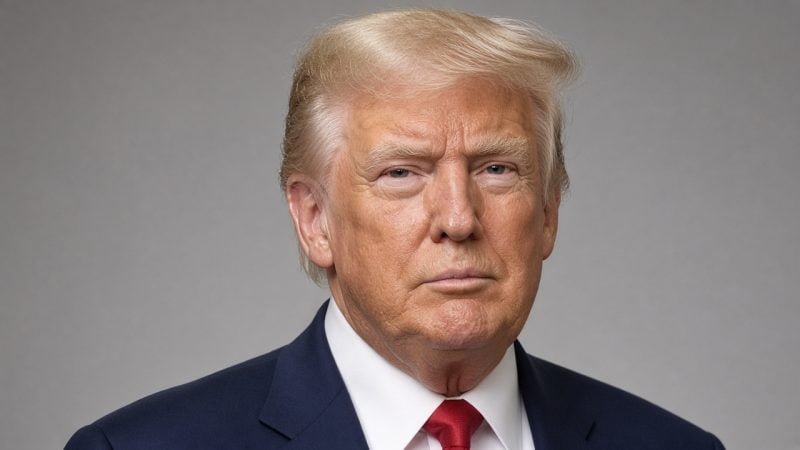
Trump and Xi meet as investors navigate US-China AI divide
Cross-border AI investment has surged from $436 million to $8.9 billion in three years, even as Washington and Beijing race to build independent tech supply chains
The world’s two largest economies are locked in an AI arms race. Their investors, apparently, didn’t get the memo.
As President Trump and President Xi Jinping prepare to meet in Washington around September 24, the capital flowing between the US and China tells a story that contradicts the confrontational rhetoric dominating headlines. Chinese and Hong Kong investors have poured approximately $8.9 billion into US AI funding rounds as of mid-September 2026, up from just $436 million in 2023. That’s a roughly 20x increase during a period when both governments were actively trying to decouple their technology sectors.
Money talks louder than tariffs
US Wall Street banks have served as bookrunners on 19 Chinese high-tech equity capital market deals worth $17.2 billion in 2026. Meanwhile, the total value of US equities held by investors from Hong Kong and mainland China has climbed 23% over the past year, now exceeding $750 billion.
Chinese mutual funds have developed a particular appetite for US semiconductor stocks. Names like Micron Technology and AMD have become favorites, which carries a certain irony given that semiconductors sit at the very center of the US-China technology rivalry. Washington has spent years trying to restrict China’s access to advanced chips. Chinese investors have responded by buying shares in the companies making them.
What the summit is really about
This meeting follows Xi’s previous engagement in Beijing during May 2026, establishing a pattern of sustained high-level dialogue that both sides seem motivated to maintain. AI is expected to be a primary agenda item, alongside the broader question of how two competing superpowers manage overlapping technological ambitions without stumbling into a deeper conflict.
The news moving money, markets, and the world—before your day starts.
Daily. Free. Join 34,000+ readers across crypto, finance, and policy.
Both nations have been working aggressively to establish independent AI supply chains. The US has leaned on export controls targeting advanced semiconductors and chip manufacturing equipment. China has responded with its own restrictions on critical minerals and accelerated domestic chip development programs.
Expectations for any breakthrough agreement from the summit remain low. These meetings tend to produce frameworks, working groups, and carefully worded joint statements rather than concrete policy shifts.
The investment case on both sides
For Chinese investors, the attraction to US AI stocks is straightforward. American companies remain at the frontier of large language models, AI infrastructure, and the semiconductor hardware that powers all of it. Even as China develops competitive alternatives like DeepSeek and other domestic AI platforms, the US ecosystem still commands premium valuations for a reason: it’s where the most advanced capabilities are being built.
The $750 billion in US equities held by Chinese and Hong Kong investors represents a substantial position that won’t unwind easily or quickly. That figure alone suggests the financial relationship between these two rivals has developed its own gravitational pull, one that political leaders on both sides will need to account for whether they like it or not.