
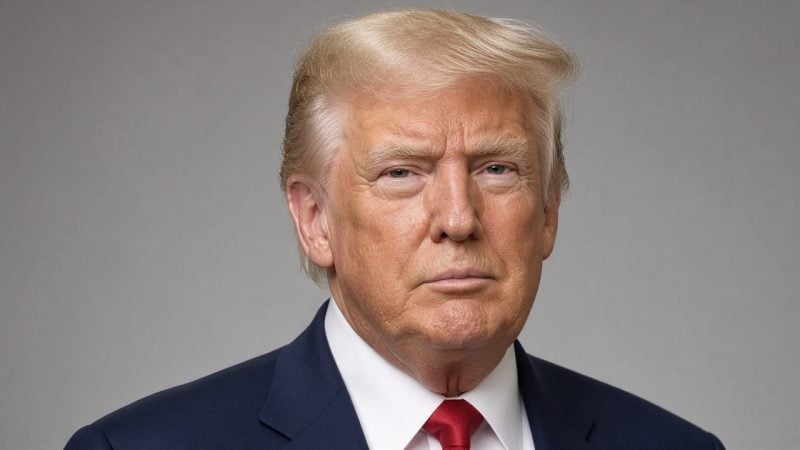
Trump hosts Xi for two-day Washington summit as tariff truce clock ticks

Trump hosts Xi for two-day Washington summit as tariff truce clock ticks

The September summit puts AI governance, trade, Taiwan, and Iran on the table while Silicon Valley's biggest names prep for a state dinner

President Donald Trump is welcoming Chinese President Xi Jinping to Washington for a summit on September 23-24, 2026, a diplomatic event that carries the weight of a ticking clock. The one-year tariff truce struck in Busan in 2025 expires later this year, and neither side has signaled whether it will be renewed, extended, or quietly allowed to collapse.

The visit marks the second face-to-face meeting between the two leaders in roughly four months, following their May 2026 sit-down in Beijing. That meeting produced a “Board of Trade” and a “Board of Investment,” institutional frameworks meant to give the economic relationship more structure and fewer Twitter-era surprises. This week’s Washington gathering is supposed to build on that foundation.

What’s on the agenda

The official topics read like a geopolitical greatest-hits compilation: trade tariffs, Taiwan, Iran, and artificial intelligence. The AI component is newer to the bilateral conversation and has been deliberately woven into the economic negotiations during preparatory talks led by US Treasury Secretary Scott Bessent and Chinese Vice Premier He Lifeng.

AI governance is where both sides see potential overlap, or at least enough shared anxiety about runaway development to justify sitting in the same room. The framing appears centered on safety standards and guardrails rather than any grand technology-sharing pact.

Advertisement

Trade remains the centerpiece. The Busan agreement suspended certain tariffs and export controls for a year, creating a window of relative calm for businesses on both sides of the Pacific. That window is closing, and the Washington summit may determine whether the next phase looks like continued détente or a return to escalatory measures.

Silicon Valley gets a seat at the table

Perhaps the most telling detail about this summit is the guest list for the state dinner. Sam Altman of OpenAI, Jensen Huang of Nvidia, and Tim Cook of Apple are all expected to attend. Each runs a company with deep, complicated exposure to China, whether through supply chains, chip sales, or the global AI race.

Nvidia has spent the past two years navigating increasingly restrictive US export controls on advanced semiconductors, controls that were partially suspended under the Busan truce. Apple manufactures the vast majority of its devices in China. OpenAI is building technology that both governments view as strategically critical.

Notably, Xi is not expected to bring a comparable delegation of Chinese tech CEOs. The asymmetry is worth watching. It could reflect Beijing’s tighter control over its private sector, or it could simply mean China’s tech leaders were told this particular dinner wasn’t the venue.

Expectations are deliberately low

Diplomats on both sides have been managing expectations with the enthusiasm of someone defusing a bomb. The prevailing narrative heading into the summit is one of stability and reaffirmation rather than breakthrough.

The May 2026 Beijing summit followed a similar pattern. It produced institutional structures, the trade and investment boards, rather than headline-grabbing deals. It also secured purchase commitments by China for agricultural goods and aircraft, though it did not resolve core disputes such as Taiwan’s status or the regulation of advanced chip exports.

For markets, the calculus is relatively straightforward. A summit that reaffirms the existing tariff truce and signals willingness to extend it past its late-2026 expiration would likely provide a tailwind for trade-sensitive sectors and tech stocks in particular. Nvidia, which sits at the intersection of AI and export controls, is an obvious barometer. Any language around easing semiconductor restrictions, even modestly, could move that stock meaningfully.

But the most important number isn’t in any communiqué. It’s the calendar. The Busan tariff truce expires in late 2026, and every day that passes without a clear extension or replacement agreement adds uncertainty for companies planning supply chains, investment cycles, and hiring.

Disclosure: This article was edited by Editorial Team. For more information on how we create and review content, see our Editorial Policy.
Trump hosts Xi for two-day Washington summit as tariff truce clock ticks

The September summit puts AI governance, trade, Taiwan, and Iran on the table while Silicon Valley's biggest names prep for a state dinner

President Donald Trump is welcoming Chinese President Xi Jinping to Washington for a summit on September 23-24, 2026, a diplomatic event that carries the weight of a ticking clock. The one-year tariff truce struck in Busan in 2025 expires later this year, and neither side has signaled whether it will be renewed, extended, or quietly allowed to collapse.

The visit marks the second face-to-face meeting between the two leaders in roughly four months, following their May 2026 sit-down in Beijing. That meeting produced a “Board of Trade” and a “Board of Investment,” institutional frameworks meant to give the economic relationship more structure and fewer Twitter-era surprises. This week’s Washington gathering is supposed to build on that foundation.

What’s on the agenda

The official topics read like a geopolitical greatest-hits compilation: trade tariffs, Taiwan, Iran, and artificial intelligence. The AI component is newer to the bilateral conversation and has been deliberately woven into the economic negotiations during preparatory talks led by US Treasury Secretary Scott Bessent and Chinese Vice Premier He Lifeng.

AI governance is where both sides see potential overlap, or at least enough shared anxiety about runaway development to justify sitting in the same room. The framing appears centered on safety standards and guardrails rather than any grand technology-sharing pact.

Advertisement

Trade remains the centerpiece. The Busan agreement suspended certain tariffs and export controls for a year, creating a window of relative calm for businesses on both sides of the Pacific. That window is closing, and the Washington summit may determine whether the next phase looks like continued détente or a return to escalatory measures.

Silicon Valley gets a seat at the table

Perhaps the most telling detail about this summit is the guest list for the state dinner. Sam Altman of OpenAI, Jensen Huang of Nvidia, and Tim Cook of Apple are all expected to attend. Each runs a company with deep, complicated exposure to China, whether through supply chains, chip sales, or the global AI race.

Nvidia has spent the past two years navigating increasingly restrictive US export controls on advanced semiconductors, controls that were partially suspended under the Busan truce. Apple manufactures the vast majority of its devices in China. OpenAI is building technology that both governments view as strategically critical.

Notably, Xi is not expected to bring a comparable delegation of Chinese tech CEOs. The asymmetry is worth watching. It could reflect Beijing’s tighter control over its private sector, or it could simply mean China’s tech leaders were told this particular dinner wasn’t the venue.

Expectations are deliberately low

Diplomats on both sides have been managing expectations with the enthusiasm of someone defusing a bomb. The prevailing narrative heading into the summit is one of stability and reaffirmation rather than breakthrough.

The May 2026 Beijing summit followed a similar pattern. It produced institutional structures, the trade and investment boards, rather than headline-grabbing deals. It also secured purchase commitments by China for agricultural goods and aircraft, though it did not resolve core disputes such as Taiwan’s status or the regulation of advanced chip exports.

For markets, the calculus is relatively straightforward. A summit that reaffirms the existing tariff truce and signals willingness to extend it past its late-2026 expiration would likely provide a tailwind for trade-sensitive sectors and tech stocks in particular. Nvidia, which sits at the intersection of AI and export controls, is an obvious barometer. Any language around easing semiconductor restrictions, even modestly, could move that stock meaningfully.

But the most important number isn’t in any communiqué. It’s the calendar. The Busan tariff truce expires in late 2026, and every day that passes without a clear extension or replacement agreement adds uncertainty for companies planning supply chains, investment cycles, and hiring.

Disclosure: This article was edited by Editorial Team. For more information on how we create and review content, see our Editorial Policy.