
TSMC’s Arizona fab delays could squeeze Bitcoin mining chip supply through 2027

Via tomshardware.com

TSMC’s Arizona fab delays could squeeze Bitcoin mining chip supply through 2027

The world's largest chipmaker says building in the US takes twice as long as Taiwan, and crypto miners will feel the pinch

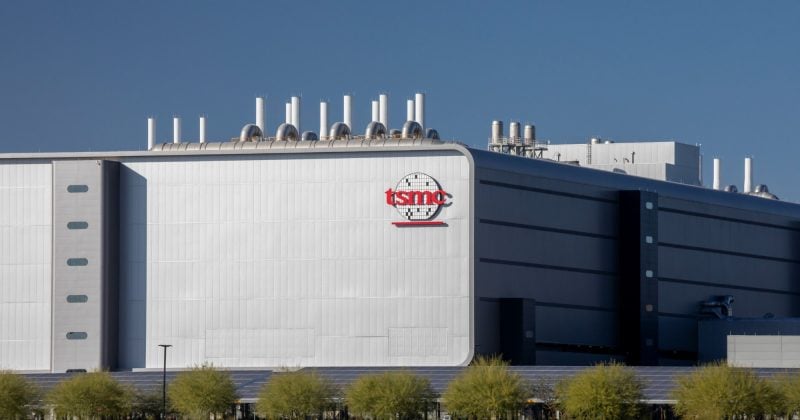
TSMC, the company responsible for manufacturing roughly 90% of the world’s most advanced semiconductors, now expects its second Arizona fabrication plant to begin high-volume production in the second half of 2027. The reason? Inspections and calibrations are taking longer than anticipated, a polite way of saying that building cutting-edge chip factories on American soil is proving to be extraordinarily difficult.

The $165 billion reality check

TSMC has committed approximately $165 billion to its Arizona operations. That figure is backstopped by $6.6 billion in CHIPS Act grants and $5 billion in federal loans, making it one of the largest foreign manufacturing investments in US history.

TSMC CEO C.C. Wei has stated that building fabs in the US takes at least twice as long as constructing equivalent facilities in Taiwan. The company’s CFO has noted that new fabs require “thousands of specialized workers and years of calibration” before they can achieve high-volume manufacturing standards. Equipment installation for the second Arizona fab is currently slated for the third quarter of 2026, with volume production following roughly a year later.

Advertisement

The delays stem from workforce shortages, prolonged permitting processes, and the complexity of calibrating tools that operate at the nanometer scale.

Why crypto miners should pay attention

TSMC fabricates processors at the 3nm, 5nm, and 7nm nodes that define the bleeding edge of semiconductor technology. Those same process nodes are what companies like Bitmain and MicroBT rely on to produce next-generation Bitcoin mining ASICs.

The Arizona expansion was supposed to add meaningful new production volume and geographic diversification to the supply chain. Pushing that timeline back means the global semiconductor supply remains more concentrated and more constrained than investors had been pricing in.

The ripple effects across markets

TSMC’s production capacity is the bottleneck for virtually every major technology trend happening right now. AI chips from Nvidia and AMD are manufactured by TSMC. Apple’s latest processors come off TSMC lines. The same goes for advanced networking chips, automotive semiconductors, and crypto mining hardware.

For Bitcoin miners specifically, the second half of 2027 is a long time to wait for additional production capacity from the world’s most important chipmaker. That’s well past the next halving event, which is expected in 2028, meaning miners will need to navigate tightening economics with potentially limited access to efficiency-improving hardware upgrades.

Disclosure: This article was edited by Editorial Team. For more information on how we create and review content, see our Editorial Policy.

TSMC’s Arizona fab delays could squeeze Bitcoin mining chip supply through 2027

TSMC’s Arizona fab delays could squeeze Bitcoin mining chip supply through 2027

The world's largest chipmaker says building in the US takes twice as long as Taiwan, and crypto miners will feel the pinch

Via tomshardware.com

TSMC, the company responsible for manufacturing roughly 90% of the world’s most advanced semiconductors, now expects its second Arizona fabrication plant to begin high-volume production in the second half of 2027. The reason? Inspections and calibrations are taking longer than anticipated, a polite way of saying that building cutting-edge chip factories on American soil is proving to be extraordinarily difficult.

The $165 billion reality check

TSMC has committed approximately $165 billion to its Arizona operations. That figure is backstopped by $6.6 billion in CHIPS Act grants and $5 billion in federal loans, making it one of the largest foreign manufacturing investments in US history.

TSMC CEO C.C. Wei has stated that building fabs in the US takes at least twice as long as constructing equivalent facilities in Taiwan. The company’s CFO has noted that new fabs require “thousands of specialized workers and years of calibration” before they can achieve high-volume manufacturing standards. Equipment installation for the second Arizona fab is currently slated for the third quarter of 2026, with volume production following roughly a year later.

Advertisement

The delays stem from workforce shortages, prolonged permitting processes, and the complexity of calibrating tools that operate at the nanometer scale.

Why crypto miners should pay attention

TSMC fabricates processors at the 3nm, 5nm, and 7nm nodes that define the bleeding edge of semiconductor technology. Those same process nodes are what companies like Bitmain and MicroBT rely on to produce next-generation Bitcoin mining ASICs.

The Arizona expansion was supposed to add meaningful new production volume and geographic diversification to the supply chain. Pushing that timeline back means the global semiconductor supply remains more concentrated and more constrained than investors had been pricing in.

The ripple effects across markets

TSMC’s production capacity is the bottleneck for virtually every major technology trend happening right now. AI chips from Nvidia and AMD are manufactured by TSMC. Apple’s latest processors come off TSMC lines. The same goes for advanced networking chips, automotive semiconductors, and crypto mining hardware.

For Bitcoin miners specifically, the second half of 2027 is a long time to wait for additional production capacity from the world’s most important chipmaker. That’s well past the next halving event, which is expected in 2028, meaning miners will need to navigate tightening economics with potentially limited access to efficiency-improving hardware upgrades.

Disclosure: This article was edited by Editorial Team. For more information on how we create and review content, see our Editorial Policy.