
Fire erupts at Tyumen oil refinery after drone strike 2,000 km inside Russia

Fire erupts at Tyumen oil refinery after drone strike 2,000 km inside Russia

Ukraine's deepest confirmed strike on Russian energy infrastructure rattles oil markets and raises fresh questions about commodity-linked crypto assets

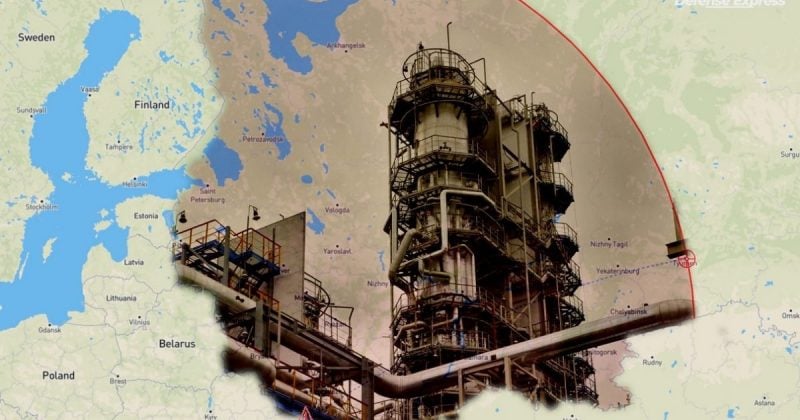
Ukrainian drones hit the Tyumen oil refinery, one of Western Siberia’s largest crude processing facilities, on June 20. The refinery sits roughly 2,000 kilometers inside Russian territory, making it the deepest confirmed strike on Russia’s energy infrastructure since the conflict began.

What happened at Tyumen

The facility, also known as the Antipinsky refinery, processes approximately 7.5 to 9 million metric tons of crude oil annually.

Ukraine deployed its domestically developed Fire Point FP-1 drones for the operation. The FP-1 has an operational range exceeding 2,000 kilometers.

Advertisement

Russian authorities initially claimed the drones were intercepted and caused no damage. Satellite imagery told a different story. Post-strike analysis confirmed damage to a diesel fuel deep-refining unit at the facility, contradicting the official narrative from Moscow.

Ukrainian President Volodymyr Zelensky acknowledged the strike’s success, pointing to it as evidence of Ukraine’s growing capacity to target critical infrastructure well beyond its own borders.

Why crypto should pay attention

When energy costs spike, mining economics shift. Miners in regions with high electricity costs get squeezed, which can affect hash rate distribution and, in extreme cases, network security dynamics.

The broader pattern of Ukraine targeting Russian energy assets isn’t new. It’s been a deliberate strategic choice throughout 2025 and into 2026, aimed at degrading Russia’s economic capacity to sustain the war effort. But the Tyumen strike represents a meaningful escalation in both range and ambition. Previous strikes largely targeted facilities closer to the front lines or in southern Russia.

For traders watching energy-sensitive crypto plays, including tokens tied to energy trading, utility infrastructure, or commodity-linked protocols, the next several weeks will be instructive.

Disclosure: This article was edited by Editorial Team. For more information on how we create and review content, see our Editorial Policy.

Fire erupts at Tyumen oil refinery after drone strike 2,000 km inside Russia

Fire erupts at Tyumen oil refinery after drone strike 2,000 km inside Russia

Ukraine's deepest confirmed strike on Russian energy infrastructure rattles oil markets and raises fresh questions about commodity-linked crypto assets

Ukrainian drones hit the Tyumen oil refinery, one of Western Siberia’s largest crude processing facilities, on June 20. The refinery sits roughly 2,000 kilometers inside Russian territory, making it the deepest confirmed strike on Russia’s energy infrastructure since the conflict began.

What happened at Tyumen

The facility, also known as the Antipinsky refinery, processes approximately 7.5 to 9 million metric tons of crude oil annually.

Ukraine deployed its domestically developed Fire Point FP-1 drones for the operation. The FP-1 has an operational range exceeding 2,000 kilometers.

Advertisement

Russian authorities initially claimed the drones were intercepted and caused no damage. Satellite imagery told a different story. Post-strike analysis confirmed damage to a diesel fuel deep-refining unit at the facility, contradicting the official narrative from Moscow.

Ukrainian President Volodymyr Zelensky acknowledged the strike’s success, pointing to it as evidence of Ukraine’s growing capacity to target critical infrastructure well beyond its own borders.

Why crypto should pay attention

When energy costs spike, mining economics shift. Miners in regions with high electricity costs get squeezed, which can affect hash rate distribution and, in extreme cases, network security dynamics.

The broader pattern of Ukraine targeting Russian energy assets isn’t new. It’s been a deliberate strategic choice throughout 2025 and into 2026, aimed at degrading Russia’s economic capacity to sustain the war effort. But the Tyumen strike represents a meaningful escalation in both range and ambition. Previous strikes largely targeted facilities closer to the front lines or in southern Russia.

For traders watching energy-sensitive crypto plays, including tokens tied to energy trading, utility infrastructure, or commodity-linked protocols, the next several weeks will be instructive.

Disclosure: This article was edited by Editorial Team. For more information on how we create and review content, see our Editorial Policy.