
Uber commits over $10B to scale autonomous vehicles across dozens of cities

Via stockpil.com

Uber commits over $10B to scale autonomous vehicles across dozens of cities

The ride-hailing giant is abandoning its asset-light playbook with massive fleet purchases and equity stakes in AV developers

Uber, the company that built a $170B+ empire by convincing other people to use their own cars, is now buying its own. Over $10 billion worth of them, to be specific.

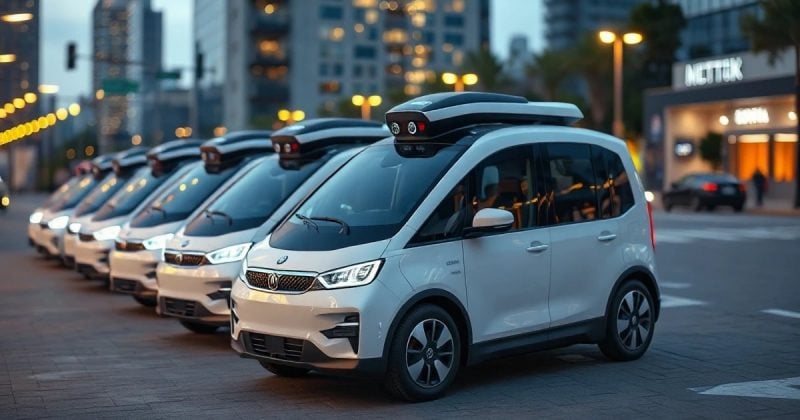
The ride-hailing giant is making its largest capital commitment ever to autonomous vehicles, splitting roughly $7.5 billion toward fleet purchases and over $2.5 billion into equity stakes in AV developers and manufacturers. The goal: launch robotaxi services in at least 15 cities by the end of 2026 and scale to 28 cities by 2028.

The end of asset-light Uber

Uber’s answer is a hybrid model. Rather than going all-in on removing humans from the equation, the company is betting that a mixed fleet of autonomous and human-driven vehicles is more scalable and reliable than a pure robotaxi approach. In practice, that means riders might get a self-driving car on one trip and a human driver on the next, depending on availability, route complexity, and city.

Building the infrastructure

Uber established its Autonomous Solutions unit back in February 2026, a dedicated division designed to support AV partners with data provision, mapping, and commercialization services.

Advertisement

The partner list is notable. Uber has previously invested $300 million each in Lucid and Rivian, positioning both EV makers as potential suppliers for its autonomous fleet. The marquee partnership, though, is with Nvidia. The two companies are collaborating on a fleet of 100,000 autonomous vehicles expected to begin rolling out in 2027.

Recent city rollouts have included Atlanta, Austin, Las Vegas, and Dallas, all markets with relatively favorable regulatory environments for AV testing and deployment.

Why Uber thinks hybrid wins

Uber hasn’t been shy about criticizing all-AV approaches. The company has positioned its hybrid strategy as fundamentally more practical than what competitors like Waymo are attempting.

By maintaining a human driver network alongside its autonomous fleet, Uber can guarantee coverage and reliability in situations where self-driving technology falls short. If your robotaxi can’t handle a particular route or condition, a human driver can step in seamlessly through the same app.

What this means for investors

A $10 billion capital commitment is the kind of number that makes Wall Street analysts reach for their calculators. This is Uber fundamentally changing its capital allocation strategy, moving from a platform that generates cash with minimal physical assets to one that owns and operates a massive vehicle fleet.

The bull case is straightforward. If autonomous vehicles are the future of transportation, and Uber can successfully integrate them into its existing network, no driver payouts on autonomous trips means Uber keeps a much larger share of each fare. Scale that across 28 cities by 2028, and the revenue potential is enormous.

The bear case is equally clear. Uber is spending $10 billion on a technology that has been perpetually “two years away” for the better part of a decade. Fleet ownership introduces depreciation, maintenance, insurance, and operational costs that Uber has never had to manage at this scale. And if the Nvidia partnership’s 100,000-vehicle target slips into 2028 or beyond, Uber could find itself with billions deployed and limited returns.

Disclosure: This article was edited by Editorial Team. For more information on how we create and review content, see our Editorial Policy.

Uber commits over $10B to scale autonomous vehicles across dozens of cities

Uber commits over $10B to scale autonomous vehicles across dozens of cities

The ride-hailing giant is abandoning its asset-light playbook with massive fleet purchases and equity stakes in AV developers

Via stockpil.com

Uber, the company that built a $170B+ empire by convincing other people to use their own cars, is now buying its own. Over $10 billion worth of them, to be specific.

The ride-hailing giant is making its largest capital commitment ever to autonomous vehicles, splitting roughly $7.5 billion toward fleet purchases and over $2.5 billion into equity stakes in AV developers and manufacturers. The goal: launch robotaxi services in at least 15 cities by the end of 2026 and scale to 28 cities by 2028.

The end of asset-light Uber

Uber’s answer is a hybrid model. Rather than going all-in on removing humans from the equation, the company is betting that a mixed fleet of autonomous and human-driven vehicles is more scalable and reliable than a pure robotaxi approach. In practice, that means riders might get a self-driving car on one trip and a human driver on the next, depending on availability, route complexity, and city.

Building the infrastructure

Uber established its Autonomous Solutions unit back in February 2026, a dedicated division designed to support AV partners with data provision, mapping, and commercialization services.

Advertisement

The partner list is notable. Uber has previously invested $300 million each in Lucid and Rivian, positioning both EV makers as potential suppliers for its autonomous fleet. The marquee partnership, though, is with Nvidia. The two companies are collaborating on a fleet of 100,000 autonomous vehicles expected to begin rolling out in 2027.

Recent city rollouts have included Atlanta, Austin, Las Vegas, and Dallas, all markets with relatively favorable regulatory environments for AV testing and deployment.

Why Uber thinks hybrid wins

Uber hasn’t been shy about criticizing all-AV approaches. The company has positioned its hybrid strategy as fundamentally more practical than what competitors like Waymo are attempting.

By maintaining a human driver network alongside its autonomous fleet, Uber can guarantee coverage and reliability in situations where self-driving technology falls short. If your robotaxi can’t handle a particular route or condition, a human driver can step in seamlessly through the same app.

What this means for investors

A $10 billion capital commitment is the kind of number that makes Wall Street analysts reach for their calculators. This is Uber fundamentally changing its capital allocation strategy, moving from a platform that generates cash with minimal physical assets to one that owns and operates a massive vehicle fleet.

The bull case is straightforward. If autonomous vehicles are the future of transportation, and Uber can successfully integrate them into its existing network, no driver payouts on autonomous trips means Uber keeps a much larger share of each fare. Scale that across 28 cities by 2028, and the revenue potential is enormous.

The bear case is equally clear. Uber is spending $10 billion on a technology that has been perpetually “two years away” for the better part of a decade. Fleet ownership introduces depreciation, maintenance, insurance, and operational costs that Uber has never had to manage at this scale. And if the Nvidia partnership’s 100,000-vehicle target slips into 2028 or beyond, Uber could find itself with billions deployed and limited returns.

Disclosure: This article was edited by Editorial Team. For more information on how we create and review content, see our Editorial Policy.