
UBS Financial Services hit with record $125M fine over repeated anti-money laundering failures

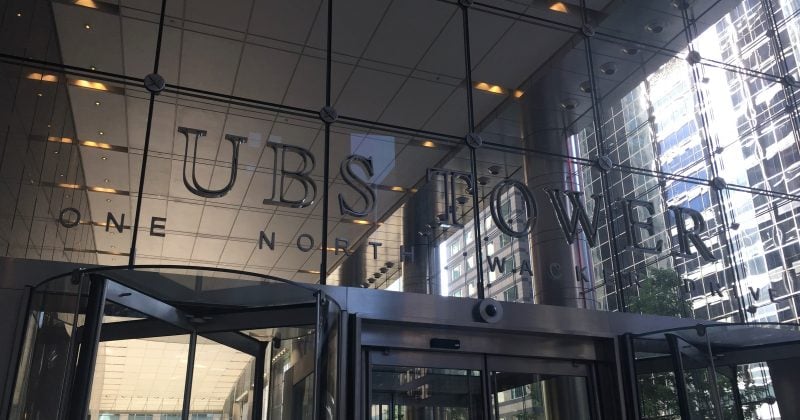
Photo: DonSpencer1 / Wikimedia Commons / CC BY-SA 4.0 (https://creativecommons.org/licenses/by-sa/4.0)

UBS Financial Services hit with record $125M fine over repeated anti-money laundering failures

The penalty marks the largest ever levied against a broker-dealer for Bank Secrecy Act violations, following years of unresolved compliance deficiencies

UBS Financial Services Inc., the US wealth management arm of Swiss banking giant UBS Group AG, just got handed a $125 million bill for willfully and repeatedly violating anti-money laundering rules. The fine, assessed by the Financial Crimes Enforcement Network (FinCEN), is the largest ever imposed on a broker-dealer for Bank Secrecy Act (BSA) infractions.

This isn’t UBS’s first rodeo with FinCEN. The firm was hit with a $14.5 million penalty back in 2018 for similar AML failures. The fact that regulators are back, this time with a fine roughly eight times larger, tells you everything about how seriously they view recidivism in financial compliance.

Advertisement

What UBS got wrong, twice

The enforcement action traces back to deficiencies first flagged in a 2018 consent order. At that time, UBSFS was criticized for poorly monitoring more than 50,000 foreign currency transactions that totaled over $10 billion in value. The firm also failed to conduct adequate customer due diligence on high-risk clients connected to regions notorious for corruption, including Russia and Latin America.

FinCEN determined that the violations were willful, not merely negligent, a distinction that carries significant legal weight and explains the severity of the penalty.

Beyond the financial hit, UBSFS will now be required to undergo an independent third-party review of its entire AML program. The firm must also perform a lookback on suspicious activities that went unreported, particularly transactions linked to drug cartels and international corruption networks.

FinCEN Director Andrea Gacki made the regulatory posture crystal clear: recidivist financial institutions will face strict repercussions.

What this means for investors

The requirement for an independent AML program review and a suspicious activity lookback also creates ongoing uncertainty. If the lookback uncovers additional unreported suspicious activities, UBSFS could face further regulatory actions, referrals to the Department of Justice, or both.

Disclosure: This article was edited by Editorial Team. For more information on how we create and review content, see our Editorial Policy.

UBS Financial Services hit with record $125M fine over repeated anti-money laundering failures

UBS Financial Services hit with record $125M fine over repeated anti-money laundering failures

The penalty marks the largest ever levied against a broker-dealer for Bank Secrecy Act violations, following years of unresolved compliance deficiencies

Photo: DonSpencer1 / Wikimedia Commons / CC BY-SA 4.0 (https://creativecommons.org/licenses/by-sa/4.0)

UBS Financial Services Inc., the US wealth management arm of Swiss banking giant UBS Group AG, just got handed a $125 million bill for willfully and repeatedly violating anti-money laundering rules. The fine, assessed by the Financial Crimes Enforcement Network (FinCEN), is the largest ever imposed on a broker-dealer for Bank Secrecy Act (BSA) infractions.

This isn’t UBS’s first rodeo with FinCEN. The firm was hit with a $14.5 million penalty back in 2018 for similar AML failures. The fact that regulators are back, this time with a fine roughly eight times larger, tells you everything about how seriously they view recidivism in financial compliance.

Advertisement

What UBS got wrong, twice

The enforcement action traces back to deficiencies first flagged in a 2018 consent order. At that time, UBSFS was criticized for poorly monitoring more than 50,000 foreign currency transactions that totaled over $10 billion in value. The firm also failed to conduct adequate customer due diligence on high-risk clients connected to regions notorious for corruption, including Russia and Latin America.

FinCEN determined that the violations were willful, not merely negligent, a distinction that carries significant legal weight and explains the severity of the penalty.

Beyond the financial hit, UBSFS will now be required to undergo an independent third-party review of its entire AML program. The firm must also perform a lookback on suspicious activities that went unreported, particularly transactions linked to drug cartels and international corruption networks.

FinCEN Director Andrea Gacki made the regulatory posture crystal clear: recidivist financial institutions will face strict repercussions.

What this means for investors

The requirement for an independent AML program review and a suspicious activity lookback also creates ongoing uncertainty. If the lookback uncovers additional unreported suspicious activities, UBSFS could face further regulatory actions, referrals to the Department of Justice, or both.

Disclosure: This article was edited by Editorial Team. For more information on how we create and review content, see our Editorial Policy.