
Via militarnyi.com
Ukraine closes Sea of Azov, disrupting Russian export routes and rattling commodity markets
Ukrainian drone strikes on over 90 Russian vessels have shut down a critical shipping corridor that handles a quarter of Russia's grain exports, sending wheat futures surging.
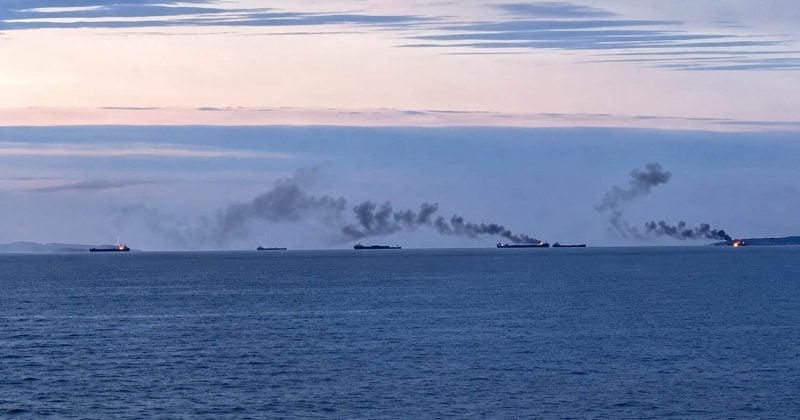
Ukraine just did something that geopolitical analysts have been gaming out for years. It effectively shut down the Sea of Azov as a viable shipping route for Russia, striking as many as 116 commercial vessels in a sustained drone campaign and forcing Moscow to suspend all maritime traffic through the Don-Azov Channel and Kerch Strait.
The closure, which took effect on July 11, 2026, has no set reopening date. And the consequences are already rippling through global commodity markets in ways that matter well beyond the Black Sea region.
What happened and why it matters
Between July 6 and July 14, Ukrainian forces targeted somewhere between 90 and 116 Russian vessels operating in the Sea of Azov. Russia responded by halting all shipping through the Don-Azov Channel and the Kerch Strait at approximately 6:10 p.m. local time on July 11.
The Sea of Azov route historically facilitated roughly 25% of Russia’s grain exports. Russia is the world’s largest wheat exporter, so removing a quarter of its export capacity from the board is not a minor logistical headache. It’s a supply shock.
Wheat export forecasts for Russia in July 2026 have already dropped to approximately 1.5 million metric tons. That represents a roughly 30% decrease compared to the same period last year.
Macro, rates, and crypto—what moved markets and what matters next.
Daily. Free. Join 34,000+ readers across crypto, finance, and policy.
Euronext wheat futures climbed between 4% and 7% on reports of the strikes. Some US futures contracts jumped as much as 8.5%.
The Strait of Hormuz comparison
Analysts are drawing parallels to a “Strait of Hormuz-style crisis,” which is the kind of comparison that makes commodity desks very nervous. The Strait of Hormuz is the narrow waterway through which roughly a fifth of the world’s oil passes daily. The Sea of Azov closure is the agricultural equivalent.
Russia is reportedly exploring alternative transport routes for its grain exports, but rerouting that volume is easier said than done. Rail capacity has limits. Black Sea ports further west face their own security concerns. And every alternative route adds cost, time, and complexity to an already strained supply chain.
The situation echoes previous disruptions to Ukrainian grain exports earlier in the conflict, when Black Sea shipping corridors were contested and global food prices spiked. The difference now is that Ukraine has flipped the script. Instead of its own exports being blocked, it’s doing the blocking.