
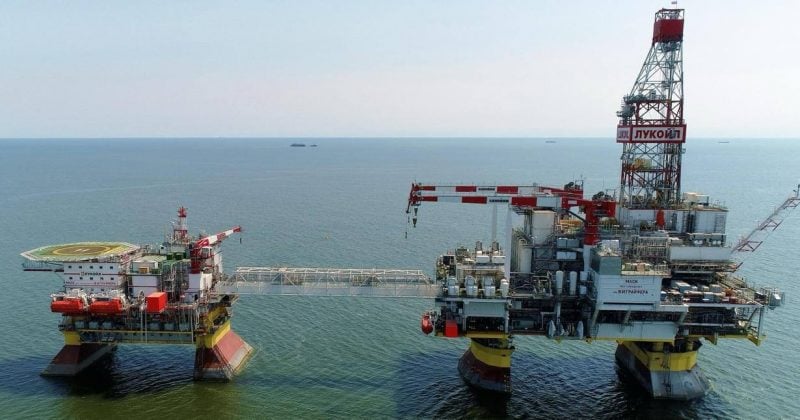
Ukraine strikes Russia’s Filanovsky oil platform in first Caspian Sea attack

Ukraine strikes Russia’s Filanovsky oil platform in first Caspian Sea attack

SBU drone strikes hit a Lukoil offshore platform at least four times, halting production from over 20 wells and marking a major expansion of Ukraine's long-range campaign

Ukraine just extended its war with Russia by several hundred kilometers, in a direction almost nobody was watching. Between December 9 and 11, 2025, Ukraine’s Security Service, the SBU, launched drone strikes against Russia’s Vladimir Filanovsky offshore oil platform in the northern Caspian Sea. The operation hit the platform at least four times and shut down production across more than 20 wells.

This is the first confirmed Ukrainian strike on Russian offshore oil infrastructure in the Caspian Sea. It signals a meaningful expansion of Ukraine’s long-range targeting doctrine, one that now reaches energy assets sitting 700 to 900 kilometers from active combat zones.

What exactly got hit, and why it matters

The Filanovsky field is a serious piece of infrastructure. Lukoil discovered it in 2005, brought it online in 2016, and the field now holds an estimated 129 million tons of oil and 30 billion cubic meters of natural gas. At full capacity, the platform processes around 120,000 barrels per day, roughly 6 million tons annually.

Advertisement

That output flows primarily through the Caspian Pipeline Consortium, known as the CPC. The CPC handles approximately 1% of global oil supply.

The SBU’s Alpha unit carried out the strikes using long-range drones. Beyond the platform itself, reports indicate attacks extended to the Korchagin platform, another Lukoil installation, as well as the military patrol ship Okhotnik and two cargo vessels suspected of supporting Russian military logistics. The SBU framed the entire operation as targeting enterprises actively enabling Russia’s war effort.

The energy market angle

The CPC pipeline’s importance amplifies this. The consortium is a multinational export route, meaning disruptions don’t stay neatly inside Russian borders. Kazakhstan, which also routes significant oil exports through the CPC, now has a complication it didn’t ask for.

Ukraine’s expanding strategic playbook

The Caspian is landlocked, bordered by Russia, Kazakhstan, Turkmenistan, Azerbaijan, and Iran. Ukraine operating effectively at this range, against offshore infrastructure, using drone technology, represents a genuine shift in what Kyiv can credibly threaten.

The SBU has been explicit about the logic: operations like this are designed to degrade Russia’s capacity to fund its military by targeting the economic infrastructure that generates that funding. Oil and gas revenue remains central to the Russian federal budget.

What investors should be watching

For energy markets, the immediate question is whether production from the Filanovsky field resumes quickly or whether the damage requires extended repair timelines. Every week of halted production from a 120,000-barrel-per-day facility adds up in ways that Lukoil and the Russian state will need to account for.

Disclosure: This article was edited by Editorial Team. For more information on how we create and review content, see our Editorial Policy.

Ukraine strikes Russia’s Filanovsky oil platform in first Caspian Sea attack

Ukraine strikes Russia’s Filanovsky oil platform in first Caspian Sea attack

SBU drone strikes hit a Lukoil offshore platform at least four times, halting production from over 20 wells and marking a major expansion of Ukraine's long-range campaign

Ukraine just extended its war with Russia by several hundred kilometers, in a direction almost nobody was watching. Between December 9 and 11, 2025, Ukraine’s Security Service, the SBU, launched drone strikes against Russia’s Vladimir Filanovsky offshore oil platform in the northern Caspian Sea. The operation hit the platform at least four times and shut down production across more than 20 wells.

This is the first confirmed Ukrainian strike on Russian offshore oil infrastructure in the Caspian Sea. It signals a meaningful expansion of Ukraine’s long-range targeting doctrine, one that now reaches energy assets sitting 700 to 900 kilometers from active combat zones.

What exactly got hit, and why it matters

The Filanovsky field is a serious piece of infrastructure. Lukoil discovered it in 2005, brought it online in 2016, and the field now holds an estimated 129 million tons of oil and 30 billion cubic meters of natural gas. At full capacity, the platform processes around 120,000 barrels per day, roughly 6 million tons annually.

Advertisement

That output flows primarily through the Caspian Pipeline Consortium, known as the CPC. The CPC handles approximately 1% of global oil supply.

The SBU’s Alpha unit carried out the strikes using long-range drones. Beyond the platform itself, reports indicate attacks extended to the Korchagin platform, another Lukoil installation, as well as the military patrol ship Okhotnik and two cargo vessels suspected of supporting Russian military logistics. The SBU framed the entire operation as targeting enterprises actively enabling Russia’s war effort.

The energy market angle

The CPC pipeline’s importance amplifies this. The consortium is a multinational export route, meaning disruptions don’t stay neatly inside Russian borders. Kazakhstan, which also routes significant oil exports through the CPC, now has a complication it didn’t ask for.

Ukraine’s expanding strategic playbook

The Caspian is landlocked, bordered by Russia, Kazakhstan, Turkmenistan, Azerbaijan, and Iran. Ukraine operating effectively at this range, against offshore infrastructure, using drone technology, represents a genuine shift in what Kyiv can credibly threaten.

The SBU has been explicit about the logic: operations like this are designed to degrade Russia’s capacity to fund its military by targeting the economic infrastructure that generates that funding. Oil and gas revenue remains central to the Russian federal budget.

What investors should be watching

For energy markets, the immediate question is whether production from the Filanovsky field resumes quickly or whether the damage requires extended repair timelines. Every week of halted production from a 120,000-barrel-per-day facility adds up in ways that Lukoil and the Russian state will need to account for.

Disclosure: This article was edited by Editorial Team. For more information on how we create and review content, see our Editorial Policy.