
US nears full withdrawal from Iraq as Middle East geopolitical shifts put risk assets in focus

Via responsiblestatecraft.org

US nears full withdrawal from Iraq as Middle East geopolitical shifts put risk assets in focus

The removal of Patriot air defense systems and a September 2026 deadline for the final 2,000 troops in Kurdistan are reshaping the region's security calculus, with implications for oil markets and risk appetite across crypto.

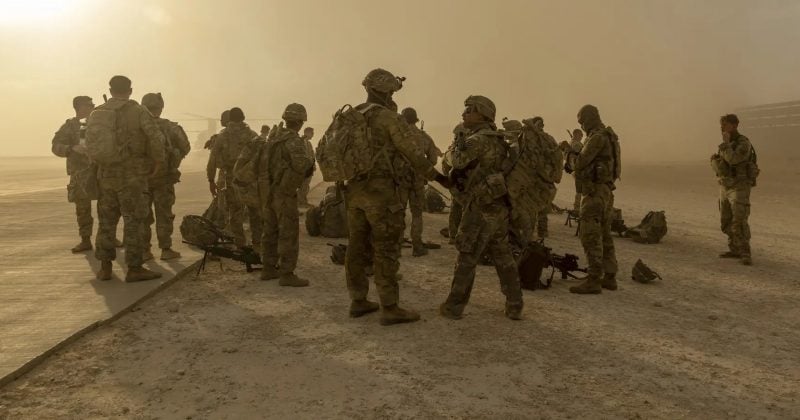
The US military has already pulled its Patriot air defense systems out of Iraq, and the roughly 2,000 American troops still stationed at Harir Air Base in the Kurdistan Region are set to leave by September 30, 2026.

US forces completed their withdrawal from federal Iraqi territory by January 19, 2026, vacating installations including the al-Asad Airbase. The remaining contingent in Kurdistan represents the final phase of a drawdown that traces back to a bilateral agreement struck in September 2024.

Iraqi Prime Minister Ali al-Zaidi met with US President Donald Trump on July 14, 2026, reaffirming the September deadline. Al-Zaidi framed the withdrawal as part of a broader package: troops leave, US companies come in, and efforts to disarm militia groups get prioritized.

Advertisement

Iraq is OPEC’s second-largest producer. Any shift in its security posture sends ripples through energy markets. Energy markets, in turn, are one of the most reliable transmission mechanisms for macro volatility into risk assets like crypto.

Previous US withdrawals offer a useful template. The 2011 pullout preceded a period of significant regional instability, including the rise of ISIS, which eventually required a return of US forces in 2014. The 2021 drawdown was more orderly but still coincided with elevated oil volatility.

When geopolitical risk rises, two things tend to happen in crypto. First, Bitcoin often benefits from its narrative as a non-sovereign store of value, particularly among investors in regions directly affected by instability. Second, the broader altcoin market tends to suffer as risk appetite contracts and capital flows toward perceived safe havens.

Al-Zaidi’s emphasis on US companies entering Iraq suggests potential economic modernization. Iraq’s banking system remains heavily cash-based, and its population skews young. Both factors are correlated with higher crypto uptake in emerging markets.

Oil price movements in the weeks surrounding the September deadline will be a key signal. If crude spikes on concerns about a post-withdrawal security vacuum, expect that to feed into broader macro anxiety.

Disclosure: This article was edited by Editorial Team. For more information on how we create and review content, see our Editorial Policy.

US nears full withdrawal from Iraq as Middle East geopolitical shifts put risk assets in focus

US nears full withdrawal from Iraq as Middle East geopolitical shifts put risk assets in focus

The removal of Patriot air defense systems and a September 2026 deadline for the final 2,000 troops in Kurdistan are reshaping the region's security calculus, with implications for oil markets and risk appetite across crypto.

Via responsiblestatecraft.org

The US military has already pulled its Patriot air defense systems out of Iraq, and the roughly 2,000 American troops still stationed at Harir Air Base in the Kurdistan Region are set to leave by September 30, 2026.

US forces completed their withdrawal from federal Iraqi territory by January 19, 2026, vacating installations including the al-Asad Airbase. The remaining contingent in Kurdistan represents the final phase of a drawdown that traces back to a bilateral agreement struck in September 2024.

Iraqi Prime Minister Ali al-Zaidi met with US President Donald Trump on July 14, 2026, reaffirming the September deadline. Al-Zaidi framed the withdrawal as part of a broader package: troops leave, US companies come in, and efforts to disarm militia groups get prioritized.

Advertisement

Iraq is OPEC’s second-largest producer. Any shift in its security posture sends ripples through energy markets. Energy markets, in turn, are one of the most reliable transmission mechanisms for macro volatility into risk assets like crypto.

Previous US withdrawals offer a useful template. The 2011 pullout preceded a period of significant regional instability, including the rise of ISIS, which eventually required a return of US forces in 2014. The 2021 drawdown was more orderly but still coincided with elevated oil volatility.

When geopolitical risk rises, two things tend to happen in crypto. First, Bitcoin often benefits from its narrative as a non-sovereign store of value, particularly among investors in regions directly affected by instability. Second, the broader altcoin market tends to suffer as risk appetite contracts and capital flows toward perceived safe havens.

Al-Zaidi’s emphasis on US companies entering Iraq suggests potential economic modernization. Iraq’s banking system remains heavily cash-based, and its population skews young. Both factors are correlated with higher crypto uptake in emerging markets.

Oil price movements in the weeks surrounding the September deadline will be a key signal. If crude spikes on concerns about a post-withdrawal security vacuum, expect that to feed into broader macro anxiety.

Disclosure: This article was edited by Editorial Team. For more information on how we create and review content, see our Editorial Policy.