
US missile strike on Larak Island raises oil price fears and crypto safe-haven questions

US missile strike on Larak Island raises oil price fears and crypto safe-haven questions

A strike at the Strait of Hormuz's narrowest point sends oil toward $95 and puts global markets on edge

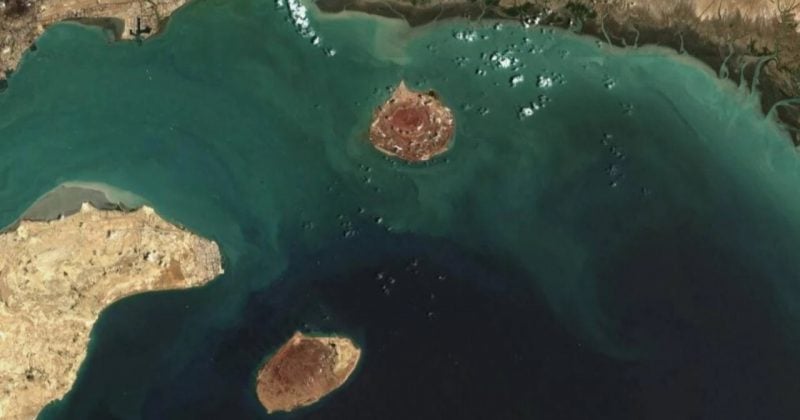
The US military struck Larak Island on July 22, 2026, a small but strategically outsized piece of land sitting at the narrowest choke point of the Strait of Hormuz. Iranian media outlet Tasnim News reported the strike targeted positions linked to Islamic Revolutionary Guard Corps Navy assets.

The Strait of Hormuz handles somewhere between 20% and 25% of all seaborne oil traded globally. Markets noticed immediately, with crude oil prices climbing toward $95 per barrel as traders priced in the possibility that supply disruptions could get significantly worse before they get better.

How we got here

US and Israeli military operations began in February 2026, drawing an aggressive Iranian response. By March 2026, Iran declared the strait effectively closed, a move that sent shockwaves through global shipping markets and triggered a significant rerouting of maritime traffic.

Advertisement

The US reinstated a naval blockade in mid-July 2026, tightening pressure on Iranian shipping access and further disrupting commercial vessel movement through the region. The July 22 missile strike on Larak Island represents the 11th consecutive night of US airstrikes on Iranian positions.

Prior to the Larak strike, there were also reported attacks on two IRGC Navy speedboats operating just off the island’s coast, suggesting a systematic effort to degrade Iranian naval capacity in the strait rather than a one-off escalation.

What oil at $95 means for the broader market

Oil approaching $95 per barrel is not just a number for energy traders to worry about. It is an inflation input that ripples across transportation, manufacturing, food production, and consumer goods. Central banks that spent the past several years fighting post-pandemic inflation are now watching a geopolitically-driven price spike with very limited policy tools to counter it.

During acute risk-off episodes, Bitcoin has often sold off alongside equities rather than acting as a true safe haven. If the conflict drives sustained inflation or currency instability in emerging markets exposed to energy import costs, traders in regions directly affected by currency weakness tied to oil price shocks have historically shown elevated interest in crypto as a capital preservation tool.

In markets where local currencies are under pressure from energy-driven inflation, demand for dollar-pegged stablecoins tends to rise.

What investors should watch

Larak Island’s position at the narrowest point of the strait means that sustained military activity there directly threatens the navigability of the most important oil shipping lane on the planet. If Iran retaliates in ways that further restrict vessel movement, the $95 oil price could look like the floor rather than the ceiling.

Eleven consecutive nights of US airstrikes suggests a campaign rather than a calculated pressure play. For crypto specifically, the short-term correlation with risk assets remains the dominant dynamic to watch. A broader equity sell-off driven by oil shock and inflation fears would likely drag Bitcoin lower in the near term.

Disclosure: This article was edited by Editorial Team. For more information on how we create and review content, see our Editorial Policy.

US missile strike on Larak Island raises oil price fears and crypto safe-haven questions

US missile strike on Larak Island raises oil price fears and crypto safe-haven questions

A strike at the Strait of Hormuz's narrowest point sends oil toward $95 and puts global markets on edge

The US military struck Larak Island on July 22, 2026, a small but strategically outsized piece of land sitting at the narrowest choke point of the Strait of Hormuz. Iranian media outlet Tasnim News reported the strike targeted positions linked to Islamic Revolutionary Guard Corps Navy assets.

The Strait of Hormuz handles somewhere between 20% and 25% of all seaborne oil traded globally. Markets noticed immediately, with crude oil prices climbing toward $95 per barrel as traders priced in the possibility that supply disruptions could get significantly worse before they get better.

How we got here

US and Israeli military operations began in February 2026, drawing an aggressive Iranian response. By March 2026, Iran declared the strait effectively closed, a move that sent shockwaves through global shipping markets and triggered a significant rerouting of maritime traffic.

Advertisement

The US reinstated a naval blockade in mid-July 2026, tightening pressure on Iranian shipping access and further disrupting commercial vessel movement through the region. The July 22 missile strike on Larak Island represents the 11th consecutive night of US airstrikes on Iranian positions.

Prior to the Larak strike, there were also reported attacks on two IRGC Navy speedboats operating just off the island’s coast, suggesting a systematic effort to degrade Iranian naval capacity in the strait rather than a one-off escalation.

What oil at $95 means for the broader market

Oil approaching $95 per barrel is not just a number for energy traders to worry about. It is an inflation input that ripples across transportation, manufacturing, food production, and consumer goods. Central banks that spent the past several years fighting post-pandemic inflation are now watching a geopolitically-driven price spike with very limited policy tools to counter it.

During acute risk-off episodes, Bitcoin has often sold off alongside equities rather than acting as a true safe haven. If the conflict drives sustained inflation or currency instability in emerging markets exposed to energy import costs, traders in regions directly affected by currency weakness tied to oil price shocks have historically shown elevated interest in crypto as a capital preservation tool.

In markets where local currencies are under pressure from energy-driven inflation, demand for dollar-pegged stablecoins tends to rise.

What investors should watch

Larak Island’s position at the narrowest point of the strait means that sustained military activity there directly threatens the navigability of the most important oil shipping lane on the planet. If Iran retaliates in ways that further restrict vessel movement, the $95 oil price could look like the floor rather than the ceiling.

Eleven consecutive nights of US airstrikes suggests a campaign rather than a calculated pressure play. For crypto specifically, the short-term correlation with risk assets remains the dominant dynamic to watch. A broader equity sell-off driven by oil shock and inflation fears would likely drag Bitcoin lower in the near term.

Disclosure: This article was edited by Editorial Team. For more information on how we create and review content, see our Editorial Policy.