
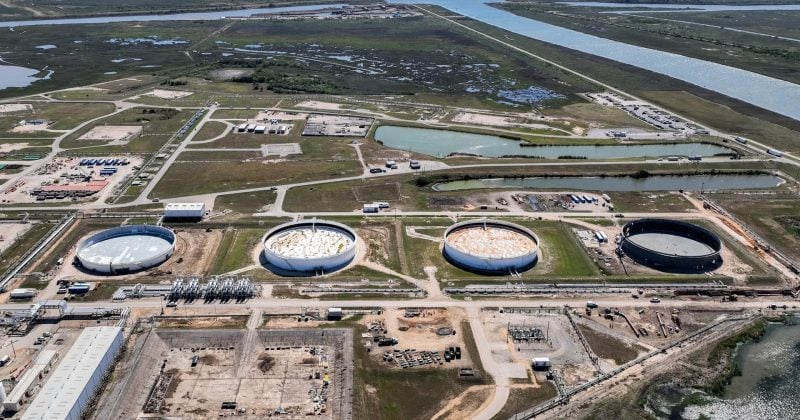
US Strategic Petroleum Reserve won’t be tapped to ease fuel prices, and Bitcoin miners are feeling the heat

Via axios.com

US Strategic Petroleum Reserve won’t be tapped to ease fuel prices, and Bitcoin miners are feeling the heat

With SPR inventories at their lowest since 1983, Washington is keeping its oil safety net closed while energy costs ripple through crypto mining economics

The US government has decided to keep its hands off the Strategic Petroleum Reserve despite rising fuel prices tied to the ongoing Hormuz crisis. Think of the SPR as America’s financial emergency fund, except instead of cash, it’s roughly 308 million barrels of crude oil sitting in salt caverns along the Gulf Coast.

That 308 million barrel figure represents the lowest SPR inventory since March 1983. Officials have signaled they’ll take a conservative approach, preserving remaining stocks rather than drawing them down further to provide short-term price relief.

How the reserve got this thin

Approximately 352 million barrels have been withdrawn over the past four years through a series of authorized releases.

The most significant single drawdown was a 172 million barrel release ordered by President Trump in March 2026, a direct response to geopolitical disruptions around the Strait of Hormuz. The Strait of Hormuz is arguably the most important oil chokepoint on Earth, with roughly a fifth of global petroleum consumption flowing through its narrow waters.

Advertisement

When that strait effectively closed amid the US-Iran conflict, coordinated emergency stock releases from the International Energy Agency, including US SPR contributions, provided a temporary buffer of approximately 2.5 million barrels per day over four months.

Once the March 2026 release is fully executed, analysts project SPR levels will drop to approximately 243 million barrels, roughly a third of the reserve’s total capacity.

Why crypto investors should care about oil reserves

The sustained oil market disruptions linked to the Hormuz crisis have pushed Bitcoin mining production costs to an estimated average of around $88,000 per BTC. When production costs rise, miners who can’t cover their expenses either shut down or sell reserves, both of which affect supply dynamics.

A significant portion of the global hashrate draws from hydroelectric, nuclear, or renewable sources that aren’t directly tethered to crude prices. But when oil prices surge, natural gas and electricity prices tend to follow, even in regions where oil isn’t the primary fuel source. Elevated energy costs feed into broader inflation, which influences central bank policy, which shapes risk appetite across every asset class including crypto.

The policy shift and its market implications

The decision not to tap the SPR represents a meaningful pivot. Previous administrations treated the reserve as a tool for managing consumer fuel prices. The current approach prioritizes preservation over intervention.

Brent crude has shown volatility in recent months, averaging lower as partial supply recovery takes hold, but fuel prices remain elevated enough to keep the conversation alive. Without SPR releases acting as a relief valve, prices will be more directly determined by actual supply and demand fundamentals.

Higher sustained energy costs compress mining margins, potentially accelerating consolidation in the mining industry as smaller, less efficient operators get squeezed out. Market participants should watch for any reversal in the SPR policy and the relationship between energy costs and Bitcoin’s hashrate, as on-chain metrics like hashrate and difficulty adjustments will signal stress before price does.

Disclosure: This article was edited by Editorial Team. For more information on how we create and review content, see our Editorial Policy.

US Strategic Petroleum Reserve won’t be tapped to ease fuel prices, and Bitcoin miners are feeling the heat

US Strategic Petroleum Reserve won’t be tapped to ease fuel prices, and Bitcoin miners are feeling the heat

With SPR inventories at their lowest since 1983, Washington is keeping its oil safety net closed while energy costs ripple through crypto mining economics

Via axios.com

The US government has decided to keep its hands off the Strategic Petroleum Reserve despite rising fuel prices tied to the ongoing Hormuz crisis. Think of the SPR as America’s financial emergency fund, except instead of cash, it’s roughly 308 million barrels of crude oil sitting in salt caverns along the Gulf Coast.

That 308 million barrel figure represents the lowest SPR inventory since March 1983. Officials have signaled they’ll take a conservative approach, preserving remaining stocks rather than drawing them down further to provide short-term price relief.

How the reserve got this thin

Approximately 352 million barrels have been withdrawn over the past four years through a series of authorized releases.

The most significant single drawdown was a 172 million barrel release ordered by President Trump in March 2026, a direct response to geopolitical disruptions around the Strait of Hormuz. The Strait of Hormuz is arguably the most important oil chokepoint on Earth, with roughly a fifth of global petroleum consumption flowing through its narrow waters.

Advertisement

When that strait effectively closed amid the US-Iran conflict, coordinated emergency stock releases from the International Energy Agency, including US SPR contributions, provided a temporary buffer of approximately 2.5 million barrels per day over four months.

Once the March 2026 release is fully executed, analysts project SPR levels will drop to approximately 243 million barrels, roughly a third of the reserve’s total capacity.

Why crypto investors should care about oil reserves

The sustained oil market disruptions linked to the Hormuz crisis have pushed Bitcoin mining production costs to an estimated average of around $88,000 per BTC. When production costs rise, miners who can’t cover their expenses either shut down or sell reserves, both of which affect supply dynamics.

A significant portion of the global hashrate draws from hydroelectric, nuclear, or renewable sources that aren’t directly tethered to crude prices. But when oil prices surge, natural gas and electricity prices tend to follow, even in regions where oil isn’t the primary fuel source. Elevated energy costs feed into broader inflation, which influences central bank policy, which shapes risk appetite across every asset class including crypto.

The policy shift and its market implications

The decision not to tap the SPR represents a meaningful pivot. Previous administrations treated the reserve as a tool for managing consumer fuel prices. The current approach prioritizes preservation over intervention.

Brent crude has shown volatility in recent months, averaging lower as partial supply recovery takes hold, but fuel prices remain elevated enough to keep the conversation alive. Without SPR releases acting as a relief valve, prices will be more directly determined by actual supply and demand fundamentals.

Higher sustained energy costs compress mining margins, potentially accelerating consolidation in the mining industry as smaller, less efficient operators get squeezed out. Market participants should watch for any reversal in the SPR policy and the relationship between energy costs and Bitcoin’s hashrate, as on-chain metrics like hashrate and difficulty adjustments will signal stress before price does.

Disclosure: This article was edited by Editorial Team. For more information on how we create and review content, see our Editorial Policy.