
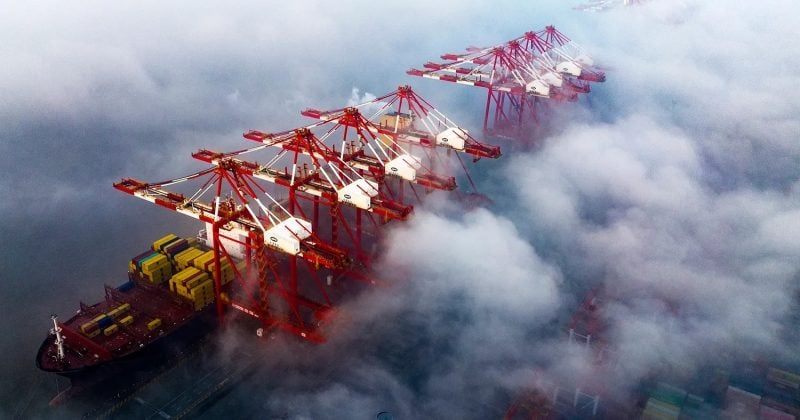
US tariffs hit 60 trading partners as trade war enters a new phase
New duties covering nearly all US imports take effect July 24, with crypto markets watching for spillover volatility
The Trump administration activated a sweeping new round of tariffs on July 24, 2026, covering 60 trading partners and replacing the temporary 10% global duty that had been in place since earlier in the year. The new rates land at either 10% or 12.5% depending on the country, and together these economies account for 99.4% of all US imports.
The legal hook is Section 301 of the Trade Act of 1974, a Cold War-era statute that gives the executive branch broad authority to respond to what it deems unfair trade practices. The administration’s specific justification here is that these 60 economies have failed to adequately enforce their own bans on goods produced with forced labor.
Who pays what
The 12.5% rate applies to major trading partners including China and Vietnam. The lower 10% rate covers the UK, Canada, and Mexico, which is notable given that Canada and Mexico are US neighbors bound by the USMCA trade agreement.
The Office of the US Trade Representative first proposed these rates in June 2026. The finalization came on July 23-24, with the measures taking effect at 12:01 a.m. ET on July 24.
Macro, rates, and crypto—what moved markets and what matters next.
Daily. Free. Join 34,000+ readers across crypto, finance, and policy.
Supply chains and market implications
Industries with thin margins and high import dependency, think consumer electronics, apparel, and furniture, face immediate pressure. Companies in these sectors that rely on Chinese or Vietnamese manufacturing were already navigating elevated costs from the earlier temporary tariff. The step up to 12.5% adds another layer on top of that.
For equity markets, the first-order effect is a re-rating of import-dependent businesses. Companies with diversified supply chains or significant domestic production capacity are relatively insulated.
What investors should watch now is the response from Beijing and Hanoi in particular. China has retaliated in kind during previous rounds of US tariff escalation, and any counter-measures targeting US agricultural exports or technology firms would accelerate the repricing already underway in equity markets. Vietnam, which absorbed significant manufacturing investment as companies sought to reduce China exposure after 2018, now faces its own cost disadvantage.